
Catalogue Search | MBRL


Are you sure you want to remove the book from the shelf?

{{itemTitle}}
3
result(s) for
"Jews History 70-1789 Sources"
Sort by:
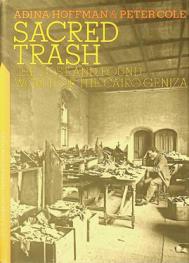
Sacred trash : the lost and found world of the Cairo Geniza
Traces the efforts of two women scholars who recovered what has become the most vital cache of Hebrew manuscripts ever discovered, in an account that explains what the findings reveal about Mediterranean Judaism.
Book

The chosen few
In 70 CE, the Jews were an agrarian and illiterate people living mostly in the Land of Israel and Mesopotamia. By 1492 the Jewish people had become a small group of literate urbanites specializing in crafts, trade, moneylending, and medicine in hundreds of places across the Old World, from Seville to Mangalore. What caused this radical change?The Chosen Fewpresents a new answer to this question by applying the lens of economic analysis to the key facts of fifteen formative centuries of Jewish history.
Maristella Botticini and Zvi Eckstein show that, contrary to previous explanations, this transformation was driven not by anti-Jewish persecution and legal restrictions, but rather by changes within Judaism itself after 70 CE--most importantly, the rise of a new norm that required every Jewish male to read and study the Torah and to send his sons to school. Over the next six centuries, those Jews who found the norms of Judaism too costly to obey converted to other religions, making world Jewry shrink. Later, when urbanization and commercial expansion in the newly established Muslim Caliphates increased the demand for occupations in which literacy was an advantage, the Jews found themselves literate in a world of almost universal illiteracy. From then forward, almost all Jews entered crafts and trade, and many of them began moving in search of business opportunities, creating a worldwide Diaspora in the process.
The Chosen Fewoffers a powerful new explanation of one of the most significant transformations in Jewish history while also providing fresh insights to the growing debate about the social and economic impact of religion.
eBook

God, Humanity, and History
Although closely focused on the remarkable Hebrew First-Crusade narratives, Robert Chazan's new interpretation of these texts is anything but narrow, as his title, God, Humanity, and History, strongly suggests. The three surviving Hebrew accounts of the crusaders' devastating assaults on Rhineland Jewish communities during the spring of 1096 have been examined at length, but only now can we appreciate the extent to which they represent their turbulent times. After a close analysis of the texts themselves, Chazan addresses the objectives of the three narratives. He compares these accounts with earlier Jewish history writing and with contemporary crusade historiography. It is in their disjuncture with past forms of Jewish historical narration and their amazing parallels with Latin crusade narratives that the Hebrew narratives are most revealing. We see how they reflect the embeddedness of early Ashkenazic Jewry in the vibrant atmosphere of late-eleventh- and early-twelfth-century northern Europe.
eBook