
Catalogue Search | MBRL


Are you sure you want to remove the book from the shelf?

{{itemTitle}}
159
result(s) for
"Jews Iraq History"
Sort by:
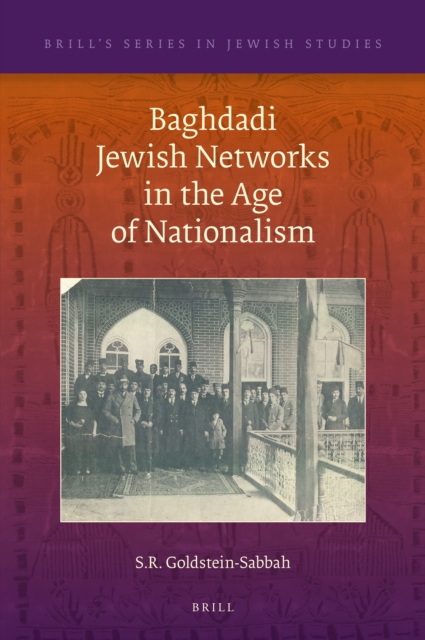
Baghdadi Jewish Networks in the Age of Nationalism
Baghdadi Jewish Networks in the Age of Nationalism explores different components of Baghdadi participation in global Jewish networks through the modernization of communal leadership, satellite communities, transnational Jewish philanthropy and secular education during the Hashemite period (1920-1951).
eBook


The Curious Case of the Jewish Sasanian Queen Šīšīnduxt: Exilarchal Propaganda and Zoroastrians in Tenth- to Eleventh-Century Baghdad
The Provincial Capitals of Ērānšahr, a medieval Zoroastrian Middle Persian text, recounts how the daughter of the Jewish exilarch married the Sasanian king Yazdgird I and gave birth to Wahrām Gōr, his successor. While the historicity of the text has been largely undermined, scant attention has been given to its authorship and purpose. This article proposes that the story's creators were members of the exilarch's household in the tenth through eleventh century who internalized the broader concern with (invented) Sasanian pedigree during the period known as the Iranian intermezzo in an effort to appeal to Iranian Jews and other elites alike. Studying this text and its origins provides evidence of contact between Jews and Zoroastrians during this period and offers a new suggestion about the cultural context of the Zoroastrians who produced The Provincial Capitals.
Journal Article


The Barbarism from Within—Discourses about Fascism amongst Iraqi and Iraqi-Jewish Communists, 1942-1955
This article looks at the changing significations of the word “fascist” within communist discourses in Iraq and in Israel. I do so in order to illustrate how fascism, a concept signifying a political theory conceptualized and practiced in Italy, Germany, and Spain, became a boarder frame of reference to many leftist intellectuals in the Middle East. The articles shows that communist discourses formulated in Iraq during the years 1941-1945 evoked the word “fascist” not only in order to discredit Germany and Italy but also, and more importantly, as a way of critiquing Iraq’s radical pan-Arab nationalists and Iraq’s conservative elites who proclaimed their loyalty to pan-Arabism as well. In other words, the article studies the ways in which Iraqi communist intellectuals, most notably the leader of the Iraqi Communist Party, Fahd, shifted the antifascist global battle to the Iraqi field and used the prodemocratic agenda of the Allies to criticize the absence of social justice and human rights in Iraq, and the Iraqi leadership’s submissive posture toward Britain. As it became clear to Iraqi communists that World War II was nearing its end, and that Iraq would be an important part of the American-British front, criticism of the Iraqi Premier Nūrī al-Saʿīd and his policies grew sharper, and such policies were increasingly identified as “fascist”. Within this context, Fahd equated chauvinist rightwing Iraqi nationalism in its anti-Jewish and anti- Kurdish manifestations with fascism and Nazi racism. I then look at the ways in which Iraqi Jewish communists internalized the party’s localized antifascist agenda. I argue that Iraqi Jewish communists identified rightwing Iraqi nationalism (especially the agenda espoused by a radical pan-Arab Party called al-Istiqlāl) as symptomatic of a fascist ideology. Finally, I demonstrate how Iraqi Jewish communists who migrated to Israel in the years 1950-1951 continued using the word “fascist” in their campaigns against rightwing Jewish nationalism and how this antifascist discourse influenced prominent Palestinian intellectuals
Journal Article
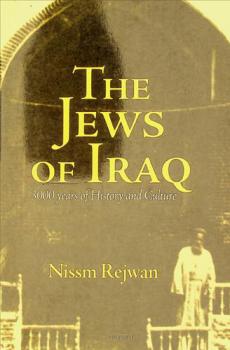
The Jews of Iraq
Long description:
Iraq exists under its current name and within its current borders officially only since 1932. The region -- which does not necessarily correspond with the current borders -- had many names over the past millennia, such as Mesopotamia, Babylon, Assyria and more. Many minorities of race and religion lived there. The Jewish exile to Babylon began in 586 BC, following Nebuchadnezzar's destruction of Jerusalem.
In Western historiography the Levant is also called the ``Fertile Crescent'' and is considered the ``birthplace of human civilization''. It was also the birth place of the monotheistic religions Judaism, Christianity and Islam, which were then spread across the world.
Alisa Douer demonstrates the integrity and long history of the Jews in Iraq, which lasted for more than 2,600 years and included many contributions to the society as a whole. One should also note that they did not leave Iraq, their home country, voluntarily, but were forced to leave after the creation of Israel and the Arab–Israeli War in 1948, as about one million Jews in the rest of the Arab world.
The Jewish community was a part of the Arab world that once was home to many ethnic and religious minorities, living predominantly in peaceful coexistence. The Jews of Iraq, like all Jews from Arab countries, were mostly Sephardic Jews, and as such, they faced discrimination and were forced to adapt to life in Israel and its majority, which were Ashkenazim -- East and Middle European Jews. They did not match the Ashkenazi schema. In spite of this, the integration of the Jews of Iraq is a success story.
eBook

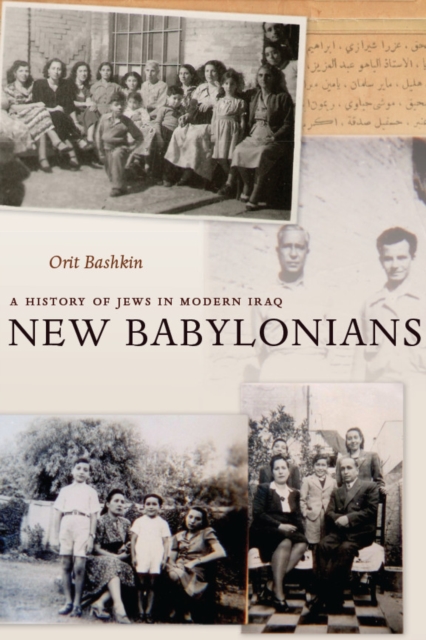
New Babylonians : a history of Jews in modern Iraq
Although Iraqi Jews saw themselves as Iraqi patriots, their community—which had existed in Iraq for more than 2,500 years—was displaced following the establishment of the state of Israel. New Babylonians chronicles the lives of these Jews, their urban Arab culture, and their hopes for a democratic nation-state. It studies their ideas about Judaism, Islam, secularism, modernity, and reform, focusing on Iraqi Jews who internalized narratives of Arab and Iraqi nationalisms and on those who turned to communism in the 1940s. As the book reveals, the ultimate displacement of this community was not the result of a perpetual persecution on the part of their Iraqi compatriots, but rather the outcome of misguided state policies during the late 1940s and early 1950s. Sadly, from a dominant mood of coexistence, friendship, and partnership, the impossibility of Arab-Jewish coexistence became the prevailing narrative in the region—and the dominant narrative we have come to know today.
eBook

The Missing Century
Scholars have generally claimed that legal interaction between Palestine and Babylonia continued to occur even at the end of the Amoraic period, that is, from the beginning of the fifth century CE until the end of the Saboraic period in Babylonia (500–689 CE). These connections, so it has been claimed, attest to the continuing Palestinian hegemony over rabbinic Babylonia, as can be seen from the legal questions sent by Babylonian Amoraim to Palestine.
In contrast with the above common scholarly claim, I argue that there is no evidence in the Babylonian Talmud of halakhic exchanges between Babylonia and Palestine during the fifth century CE. Evidence as to interaction between these two centers disappears after the fifth generation of Amoraim, one generation before R. Ashi. I will further argue that the Amoraic statements reported in the generation of R. Ashi in Babylonia are earlier, and do not contain evidence of rabbinic activity in Palestine during that period. All that we really have from this period is a limited number of Palestinian traditions (slightly over twenty) that were brought to Babylonia by three Amoraim who emigrated during this period, R. Hanina, R. Abba and R. Yose b. Avun. The best explanation for this phenomenon is that the Amoraic period in Palestine came to a close by the end of the fourth century.
Journal Article