
Catalogue Search | MBRL


Are you sure you want to remove the book from the shelf?

{{itemTitle}}
45
result(s) for
"Jews Latin America Identity."
Sort by:

Keeping the mystery alive : Jewish mysticism in Latin American cultural production
\"This book delves into creative renditions of key aspects of Jewish Mysticism in Latin American literature, film, and art from the perspective of literary and cultural studies. The overarching question is whether the authors presented question, or reproduce literally, traditional renditions of the Jewish mysticism, and how this aspect of their literature and visual art relates to the Latin American canon to which they belong\"-- Provided by publisher.
BOOK

Past and Present of Latin American Jewry: A Conceptual Pathway
The article aims to analyze the conceptual pathway that the author followed along her research trajectory focused on past and present trends in contemporary Jewish life, as specifically expressed in Latin America. Along a systematic reflection on axioms, theories and findings, diverse conceptual elaborations are presented, as they entail a sustained encounter with previous scientific formulations and changing times and contexts. Thus the author reflects on theory and biography as they nourished her research questions, while simultaneously committed to the stricter canon of scientific conscientiousness. Political science, sociology and contemporary Jewish studies converge in the development of research axes that found their point of departure in the prefix \"multiple,\" covering the author's multidisciplinary journey through Latin American multiple modernities; multiple collective identities; and multiple social and communal structures and praxis. Diverse thematic clues are displayed to account for the striking fact that over the course of two generations Latin American Jews have transformed from mostly immigrants and immigrant communities, to rooted communities of locally-born citizens and, simultaneously, of expatriates and emigrants. The richness of Jewish life in the region, its presence and relevance in the Jewish world, as well as in national and communal spheres, and simultaneously, its relocation in new geographies are part of their current reality marked by disjunctures and paradoxes. The research presented crosses disciplinary confines in order to reach a wider epistemic spectrum and become better equipped to deal with the complexity that characterizes Jewish life today, as well as to traverse the national borders where Jewish diasporas dwell, in an effort to understand the globality of the Jewish condition and grasp its current dynamics.
Journal Article
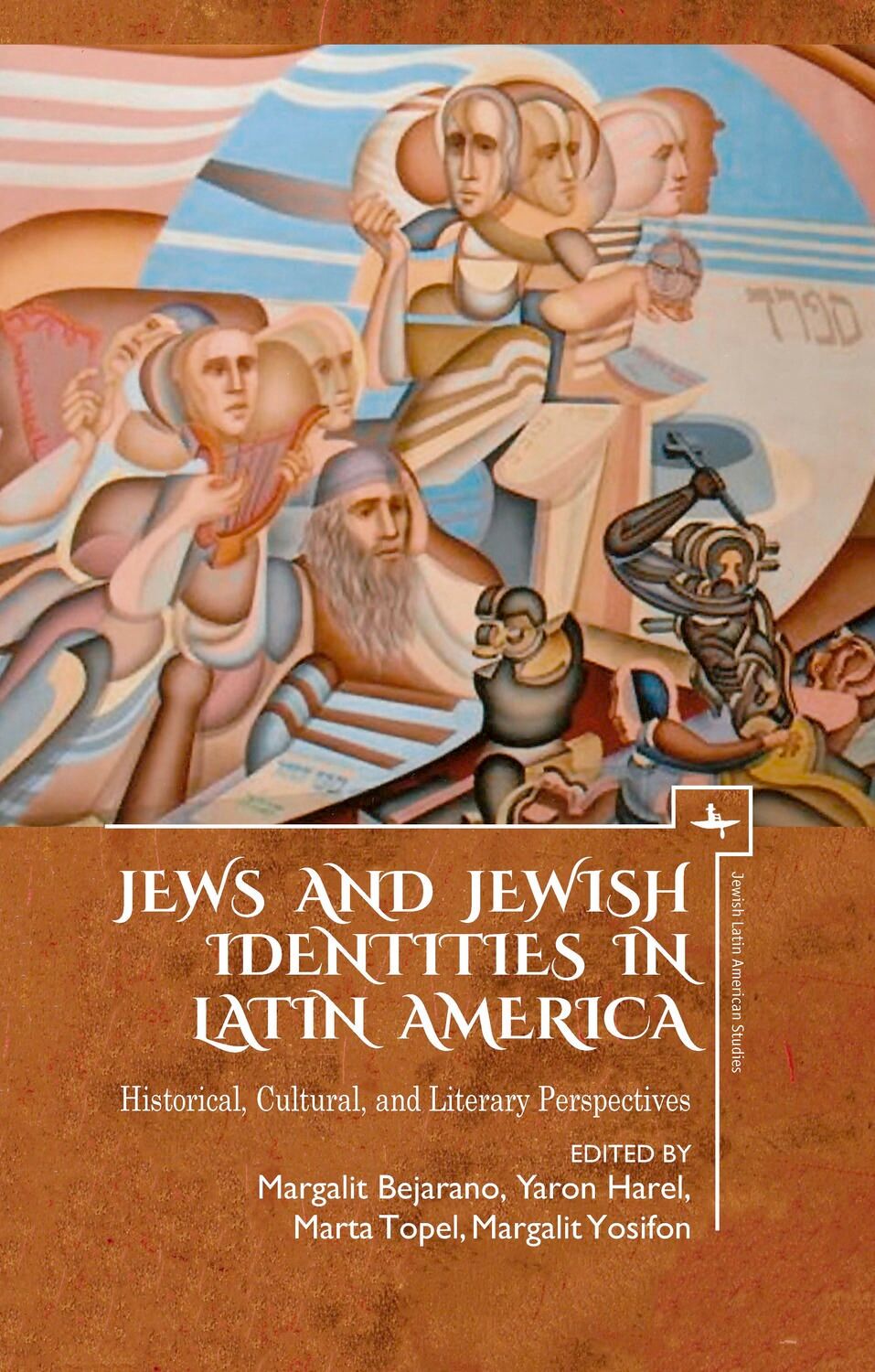
Jews and Jewish Identities in Latin America
This collection of articles constitutes a major contribution to the growing field of Latin American Jewish studies, offering different perspectives on the rich and complex phenomena in the social, political, and cultural development of Jewish communities in the area. The essays span across a wide range of subjects, from comparisons between Jewish communities from different countries and with different levels of assimilation, the effects of globalization and transnationalism on the field, the interactions between Jews and non-Jews in the area, all the way to literary criticism. Based on an international conference organized by the University of Sao Paulo, the Dahan Center of Bar Ilan University, and the Academic College in Ashkelon, this volume offers a new approach to Latin American Jewish studies: it contributes to demystifying stereotypes and raising awareness of the importance of Latin America in a global context, and it highlights the relevance of the different Jewish communities across the globe in their special relationship to the state of Israel.
eBook
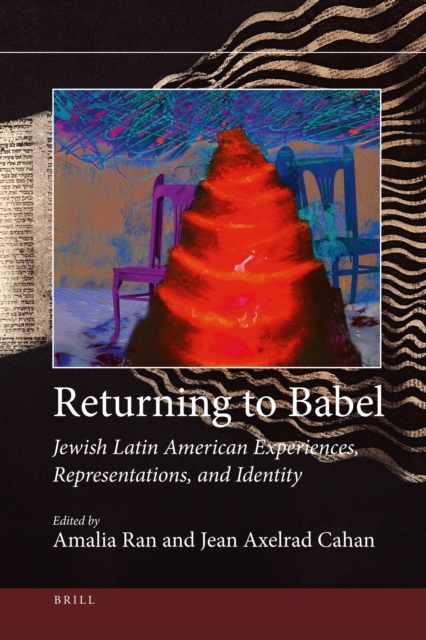
Returning to Babel
This edited volume explores multiple representations by and of Jewish Latin Americans, thus revisiting the canon of Judeo-Latin American culture. It expands the horizon of what is traditionally considered \"Jewish\" or \"Latinoamericano.\".
eBook
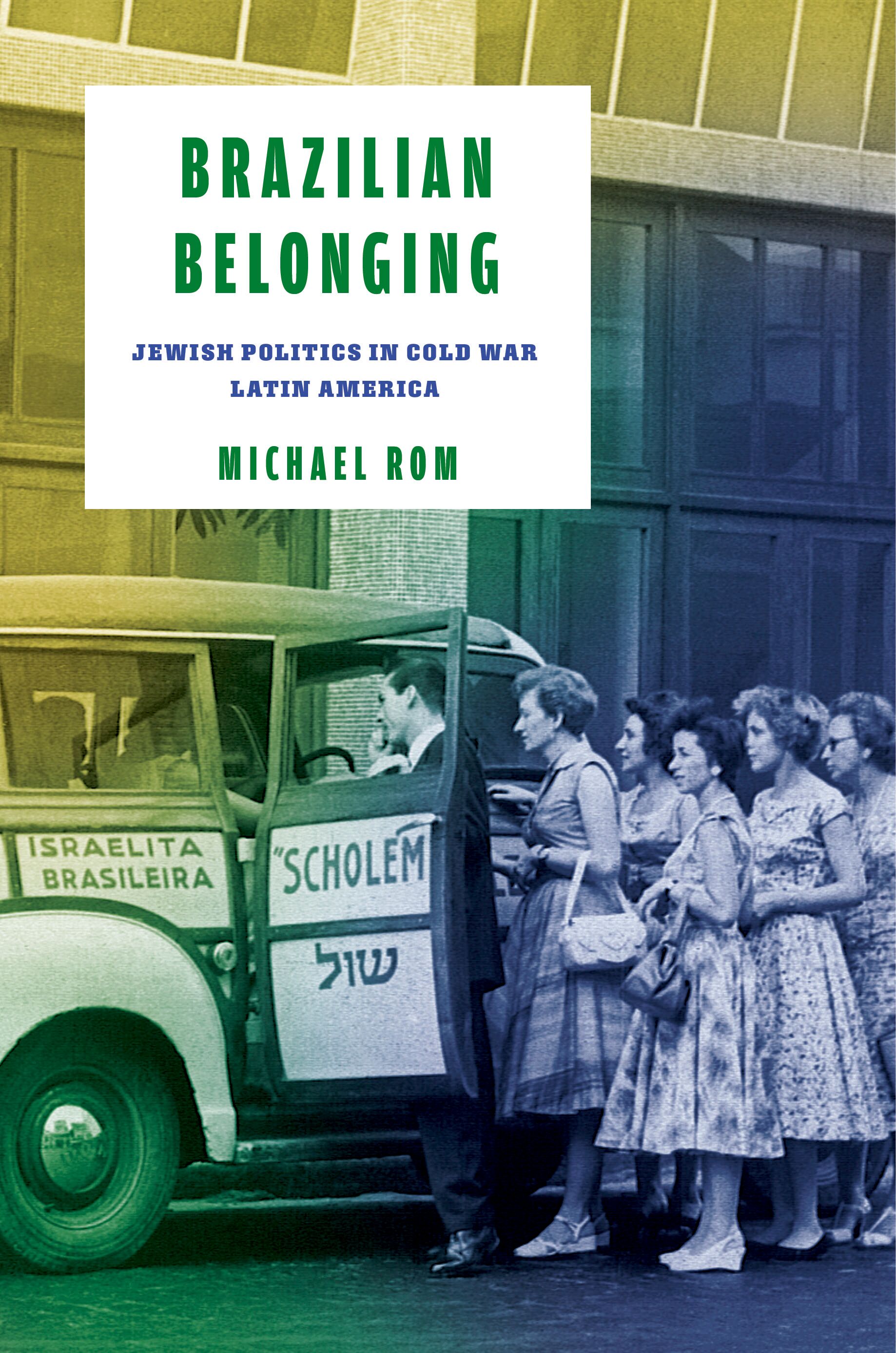
Brazilian Belonging
Brazilian Belonging examines a century of Brazilian Jewish political activism, from the onset of Jewish mass migration to Brazil in the early 1920s to the present. The home of the largest Jewish community living in a nonwhite-majority country in the world, and a country that has witnessed extended periods of democratic and dictatorial rule, Brazil offers an important window for rethinking Jewish ideas about race and nation, democracy and dictatorship, and local and global forms of state violence. In this book, Michael Rom highlights the important roles Brazilian Jews played in prominent social movements—movements that contested the meaning of the discourse of racial democracy, fought against the military dictatorship, and sought out new political possibilities following the return of democratic rule. He draws on extensive research—including previously unexamined secret police and intelligence records, the Brazilian Yiddish press, and oral history interviews—to illuminate decades of Brazilian Jewish activism under both democratic and dictatorial regimes. Offering the first study of modern Jewish politics and Latin American ethnic belonging throughout the Cold War, this book situates Brazilian Jewish activism within the transnational contexts of the immediate aftermath of the Holocaust, Cold War superpower rivalries, Latin American revolutionary insurgencies, and the Israeli-Palestinian conflict.
eBook
Jewish Populations, Migrations, and Identities in the Americas: The Shared and the Particular
This paper presents a macro-social perspective on Jewish populations and societies in the Americas, arguing for a broad transnational view of several different fundamental demographic and ideational processes and trends. The goal is to detect broad commonalities versus regional differences in the Jewish experience on the American continent beyond local national frameworks. Commonalities and differences between Jews in the different parts of the Americas emerge through observing Jewish population distribution and its relation to local human development levels, inter- and intracontinental migration, levels and modes of Jewish education, and patterns of Jewish identification, socialization, and assimilation. I address Jewish interactions with the majority of society by examining frequencies of antisemitism across different countries. Interactions within the Jewish collective itself are assessed by looking at mutual influences through the worldwide institutional network. Conclusions are suggested at the pancontinental level. A variety of quantitative analytical tools are used. Sources are large-scale sociodemographic surveys, compilations of annual data series, and observations of the global networks of Jewish community organizations.
Journal Article
Israel’s Tech Turn and Its Impact on Latin American Jewish Diaspora Relations
The twenty-first century has seen a significant transformation in Israel’s economy, highlighted by the emergence of its technology sector as a crucial force within the domestic economy and a symbol of international business success. This shift has influenced Israel’s relations with Latin America and its connections with the Jewish diaspora there, the most extensive in the Global South. Motivated by its tech private sector, new frameworks of diaspora identity have been established, centering on the enhancement of individual professional development. These dynamics underscore the “porosity” introduced by the private sector into collective identity boundaries, highlighting the complex interplay between a sense of collective Jewish belonging among Israeli entrepreneurs and their pursuit of economic–commercial ties with Latin America. This article advocates for a broader historiographical perspective to understand the role of private sector motivations and practices in shaping identities and relations between these regions.
Journal Article
Identities in an Era of Globalization and Multiculturalism
This volume offers a multidimensional and interdisciplinary exploration of contemporary Jewish identities amidst globalization processes, with special emphasis on Latin American socio-political, communal, and cultural milieu. Stretching from political science to sociology, from art to cultural studies, it provides systematic tools for understanding different aspects of the Jewish experience.
eBook

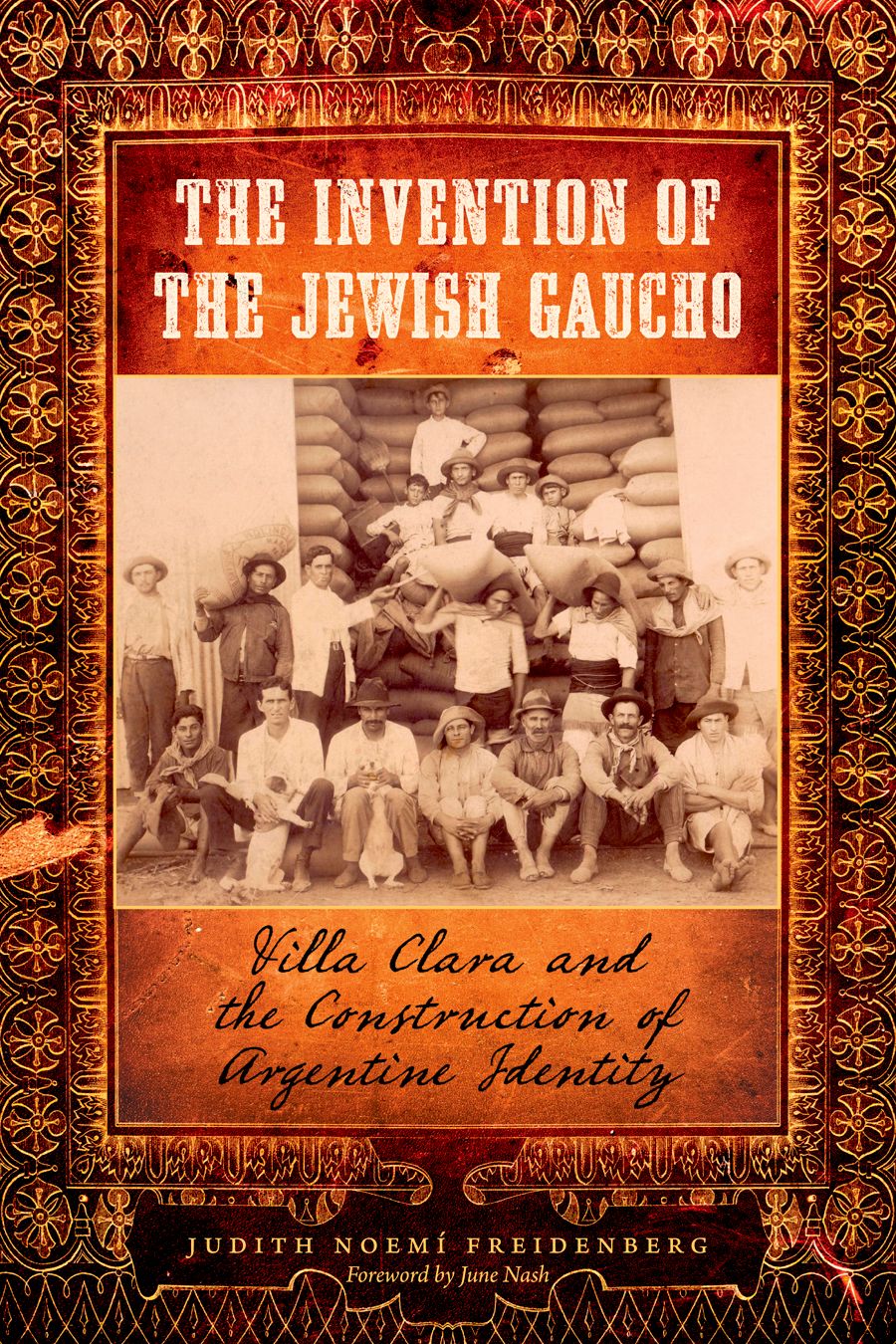
The Invention of the Jewish Gaucho
By the mid-twentieth century, Eastern European Jews had become one of Argentina's largest minorities. Some represented a wave of immigration begun two generations before; many settled in the province of Entre Ríos and founded an agricultural colony. Taking its title from the resulting hybrid of acculturation, The Invention of the Jewish Gaucho examines the lives of these settlers, who represented a merger between native cowboy identities and homeland memories. The arrival of these immigrants in what would be the village of Villa Clara coincided with the nation's new sense of liberated nationhood. In a meticulous rendition of Villa Clara's social history, Judith Freidenberg interweaves ethnographic and historical information to understand the saga of European immigrants drawn by Argentine open-door policies in the nineteenth century and its impact on the current transformation of immigration into multicultural discourses in the twenty-first century. Using Villa Clara as a case study, Freidenberg demonstrates the broad power of political processes in the construction of ethnic, class, and national identities. The Invention of the Jewish Gaucho draws on life histories, archives, material culture, and performances of heritage to enhance our understanding of a singular population—and to transform our approach to social memory itself.
eBook