
Catalogue Search | MBRL


Are you sure you want to remove the book from the shelf?

{{itemTitle}}
216
result(s) for
"Jews Morocco"
Sort by:

A Man of Three Worlds
In the late fifteenth century, many of the Jews expelled from Spain made their way to Morocco and established a dynamic community in Fez. A number of Jewish families became prominent in commerce and public life there. Among the Jews of Fez of Hispanic origin was Samuel Pallache, who served the Moroccan sultan as a commercial and diplomatic agent in Holland until Pallache's death in 1616. Before that, he had tried to return with his family to Spain, and to this end he tried to convert to Catholicism and worked as an informer, intermediary, and spy in Moroccan affairs for the Spanish court. Later he became a privateer against Spanish ships and was tried in London for that reason. His religious identity proved to be as mutable as his political allegiances: when in Amsterdam, he was devoutly Jewish; when in Spain, a loyal converso (a baptized Jew).
In A Man of Three Worlds, Mercedes García-Arenal and Gerard Wiegers view Samuel Pallache's world as a microcosm of early modern society, one far more interconnected, cosmopolitan, and fluid than is often portrayed. Pallache's missions and misadventures took him from Islamic Fez and Catholic Spain to Protestant England and Holland. Through these travels, the authors explore the workings of the Moroccan sultanate and the Spanish court, the Jewish communities of Fez and Amsterdam, and details of the Atlantic-Mediterranean trade. At once a sweeping view of two continents, three faiths, and five nation-states and an intimate story of one man's remarkable life, A Man of Three Worlds is history at its most compelling.
eBook

Memories of Absence
There is a Moroccan saying: A market without Jews is like bread without salt. Once a thriving community, by the late 1980s, 240,000 Jews had emigrated from Morocco. Today, fewer than 4,000 Jews remain. Despite a centuries-long presence, the Jewish narrative in Moroccan history has largely been suppressed through national historical amnesia, Jewish absence, and a growing dismay over the Palestinian conflict.
Memories of Absence investigates how four successive generations remember the lost Jewish community. Moroccan attitudes toward the Jewish population have changed over the decades, and a new debate has emerged at the center of the Moroccan nation: Where does the Jew fit in the context of an Arab and Islamic monarchy? Can Jews simultaneously be Moroccans and Zionists? Drawing on oral testimony and stories, on rumor and humor, Aomar Boum examines the strong shift in opinion and attitude over the generations and increasingly anti-Semitic beliefs in younger people, whose only exposure to Jews has been through international media and national memory.
eBook

On Belonging and Other Dreams. The Ambiguous Positions of the Jews in \Spanish Morocco\
This paper presents an ethnographic study of autobiographical narratives about Jewish life during the Spanish Protectorate in Morocco (1912-1956). Based on eighteen interviews conducted between 2013 and 2016, this work examines the peculiar process Sephardic Jews underwent as a consequence of the Spanish colonial presence in the north of Morocco. Spanish-Moroccan Jews developed their identity affiliations and allegiances under the influence of different institutions: the Spanish colonial agencies, the Alliance Israélite Universelle, the Jewish Agency, the Jewish community and the Moroccan authorities. These institutions presented different and often contradictory roles for Moroccan Jews. This work shows the tensions and conflicts experienced by the participants when navigating these different cultural and political spheres. The paper examines the participants' narratives about the ambiguous \"re-Hispanicization\" of Sephardic Jews during the colonial period. It studies the participants' memories about their identification with Spain and the adoption of Spanish habits and customs during the Protectorate period, which transformed Jewish life and redefined the limits between the different ethno-religious groups. This paper shows the impact of the social, historical and political conditions of the Protectorate on the participants' memories about colonial Morocco.
Journal Article
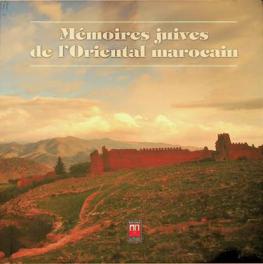
Mémoires juives de l'Oriental marocain
Ce livre est une évocation illustrée, réaliste et enthousiaste du patrimoine culturel judéo-marocain de lʹOriental, \"précisément cette particularité hébraïque qui constitue aujourdʹhui, ainsi que lʹa consacré la nouvelle Constitution du Royaume, lʹun des affluents séculaires de lʹidentité nationale.\" Premier du genre réalisé au Maroc, ce beau-livre marque ainsi une nouvelle rencontre, le dessein dʹune relecture des traces toujours vivantes dʹun passé commun, dont nous voulons honorer les moments heureux. Cʹest donc un témoignage qui interroge de façon inédite le vécu de lʹune des communautés les plus anciennes du Royaume, et sa relation à lʹautre. -- Publisher description.
Book

Selkea! Memories of Eating Non-Kosher Food among the Spanish–Moroccan Jewish Diaspora in Israel
Drawing on life-story interviews and ethnography conducted in Israel from 2009 to 2023, this article examines how members of the Spanish-speaking Moroccan–Jewish diaspora in Israel recalled their habits of eating non-kosher food in Morocco. We explore how these memories emerged in response to commonplace discourses that depict Moroccan Jews as a distinctly religious-traditional ethnic group, untouched by European secular influences, and dichotomous to modern secular cultures in Israel. Contrary to this image, members of the community whom we interviewed highlighted a Jewish Moroccan life that was deeply connected to Spanish colonialism and the broader Hispanic and Sephardi worlds. We focus specifically on the concept of selkear, a Haketia (Judeo-Spanish) term meaning to let something go, make an exception, or turn a blind eye. Our analysis of our participants’ memories provides a nuanced understanding of Jewish religiosity in the context of colonialism and of how Mizrahi–Sephardi immigrants in Israel reclaimed their Judaism. Highlighting the practice of eating non-kosher food is thus a strategy used to challenge dominant notions of rigid religious commitment within the Sephardi diaspora and their interpretation in Israel.
Journal Article

Between El-Horria and La Liberté
El-Horria/La Liberté was a bilingual, Judeo-Arabic and French, Jewish weekly newspaper published in Tangier, Morocco between 1914 and ca. 1924. This article offers a careful study of this newspaper in order to show the worldview it created for its consumers through discussion of issues its editor and authors deemed to be crucial for Jewish life in Morocco at the time. These ranged from the consequences of World War I to French colonialism, Jewish peoplehood, Zionism, or the reorganization and modernization of Jewish communities in Morocco. Through a comparison of writings in Judeo-Arabic and French, this article also unpacks the intersections between language, social hierarchy, socio-political commitments, and Jewish minority-Muslim majority relations in Morocco. Ultimately, this article demonstrates how El-Horria/La Liberté promoted the integration of French-speaking, intellectual, urban, Jewish elites into a Jewish world focused on eastern and central Europe, and how it tried to do the same for the larger group of Judeo-Arabic speaking Jews in the Moroccan interior, although it was sometimes challenged by the latter.
Journal Article