
Catalogue Search | MBRL


Are you sure you want to remove the book from the shelf?

{{itemTitle}}
185
result(s) for
"Jews in China"
Sort by:

Kosher Chinese : living, teaching, and eating with China's other billion
An irreverent account of the author's experiences as a Jewish-American Peace Corps volunteer serving in rural China describes his observations about the lives of China's interior populations and their complex relationships with local traditions and the rapid changes of modernization.
Book
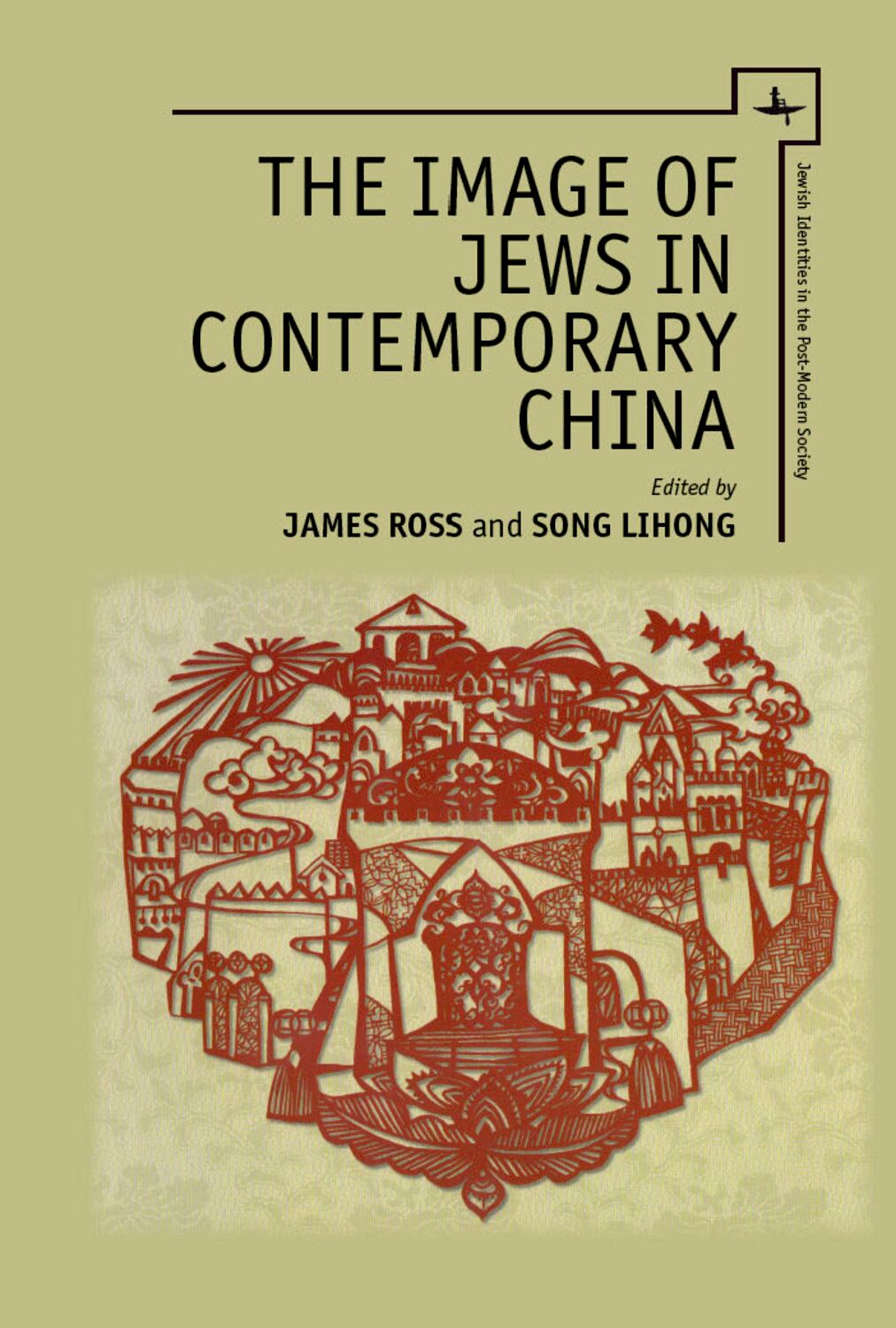
The Image of Jews in Contemporary China
Bookstores in Chinese cities are stocked with dozens of Chinese-language books on how Jews conduct business, manage the world, and raise their children. At least ten universities throughout China offer popular Jewish Studies programs, some with advanced degrees. Yet there are virtually no Jews in China. The Chinese are constructing an identity for a people that the large majority of them will never meet. This edited volume critically examines the image of Jews from the contemporary perspective of ordinary Chinese citizens. It includes chapters on Chinese Jewish Studies programs, popular Chinese books and blogs about Jews, China’s relations with Israel, and innovative examinations of the ancient Jewish community of Kaifeng.
eBook

Murder in Manchuria
In Murder in Manchuria , Scott D. Seligman explores an
unsolved murder set amid the chaos that reigned in China in the
run-up to World War II. The story unfolds against the backdrop of a
three-country struggle for control of Manchuria-an area some called
China's \"Wild East\"-and an explosive mixture of nationalities,
religions, and ideologies. Semyon Kaspé, a young Jewish musician,
is kidnapped, tortured, and ultimately murdered by disaffected,
antisemitic White Russians, secretly acting on the orders of
Japanese military overlords who covet his father's wealth. When
local authorities deliberately slow-walk the search for the
kidnappers, a young French diplomat takes over and launches his own
investigation. Part cold-case thriller and part social history, the
true, tragic saga of Kaspé is told in the context of the larger,
improbable story of the lives of the twenty thousand Jews who
called Harbin home at the beginning of the twentieth century. Scott
D. Seligman recounts the events that led to their arrival and their
hasty exodus-and solves a crime that has puzzled historians for
decades.
eBook

“Jewish Political Circles Denounce Every Kind of Terror?” Jewish Media Response to Kristallnacht in Japanese-Controlled Harbin
This article explores published Jewish responses to Kristallnacht as they appeared in the city of Harbin, which was controlled by Japan via the puppet entity “Manchukuo” during late 1938 and early 1939. The comments were carried mainly in the community’s weekly Evreiskaya Zhyzn’(Jewish Life) and, to a lesser extent, in Ha-Degel’(The Flag) published by the city’s Revisionist Zionists, both in Russian. The Japanese military in the Kwantung Army that ruled Manchukuo were presumably the main audience for the messages conveyed by the Harbin Jewish newspapers. Japanese perceptions of Jews reflected a growing anxiety about Soviet Russia, international communism, and their alleged links with Jews. In Harbin, these sentiments were energetically fueled by the anti-Bolshevik Russian community. More threatening, by mid-1938 the Nazi-Japanese alliance was burgeoning. This considerably raised the stakes for the Harbin Jews, who feared that the Japanese might adopt elements of Nazi antisemitic policies. Operating at a turbulent period in a volatile region, the Jewish newspapers had to self-censor their messages and carefully navigate their coverage of Kristallnacht (the Night of Broken Glass). Even so, some themes could not be avoided, most specifically Jewish resentment over the event. But the main target of this outrage, Nazi Germany, could not be called out by name. Another major issue was addressing Nazi accusations against the Jews raised in connection with Kristallnacht, even though these were not officially articulated by the Japanese. Particularly risky for the Harbin Jews was the question of how to come to terms with the alleged Jewish propensity for terror.
Journal Article

Wartime Shanghai and the Jewish Refugees from Central Europe
The study discusses the history of the Jewish refugees within the Shanghai setting and its relationship to the two established Jewish communities, the Sephardi and Russian Jews. Attention is also focused on the cultural life of the refugees who used both German and Yiddish, and on their attempts to cope under Japanese occupation after the outbreak of the Pacific War.
eBook

The Chinese Jews and the problem of Biblical authority in eighteenth- and nineteenth-century England
The Chinese Jews were thought to be one of the Lost Ten Tribes and to be in possession of an Old Testament dated before the medieval period. The attempts of Benjamin Kennicott, a biblical scholar at Oxford, to contact the Chinese Jews are discussed.
Journal Article

From Orientals to Imagined Britons: Baghdadi Jews in Shanghai
Studies and reminiscences, which dissect the communities of the Baghdadi trade diaspora, have so far tended to over-emphasize the smooth Anglicization process experienced by Baghdadi Jews in British India, Singapore and China in the late nineteenth and early twentieth century. The myth of the Sassoons as the ‘Rothschilds of the East’ has, in particular, distorted and enhanced the representation of Baghdadi Jews as wealthy, Anglicized and thoroughly integrated in British social circles. In reality, if we want to unravel the multi-layered history of Baghdadi Jews from India to Japan we must not only analyse in depth the complexities of the westernization process of the Baghdadi upper classes but also reconstruct carefully class divisions within Baghdadi communities. With this aim in mind, this essay will investigate the various strands of identity developed by Baghdadis during their stay in Shanghai and will especially focus on the local allegiances forged between Baghdadi and British settlers, the so-called Shanghailanders. The following pages will, at the same time, delineate the social structure of the Baghdadi community in Shanghai and will indicate that westernized affluent Baghdadis were forced to confront painfully their own ‘other’: destitute vagrant co-religionists who hailed from the Middle East and India and roamed between the various nodes of the Baghdadi diaspora. The period considered in this essay stretches from 1845, the year the first Baghdadi trader set foot in the city, to the middle of the 1930s when large numbers of Jewish refugees from Europe started to flock to Shanghai in search of a safe haven.
Journal Article

Protected Persons? The Baghdadi Jewish Diaspora, the British State, and the Persistence of Empire
Stein uses Hardoon's case to explore issues that reverberated through the early-twentieth-century Baghdadi, Mediterranean, and Middle Eastern Jewish diasporas. As the Ottoman Empire gave way to nation-states and mandates, how was the population of Jews in colonial and semicolonial settings--emigre merchants and their families residing in entrepots in India, Asia, the Middle East, and the Mediterranean Basin--to be legally defined by the state? What allegiances were at stake when extraterritorial status came into conflict with evolving national and international norms? The testamentary battle over Hardoon's fortune points to the intersection of various environments of modern colonial encounter, from Ottoman, Iraqi, and Indian to British and Chinese, to illustrate how Middle Eastern Jews negotiated the transition from imperial to national and informal colonial regimes.
Journal Article

The Kaifeng Jews: A Reconsideration of Acculturation and Assimilation in a Comparative Perspective
The permeable boundaries of the major components of Chinese religion (Confucianism, Daoism, Buddhism) and the relatively tolerant pluralism of the religious milieu are important factors in accounting for the religious acculturation of the Jewish community in the Chinese city of Kaifeng. A comparison of the acculturation of Chinese Jews with that of Muslims in Imperial China shows that, though the small size of the Jewish community and its lack of contact with other Jewish communities for a long period made it particularly susceptible to the influence of the Chinese milieu, this milieu was conducive to the acculturation of even a large minority. The unwillingness of the Catholic Church to compromise with the syncretistic milieu and its demand for an exclusive commitment from Chinese converts led to the expulsion of its missionaries. A comparison of Buddhism and Islam in China indicates that an important social structural basis for the long survival of the Kaifeng Jewish community was the combination of communal and congregational religion.
Journal Article

The Importance of Being Discovered: The Werner Von Boltenstern Shanghai Photograph and Negative Collection
The Werner von Boltenstern Shanghai Photograph and Negative Collection, housed in Loyola Marymount University’s William H. Hannon Library, is a series of photographs of 1930s–1940s Shanghai taken by Werner von Boltenstern. The images capture a time and place at a crossroads of culture and history. World War II and the Second Sino-Japanese War were raging and the city, a trade center populated by numerous peoples, including Chinese citizens, British, French, and American nationals, Sephardic and Russian Jews, and the occupying Japanese military, was receiving an influx of European Jews fleeing Nazi Europe. The rediscovery of this collection (it sat unused for many years) led to its digitization, a successful crowdsourcing effort to gather more metadata, and the incorporation of the collection into an LMU Literature of the Holocaust class digital project. Through these endeavors, the library has increased its understanding of the collection’s historical value, in particular as it relates to Holocaust studies and Jewish studies more broadly.
Journal Article