
Catalogue Search | MBRL


Are you sure you want to remove the book from the shelf?

{{itemTitle}}
11
result(s) for
"Jews-Politics and government-20th century"
Sort by:

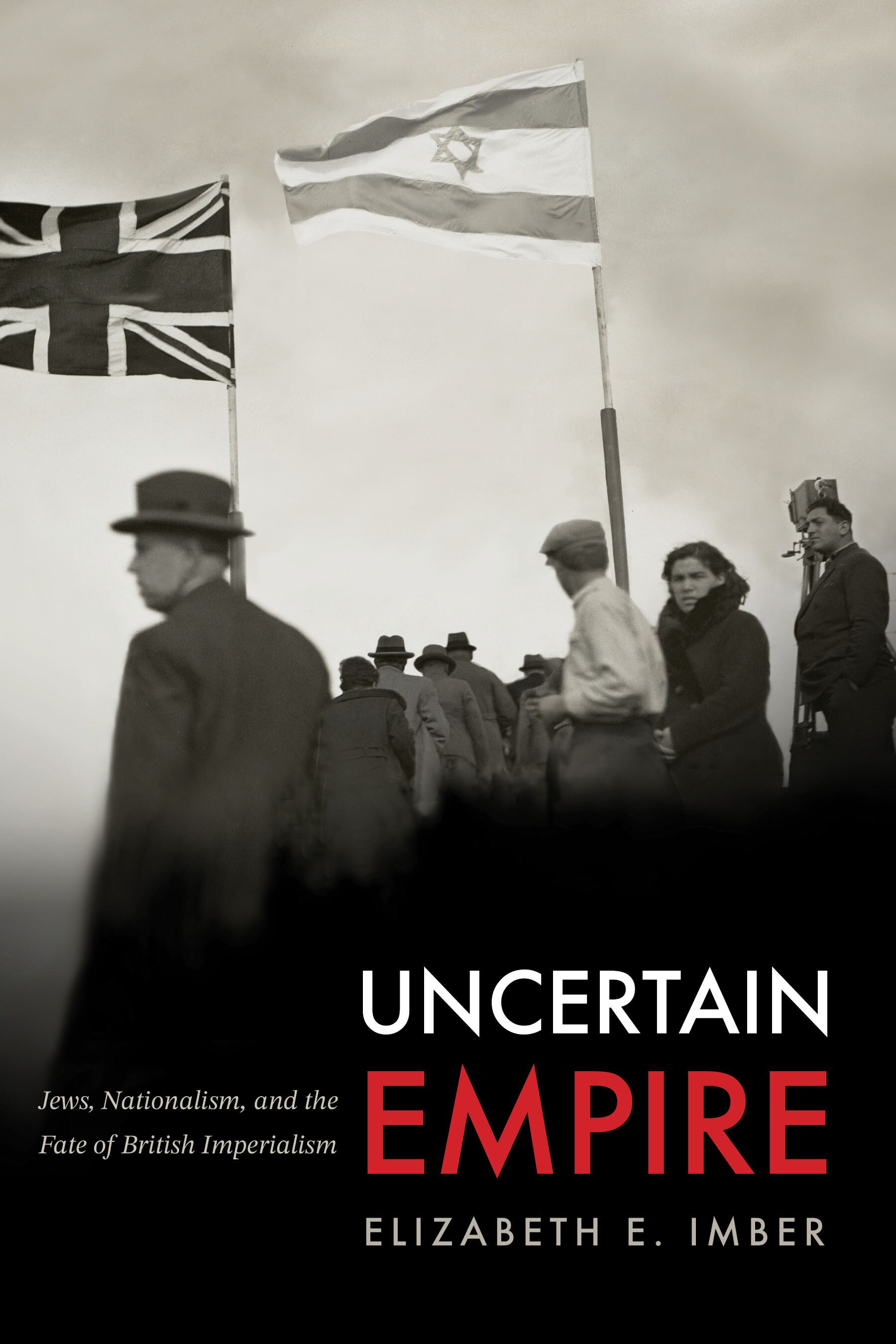
Uncertain Empire
Following the British conquest of Ottoman Palestine, Jews across the British Empire—from Jerusalem to Johannesburg, London to Calcutta—found themselves at the heart of global Jewish political discourse. As these intellectuals, politicians, activists, and communal elites navigated shifting political landscapes, some envisioned Palestine as a British dominion, leveraging imperial power for Jewish state-building, while others fostered ties with anticolonial movements, contemplating independent national aspirations. Uncertain Empire considers this intricate interplay between British imperialism, Zionism, and anticolonial movements from the 1917 British conquest of Palestine to the establishment of the state of Israel in 1948. Elizabeth Imber highlights diverse and sometimes conflicting visions of Jewish political futures, offering detailed case studies of key figures including Chaim Arlosoroff, Moshe Shertok, Helen Bentwich, Rachel Ezra, and Hermann Kallenbach. She explores a \"politics of uncertainty\" in which Jews engaged with both imperial stability and the rise of anticolonial mobilization, when many were likewise forced to reconsider Palestine as a viable refuge and political solution. Ultimately, this book provides a nuanced understanding of how the British Empire's fate became central to Zionist and broader Jewish political thought, revealing the complex intersections of empire, state power, and Jewish politics during a time marked by profound urgency and exigency.
eBook

1939 : the year that changed everything in Lithuania's history
\"This gripping and well-documented account of the history of the town of Vilnius and its surrounding region from the Polish ultimatum of March 1938, which forced Lithuania to open diplomatic relations with Poland, to the incorporation of Lithuania into the Soviet Union in June 1940 is set against the evolution of Lithuania's relations with her neighbours during this crucial period. It is a major contribution to the outbreak of war in September 1939 and the subsequent evolution of Nazi Soviet relations. Prof. Liekis presents a remarkable history based on archival sources never before utilized in any English-language study. In revealing the geopolitical, ideological, economic, social and ethnic dimensions of an immense tragedy in the heart of Europe, the author provides a new perspective on the unraveling of a society and nation during the initial days of World War II as prelude to the most violent period in European history.\"--Publisher's description.
Book

The International Jewish Labor Bund after 1945
The Jewish Labor Bund was one of the major political forces in early twentieth-century Eastern Europe. But the decades after the Second World War were years of enormous difficulty for Bundists. Like millions of other European Jews, they faced the challenge of resurrecting their lives, so gravely disrupted by the Holocaust. Not only had the organization lost many members, but its adherents were also scattered across many continents. In this book, David Slucki charts the efforts of the surviving remnants of the movement to salvage something from the wreckage.Covering both the Bundists who remained in communist Eastern Europe and those who emigrated to the United States, France, Australia, and Israel, the book explores the common challenges they faced-building transnational networks of friends, family, and fellow Holocaust survivors, while rebuilding a once-local movement under a global umbrella. This is a story of resilience and passion-passion for an idea that only barely survived Auschwitz.
eBook


The International Jewish Labor Bund after 1945
The International Jewish Labor Bund after 1945 charts the efforts of the surviving remnants of the movement to salvage something from the wreckage. Covering both the Bundists who stayed in communist Eastern Europe and those who emigrated to the United States, France, Australia, and Isreal, the book explores the common challenges they faced.
Book

Arrows in the Dark (Volumes 1 and 2)
Arrows in the Dark recounts and analyzes the many efforts of aid and rescue made by the Jewish community of Palestine—the Yishuv—to provide assistance to European Jews facing annihilation by the Nazis. Tuvia Friling provides a detailed account of the activities carried out at the behest of David Ben-Gurion and the Yishuv leadership, from daring attempts to extract Jews from Nazi-occupied territory, to proposals for direct negotiations with the Nazis. Through its rich array of detail and primary documentation, this book shows the wide scope and complexity of Yishuv activity at this time, refuting the idea that Ben-Gurion and the Yishuv ignored the plight of European Jews during the Holocaust.
eBook

The tragedy of a generation : the rise and fall of Jewish nationalism in Eastern Europe
The Tragedy of a Generation is the story of a failed ideal: an autonomous Jewish nation in Europe. It traces the origins of two influential strains of Jewish thought--Yiddishism and Diaspora Nationalism--and documents the waning hopes and painful reassessments of their leading representatives against the rising tide of Nazism and the Holocaust.
eBook

Militant Zionism in America : the rise and impact of the Jabotinsky movement in the United States, 1926-1948
This in-depth look at a controversial faction of American Zionism fills a void in the story of American Zionism--and in the story of American Judaism.This book recounts the fascinating and little-known story of the militant American Zionists who lobbied Congress, rallied American public opinion, and influenced British-American relations in their.
eBook
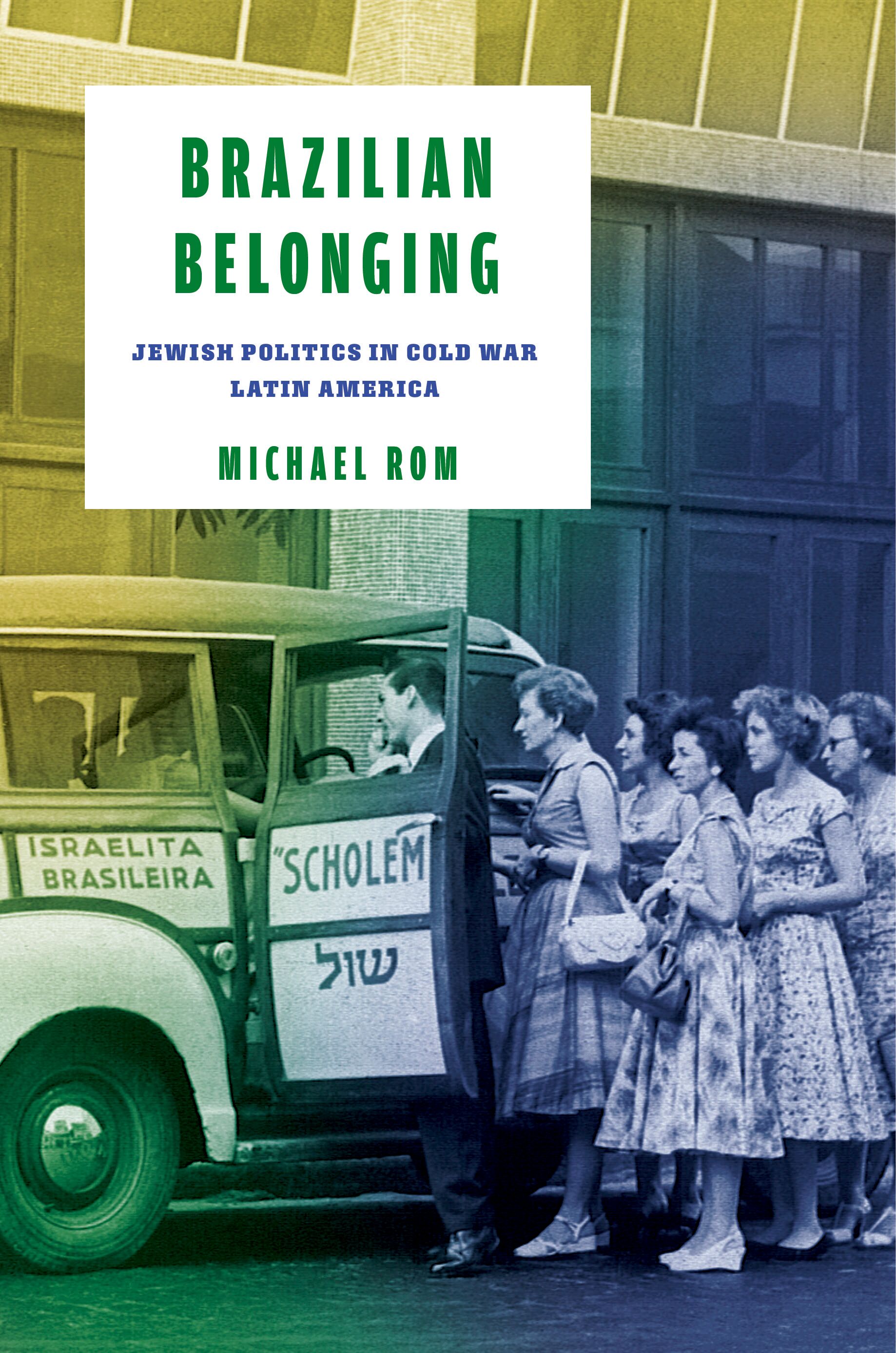
Brazilian Belonging
Brazilian Belonging examines a century of Brazilian Jewish political activism, from the onset of Jewish mass migration to Brazil in the early 1920s to the present. The home of the largest Jewish community living in a nonwhite-majority country in the world, and a country that has witnessed extended periods of democratic and dictatorial rule, Brazil offers an important window for rethinking Jewish ideas about race and nation, democracy and dictatorship, and local and global forms of state violence. In this book, Michael Rom highlights the important roles Brazilian Jews played in prominent social movements—movements that contested the meaning of the discourse of racial democracy, fought against the military dictatorship, and sought out new political possibilities following the return of democratic rule. He draws on extensive research—including previously unexamined secret police and intelligence records, the Brazilian Yiddish press, and oral history interviews—to illuminate decades of Brazilian Jewish activism under both democratic and dictatorial regimes. Offering the first study of modern Jewish politics and Latin American ethnic belonging throughout the Cold War, this book situates Brazilian Jewish activism within the transnational contexts of the immediate aftermath of the Holocaust, Cold War superpower rivalries, Latin American revolutionary insurgencies, and the Israeli-Palestinian conflict.
eBook