
Catalogue Search | MBRL


Are you sure you want to remove the book from the shelf?

{{itemTitle}}
43
result(s) for
"Jihad Fiction"
Sort by:

This life or the next
\"Tariq Khan is a Pakistani born and raised in Norway. An outsider in his own country-- adrift between two worlds divided by class, race, and culture-- he's always been searching for home. Alongside a flock of other streetwise young men, each looking for direction and each easily susceptible, Tariq finds his cause in the Muslim revival. Idealistic, driven by faith, and empowered with purpose, he's drawn to radical Islam-his last resort for achieving a sense of belonging, for embracing and being embraced. It's only when he enlists in the war against Syrian dictator Bashar al-Assad that Tariq's eyes are truly opened. Dispirited with the violence, faced with the consequences of his choices, and increasingly distanced by the brutalities of jihad, Tariq contends with spiritual struggles that are his alone. So are the stories he will tell to make sense of his life\"-- Provided by publisher.
BOOK

A BUTLERIAN HAUNTOLOGY
In this article, I engage with the backstory to Frank Herbert’s Dune saga, viz. The Butlerian Jihad, tracing its genealogy, and considering its possible relevance for thinking about and motivating an Islamicate response to artificial intelligence (AI) and cognate technologies. I argue the latter is a colonising phenomenon deployed along necropolitical lines against “the wretched of the earth”. My argument unfolds in a “nested structure”, beginning with an overview of The Butlerian Jihad and how it features in the Dune universe. I particularly examine how Herbert uses the term jihad and conflates it with crusade and explore a possible genealogy of The Butlerian Jihad, tracing its inspiration to “The Book of The Machines” in Samuel Butler’s novel Erewhon (1932 [1872]). Engaging with scholarly commentary on Butler’s work, I address implicit conceptions of class and race, particularly through the lenses of colonialism and the phenomenon of Other-ing. Considering Butler’s motivations for writing the novel, I explore how examining hauntology provides a pathway into a discussion of the potentialities of Luddism as a political project. Reframing Luddism along fugitive and decolonial lines, I conclude by exploring what it might mean to call for and enact a Butlerian Jihad today.
Journal Article
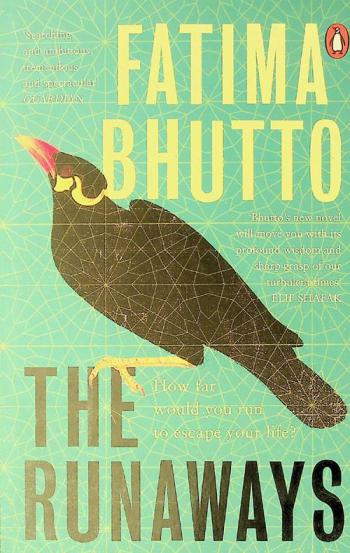
The runaways
Anita lives in Karachi's biggest slum. Her mother is a maalish wali, paid to massage the tired bones of rich women. But Anita's life will change forever when she meets her elderly neighbour, a man whose shelves of books promise an escape to a different world. On the other side of Karachi lives Monty, whose father owns half the city and expects great things of him. But when a beautiful and rebellious girl joins his school, Monty will find his life going in a very different direction. Sunny's father left India and went to England to give his son the opportunities he never had. Yet Sunny doesn't fit in anywhere. It's only when his charismatic cousin comes back into his life that he realises his life could hold more possibilities than he ever imagined. These three lives will cross in the desert, a place where life and death walk hand-in-hand, and where their closely guarded secrets will force them to make a terrible choice.
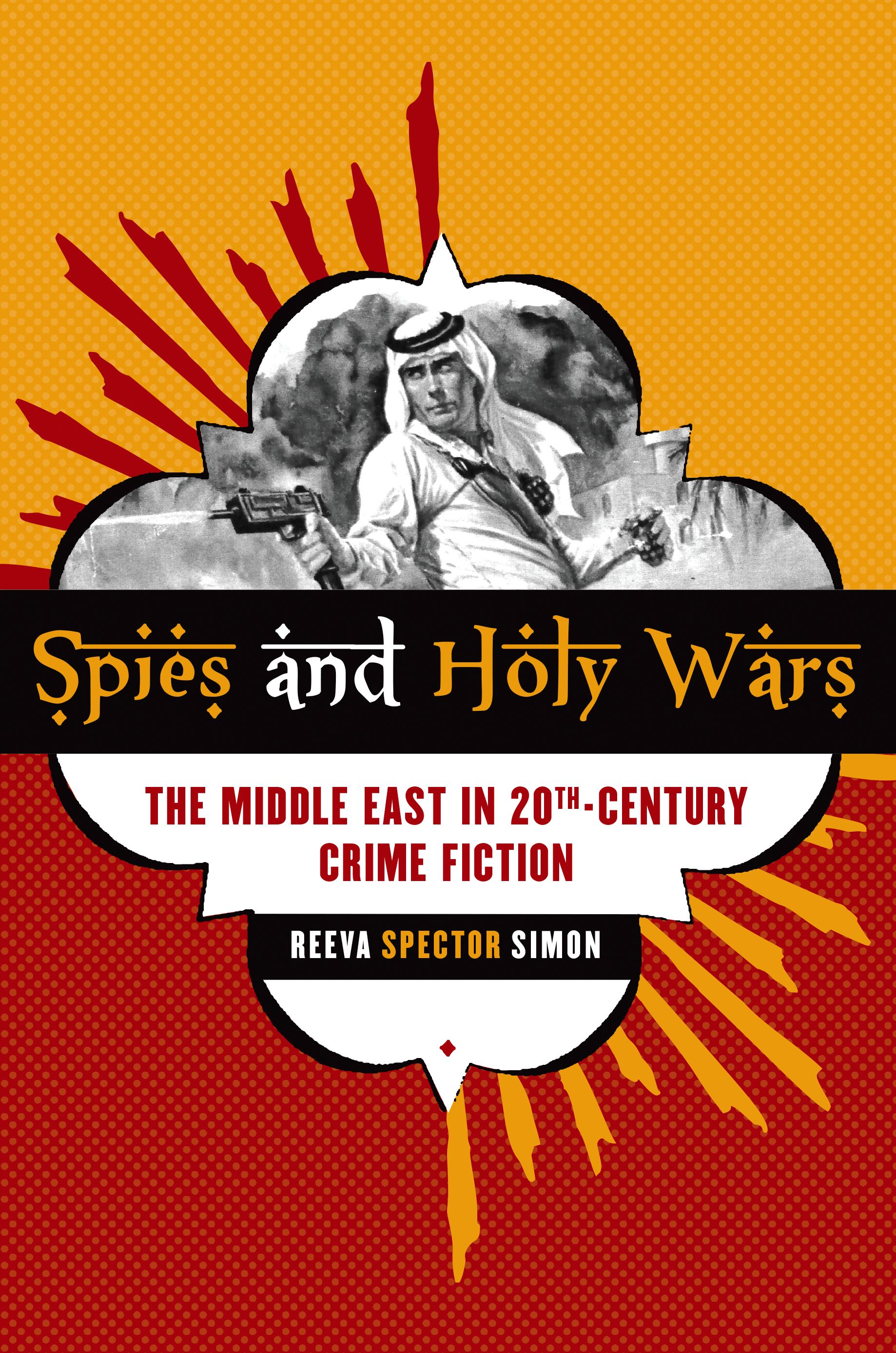
Spies and Holy Wars
Illuminating a powerful intersection between popular culture and global politics, Spies and Holy Wars draws on a sampling of more than eight hundred British and American thrillers that are propelled by the theme of jihad—an Islamic holy war or crusade against the West. Published over the past century, the books in this expansive study encompass spy novels and crime fiction, illustrating new connections between these genres and Western imperialism. Demonstrating the social implications of the popularity of such books, Reeva Spector Simon covers how the Middle Eastern villain evolved from being the malleable victim before World War II to the international, techno-savvy figure in today's crime novels. She explores the impact of James Bond, pulp fiction, and comic books and also analyzes the ways in which world events shaped the genre, particularly in recent years. Worldwide terrorism and economic domination prevail as the most common sources of narrative tension in these works, while military \"tech novels\" restored the prestige of the American hero in the wake of post-Vietnam skepticism. Moving beyond stereotypes, Simon examines the relationships between publishing trends, political trends, and popular culture at large—giving voice to the previously unexamined truths that emerge from these provocative page-turners.
eBook

PREVENTING A BUTLERIAN JIHAD: ARTICULATING A GLOBAL VISION FOR THE FUTURE OF ARTIFICIAL INTELLIGENCE
In one of my most beloved science-fiction novels of all time, the Dune series, Frank Herbert casts a bewildering image of the future. In a genre previously filled with machines and cyborgs, the author creates a revolutionary world with neither of those two things. The plot goes something like this: Many millenniums ago, there was a cosmic insurrection referred to as the \"Butlerian Jihad\" that led to artificial intelligence (AI) machines and cyborgs being outlawed in this new universe. One theory posits that the Butlerian Jihad was named after a woman named Jehanne Butler, whose pregnancy had been prematurely terminated without her knowledge or approval because an AI machine judged it to be unfit and unworthy of a full-fledged human life. What followed was a massive rebellion fueled by public outrage over the incident, the prohibition of \"thinking\" robots, and a much more draconian moral code that stated humans would no longer build machines \"in likeness of a human mind.\"
Journal Article

La suerte de los voluntarios yihadistas del estado islámico en la serie The State (TV, 2017)
La constitución del Estado Islámico (Dáesh o ISIS) se erigió como una realidad muy peligrosa, que iba a aprovecharse de la debilidad de Siria e Irak para convertirse en una seria amenaza para el equilibrio en Oriente Medio (entre 2014-2019). Su llamada a la yihad seduciría a miles de musulmanes de todo el mundo que acudieron a luchar por su consolidación y expansión, y ello preocuparía a los países occidentales que vieron como también acudían sus propios ciudadanos. La preocupación por este fenómeno dio lugar a la realización de la miniserie británica The State (TV, 2017), donde se trata y describe la vida y suerte de varios voluntarios europeos en los territorios bajo el dominio del Estado Islámico. Este artículo aborda, desde la perspectiva de la historia visual, las claves ideológicas y discursivas que plantea esta ficción televisiva.
Journal Article

Tolstoy's Enigmatic Final Hero: Holy War, Sufism, and the Spiritual Path in \Hadji Murat\
Considered an incredibly “anomalous” masterpiece, Tolstoy’s last work of fiction, Hadji Murat (1896–1904), renders the life and death of the legendary Avari warrior, Hadji Murat. The novella is aesthetically stunning and surprisingly devoid of Tolstoy’s opinionated authorial voice. With its ideologically muted nature, Hadji Murat has provoked “indecision and controversy” among critics, particularly since it impartially narrates phenomena the moralistic Tolstoy normally decried, like smoking, fornication, and especially violence. In this essay, I reconsider the question of Hadji Murat’s problematic place in Tolstoy’s oeuvre. I focus on the very aspects that have inspired the novella’s designation as an anomaly–Tolstoy’s depictions of brutal violence. Starting with the quagmire of violence, I show that Hadji Murat is not nearly so anomalous, but profoundly connected, precisely through violence, to Tolstoy’s later ideological beliefs. To this end, Islam, which has so far been omitted in scholarly discussions of Hadji Murat, is an essential component of my analysis. In particular, there has been no consideration of ties between Tolstoy’s faith and mainstream Sufi Islam, as practiced in nineteenth‐century Chechnya and Dagestan. A form of Islamic spirituality, Sufism informed the military resistance led by imam Shamil and his lieutenant Hadji Murat. Tolstoy, who spent time in the Caucasus, cites Sufi spirituality in early drafts of Hadji Murat. Sufi spirituality is implicitly significant in the novella where it motivates individual actions, especially during crisis moments on the violent battlefield. I argue that Sufism serves as the connecting thread between the violence in Hadji Murat and Tolstoy’s later spiritual beliefs. At different stages of his life, Hadji Murat has different motivations for fighting until he finally takes up the cause of jihad or “holy war” (termed gazavat in the North Caucasus). Tolstoy focuses on this concept, but moves beyond its conventional understanding in Sharia Islam to explore jihad in a wider spiritual context that intersects with Sufism. As I show, “holy war,” broadly conceived by Tolstoy as spiritually‐driven warfare, becomes the basis for bringing together outward practice and inner spirituality in Hadji Murat.
Journal Article

SAUDI NOVELISTS' RESPONSE TO TERRORISM THROUGH FICTION: A STUDY IN COMPARISON TO WORLD LITERATURE
The post-9/11 period has posited new questions for the Saudi society that required answers from different perspectives. The Saudi novelists tackled the issue of terrorism in their works and tried to define it and dig for its roots. Some blame the dominant religious-based culture for this phenomenon asking for more openness in the Saudi culture. Others take a defensive approach of the religious discourse blaming outside factors for this phenomenon. This positively connoted research uses the principles of deductive research and puts the Saudi novels that treat the theme of terrorism on par with some world literature that have the same concern excavating the common patterns such as (a) drive for terrorism and the lifestyle of a terrorist; (b) extreme religious groups and religious discourse; and (c) way of life: liberal West versus the Islamist. The selected novels are in three languages: Arabic, Urdu and English. Al-Irhabi 20 and Terrorist explore the background and transformation of the terrorists. Jangi, and Qila Jungi share almost identical events and ideological background, they explain the reasons for apparently irresistible attraction for Jihad. Along such a dichotomy, one can find varied degrees of analysis through a psycho-analytical and textual perspective.
Journal Article

Spies and Holy Wars
Illuminating a powerful intersection between popular culture and global politics,Spies and Holy Warsdraws on a sampling of more than eight hundred British and American thrillers that are propelled by the theme ofjihad-an Islamic holy war or crusade against the West. Published over the past century, the books in this expansive study encompass spy novels and crime fiction, illustrating new connections between these genres and Western imperialism.
Demonstrating the social implications of the popularity of such books, Reeva Spector Simon covers how the Middle Eastern villain evolved from being the malleable victim before World War II to the international, techno-savvy figure in today's crime novels. She explores the impact of James Bond, pulp fiction, and comic books and also analyzes the ways in which world events shaped the genre, particularly in recent years. Worldwide terrorism and economic domination prevail as the most common sources of narrative tension in these works, while military \"tech novels\" restored the prestige of the American hero in the wake of post-Vietnam skepticism. Moving beyond stereotypes, Simon examines the relationships between publishing trends, political trends, and popular culture at large-giving voice to the previously unexamined truths that emerge from these provocative page-turners.
eBook

From Flat to Round Men
Saudi fiction written by women reflects the rapid changes witnessed by Saudi Arabia as a result of oil wealth and globalization. Increased education and work opportunities, exposure to the outside world, and a better awareness of the cultural and political dynamics at work in society have enriched Saudi women’s literary expression and perception of character. In portraying male characters, women have increasingly steered away from flat, stereotyped, and preconceived notions of men to more balanced and informed representations of men’s behaviors and positions in society. Saudi women challenge gender expectations and undermine conventional concepts of masculinity by creating a variety of male images, such as the liberal-minded individual, the frustrated intellectual, the sexually disoriented male, the business tycoon, the hapless immigrant, and the Islamic jihadist—all as products of cultural, religious, and political systems underpinning Saudi society.
Journal Article