
Catalogue Search | MBRL


Are you sure you want to remove the book from the shelf?

{{itemTitle}}
132
result(s) for
"Jinn"
Sort by:

Catch a wishing star
Shimmer and Shine's best friend, Leah, is coming over for a sleepover, and the genies have a surprise for her.
Book

Islamic Law Perspective regarding the Weretiger in the Malay Archipelago
This article discusses the origin, traits and role of the Weretiger within the context in Malay Archipelago communities. The Weretiger is type of Jinn that existence pre-dates human and its’ relationship with human have been establish prior to Islam. The Islamisation of the Malay Archipelago see’s that a syncretisation of old tradition into Islam and thus the practice of Weretiger still exists until todays. The scholar (ulama) are still debating in the Islamic Law perspective not just the ties between Weretiger and human but Jinn and human as whole using references from Al-Qur’an, Hadith and previous scholarly works.
Journal Article

Legends of the fire spirits : jinn and genies from Arabia to Zanzibar
Exploring the enduring phenomenon of the jinn, 'Legends of the Fire Spirits' draws on long-forgotten testimonies, medieval histories, colonial records, anthropologists' reports and travellers' tales to explore the different types of jinn, their behaviour, society, culture and long history of contact with humankind.
Book

Fakhr al-Dīn al-Rāzī on the Existence and Nature of the Jinn
This article reconstructs Fakhr al-Dīn al-Rāzī’s (d. 1210) systematic treatment of the jinn in his Great Exegesis (al-Tafsīr al-Kabīr) and his summa The Sublime Objectives in Metaphysics (al-Maṭālib al-ʿĀliya min al-ʿIlm al-Ilāhī). In these works, al-Rāzī treats the jinn not as a marginal curiosity but as a test case for probing core metaphysical categories such as substance, embodiment, and divine action. His analysis unfolds through a sequence of guiding questions. Do the jinn exist at all? If not, we arrive at (1) the Denialist View. If they do exist, they must be either immaterial or material. The first yields (2) the Immaterialist View. The second raises the further question of whether bodies differ in essence or share a single essence. If they differ, we arrive at (3) the Non-Essentialist Corporealist View. Notably, these first three views are associated, in different ways, with various figures in the falsafa tradition. If they share a single essence, this produces the Essentialist Corporealist position, which then divides according to whether bodily structure is metaphysically necessary for life and agency. If not necessary, this produces (4) the Essentialist Corporealist—Structural Independence View, associated with the Ashʿarīs. If necessary, it leads to (5) the Essentialist Corporealist—Structural Dependence View, associated with the Muʿtazilīs. Al-Rāzī rejects (1) and (5), but he leaves (2), (3), and (4) as live possibilities. While he shows greater sympathy for (4), his broader purpose is not to settle the matter but to map the full range of theological and philosophical options. Al-Rāzī’s comprehensive exposition reflects the wider dialectic between falsafa, Ashʿarī theology, and Muʿtazilī theology, showcasing a sophisticated willingness to engage and entertain multiple metaphysical possibilities side by side. The result is an exercise in systematic metaphysics, where the question of the jinn, as liminal beings, becomes a means for interrogating broader ontological commitments in Islamic theology and philosophy.
Journal Article


The Status of Jinn as Companions of the Prophet Muhammad and Their Tradition in the Hadith Narration
The existence of hadith narrators from among the jinn has been acknowledged since the early Islamic centuries. The status of jinn as narrators can be verified through recorded chains of transmission or contextually within the text of hadith. However, the credibility (al-'adalah) and accuracy (al-dabt) of jinn as narrators have been subjects of scholarly debate. This study evaluates the status of jinn narrators, identifies their names, and examines their interactions in transmitting hadith according to the hadith tradition. By analyzing historical and social contexts, this research discovers 51 jinn narrators, concluding that their status is classified asjahalah (uncertain). Scholars of hadith have largely rejected and prohibited the transmission of hadith from jinn. An index of jinn narrators has been compiled to prevent confusion stemming from hadith dissemination based on claims, fantasies, or imagination.
Journal Article
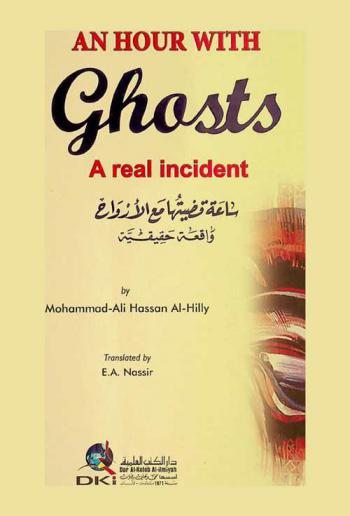
Experience vs. Explanation: Jinn and Demons in Islam and the Desert Fathers as a Case Study in Spirituality
The discipline of spirituality can be described as the study of human experience of encounter with the transcendent and our lived response to that encounter. There are commonalities to our experience of transcendence that cross the divides of culture and language, commonalities which are often obscured when we theologize about our experience. If we examine the concept of jinn, both among pre-Islamic peoples and in the Qur’an and Hadith and compare this to the demons described in The Life of Antony and The Sayings of the Desert Fathers, we see remarkable similarities. These similarities give evidence that the beliefs in jinn in early Islam and in demons among the Desert Fathers are grounded in a common desert experience. As the centers of theological activity move away from the desert, we find this experience explained by Christianity and Islam in diverse ways. The contrast between descriptive narrative and the subsequent theologizing exemplifies a movement from common spiritual experience to differing theological interpretation.
Journal Article

Winter wishes!
When Nickelodeon's Shimmer and Shine accidentally bring home two mischievous ice sprites, the twin genies must return the sprites before their palace becomes a winter wonderland! Boys and girls ages 4 to 6 will love this Step 2 deluxe Step into Reading leveled reader based on Nickelodeon's Shimmer and Shine that features over 30 shiny stickers. A perfect holiday or winter read! Step 2 Readers use basic vocabulary and short sentences to tell simple stories. For children who recognize familiar words and can sound out new words with help. Boom Zahramay! Join the madcap, magical adventures of genie-in-training twin sisters Shimmer and Shine as they grant wishes for their best human friend Leah and show preschoolers that things are always better when you work together. --Publisher
Book

Perceptions and Health-Seeking Behaviour for Mental Illness Among Syrian Refugees and Lebanese Community Members in Wadi Khaled, North Lebanon: A Qualitative Study
This is a qualitative exploration of the perceptions of mental health (MH) and their influence on health-seeking behaviour among Syrian refugees and the Lebanese population in Wadi Khaled, a rural area of Lebanon bordering Syria. Eight focus group discussions and eight key informant interviews were conducted with male and female Syrian refugees and Lebanese community members from March to April 2018. MH illness was associated with stigma, shame and fear among both populations. Beliefs surrounding mental illness were strongly linked to religious beliefs, including
Jinn
. Religious healers were considered the first line of help for people with mental illnesses, and were perceived as culturally acceptable and less stigmatizing than MH professionals. It is essential for MH professionals to build trust with the communities in which they work. Collaboration with religious healers is key to identifying MH symptoms and creating referral pathways to MH professionals in this context.
Journal Article