
Catalogue Search | MBRL


Are you sure you want to remove the book from the shelf?

{{itemTitle}}
26,270
result(s) for
"Job stress."
Sort by:


How to Thrive at Work
Tried and tested strategies to promote mindfulness, motivation and productivity at work, this book helps you face the demands of your job whatever your working environment and whatever stage you are at in your career.
eBook

Tech for Teacher Wellness
Get practical strategies for using technology to reclaim more personal space and time; connect with colleagues; and make positive changes in your life, in the classroom and on campus.Educators are feeling overwhelmed.
eBook

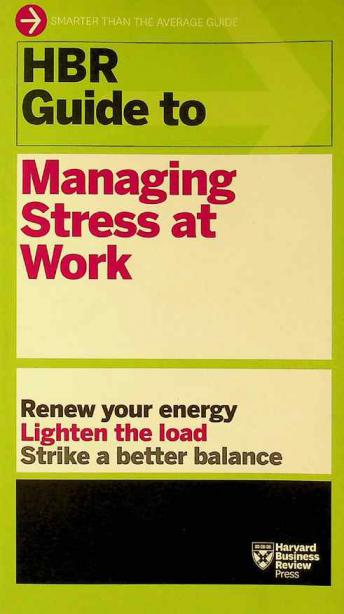
HBR guide to managing stress at work
When your job is demanding so much from you that it's starting to wear you down, here's how to stay productive, cope with the pressure, renew your energy, and perform at your best.
Book

The Routledge Companion to Mindfulness at Work
Given the ever-growing interest in the benefits of mindfulness to organizations and
the individuals who work in them, this Companion is a comprehensive
primary reference work for mindfulness (including creativity and flow) in the
workplace, including business, healthcare, and educational settings.
Research shows that mindfulness boosts creativity through greater insight,
receptivity, and balance, and increases energy and a sense of well-being. This
Companion traces the genesis and growth of this burgeoning
field, tracks its application to the workplace, and suggests trends and future
directions.
With contributions from leading scholars and practitioners in business, leadership,
psychology, healthcare, education, and other related fields, The Routledge
Companion to Mindfulness at Work is an extensive reference work which
will be a vital resource to the fields of management and organizational studies,
human resource management, psychology, spirituality, cultural anthropology, and
sociology. Each chapter will present a listing of key topics, a case or situation
that illustrates the application of the themes, workplace lessons, and reflection
questions.
eBook


Staying Mentally Healthy During Your Teaching Career
The mental health of teachers in school is just as important as the well-being of the pupils they support. Recent research reveals some alarming statistics, including that 74% of teachers are unable to relax and have a poor work-life balance. This book examines a range of relevant issues including workload, managing behaviour, developing resilience and managing professional relationships in order to address some of these concerns and provide comprehensive guidance and workable, evidence-informed strategies to support all those teaching in schools and colleges.
eBook


Sleep Satisfaction May Modify the Association between Metabolic Syndrome and BMI, Respectively, and Occupational Stress in Japanese Office Workers
The association between obesity and psychological stress is ambiguous. The aim is to investigate the association between metabolic syndrome (MetS) and body mass index (BMI), respectively, with occupational stress among Japanese office workers. The study is a secondary analysis of the intervention group from a randomized controlled trial. There are 167 participants included in the analysis. Occupational stress is self-reported using the Brief Job Stress Questionnaire (BJSQ). BMI and the classification of MetS/pre-MetS was based on the participants’ annual health check-up data. The primary exposure is divided into three groups: no MetS, pre-MetS, and MetS in accordance with Japanese guidelines. The secondary exposure, BMI, remains as a continuous variable. Multiple linear regression is implemented. Sensitivity analyses are stratified by sleep satisfaction. Pre-MetS is significantly associated with occupational stress (7.84 points; 95% CI: 0.17, 15.51). Among participants with low sleep satisfaction, pre-MetS (14.09 points; 95% CI: 1.71, 26.48), MetS (14.72 points; 95% CI: 0.93, 28.51), and BMI (2.54 points; 95% CI: 0.05, 4.99) are all significantly associated with occupational stress. No significant associations are observed in participants with high sleep satisfaction. The findings of this study indicate that sleep satisfaction may modify the association between MetS and BMI, respectively, and occupational stress.
Journal Article