
Catalogue Search | MBRL


Are you sure you want to remove the book from the shelf?

{{itemTitle}}
2,422
result(s) for
"John Dee"
Sort by:

Black swan rising
\"New York jeweller Garet James has her fair share of problems : money, an elderly father, a struggling business. One day she comes across an antiques shop she'd never noticed before. The owner possesses an old silver box that's been sealed shut. Would she help an old man and open it, perhaps ? She does ... and that night strange things begin to happen. It's as if her world-our world-has shifted slightly, revealing another, parallel place that co-exists without our knowledge : the world of the Fey ... Garet learns that one of her ancestors was 'the Watchtower': an immortal chosen to stand guard over the human and the fey worlds-a role that she has, it seems, inherited from her mother. But the equilibrium between these two existences is under threat. The 16th-century magician and necromancer Dr John Dee has returned, the box has been opened and the demons of Despair and Discord released. In a race against time and impending apocalypse, it is Garet who must find Dee --- and close the box.\" -- Provided by publisher.

The mirror, the magus and more: reflections on John Dee's obsidian mirror
The obsidian mirror associated with the Elizabethan polymath and magus John Dee (1527–1608/1609) has been an object of fascination for centuries. The mirror, however, has a deeper history as an Aztec artefact brought to Europe soon after the Spanish conquest. The authors present the results of new geochemical analysis, and explore its history and changing cultural context to provide insights into its meaning during a period in which entirely new world views were emerging. The biography of the mirror demonstrates how a complex cultural history underpins an iconic object. The study highlights the value of new compositional analyses of museum objects for the reinterpretation of historically significant material culture.
Journal Article
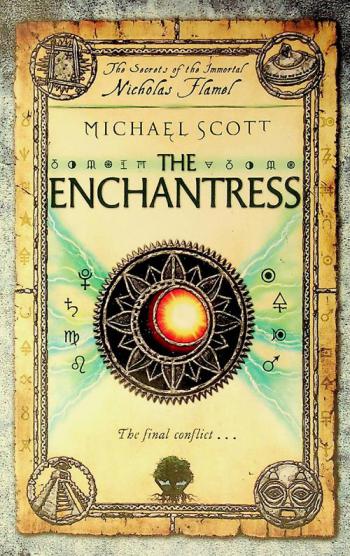
The enchantress
\"The twins of prophecy have been split. Nicholas Flamel is near death. John Dee has the swords of power. And Danu Talis has yet to fall. The future of the human race lies in the balance--how will the legend end?\"--Provided by publisher.

Magic as Technological Dominion: John Dee’s Hydragogy and the Draining of the Fens in Ben Jonson’s The Devil is an Ass
This paper explores the ambiguous role of magic in the controversy over the draining of the fens, the last bastion of wilderness in seventeenth-century England. In what now looks like an early form of environmentalist resistance to the destruction of these wetlands, opponents of the drainage accused the undertakers of invoking diabolical aid in their audacious efforts to tamper with God’s creation. Evidence of this mentality can be found in both William Shakespeare’s The Tempest and Ben Jonson’s The Devil is an Ass. Via a close reading of Jonson’s comedy, this paper navigates the confluence of magic, technology, and “projection” in the ideological debate surrounding the fens. Just as the traditional Vice figures (Iniquity and Pug) find themselves out-devilled by Jacobean Londoners, the play dramatizes the appropriation and displacement of a residual poetics of enchantment by the emergent discourses of economics and applied engineering. A tendency to equate magic with hydro-engineering technology may have been encouraged by John Dee’s involvement in the project. Drawing on an unpublished manuscript in the Ashmole collection at the Bodleian Library, this paper seeks to uncover the extent and impact of Dee’s role in the drainage. Advocates of the drainage, however, not only denied any supernatural involvement but also counterattacked by accusing their opponents of credulity and magical thinking. They characterized the native fen-dwellers as superstitious heathens and cast a scathing eye on local folklore depicting the fens as a demon-haunted wasteland. In pro-drainage documents, the proposed draining of the fenlands becomes tantamount to an exorcism, purging the rural backwaters of paganism and witchcraft. Wetlands management will now be conducted through applied engineering rather than magical incantations. A little known Jacobean ballad, “The Powte’s Complaint” (c. 1619) revives these animistic tropes to protest the fen’s destruction. Jonson’s play may explain why this tactic was doomed to fail and why this poem has been forgotten. As the credibility of magic eroded in the mid-seventeenth century, opponents of the drainage instead sought to stir up public resentment against the foreignness of the Dutch under-takers rather than their supposed collusion with supernatural forces. Jonson’s own projection that the drainage was an impossible con (like alchemy) would prove inaccurate. Nevertheless, The Devil is an Ass stands as the one of the most ecologically-engaged texts in the canon of early modern English drama.
Journal Article
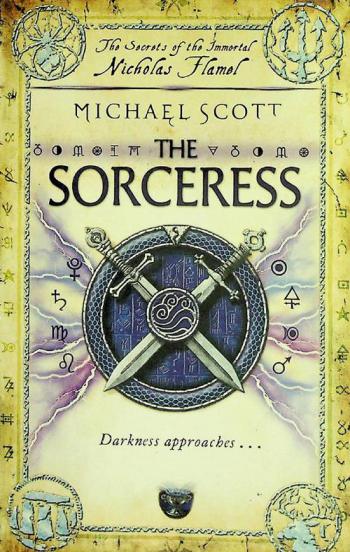
The sorceress
Dr John Dee has destroyed Paris in his mission to find Nicholas Flamel and Sophie and Josh Newman. The two missing pages of the book of \"Abraham The Mage\" are still with them and the Dark Elders need them for the Final Summoning. They will not rest until they are in power and the human race has been destroyed. Nicholas Flamel knows he must protect Josh and Sophie and the pages from the Dark Elders. For this he must rely on Clarent - the sister sword to Excalibur - and the sword's evil power makes it nearly impossible to use without darkness seeping into the soul of whoever wields it. What will be the price to pay for the twins to remain protected and the Dark Elders to be defeated?

Transformer and Influencer: Giovanni Battista Ramusio’s Impact on Western European Geography
In the mid-sixteenth century, the study of cosmography was in a state of upheaval in Western Europe, for the European voyages of exploration had disrupted the old ideas of the nature and structure of the world. As a consequence, cosmographers and geographers struggled to accommodate the ever-expanding influx of new empirical knowledge into their works. In the 1550s the Venetian Giovanni Battista Ramusio compiled the Navigationi et viaggi, initiating a new form of geography which endeavoured to present a world cosmography through the eyes of travellers, ideally transmitting the knowledge gained from an age of exploration. In framing his work, Ramusio used both his knowledge of the classics and his humanist editorial skills, while his tests for inclusion derived from attested observation. Over seventy narratives, originally written in a variety of languages, were presented by Ramusio in vernacular Italian and skilfully woven together with intervening Discorsi, written by Ramusio by way of commentary. Ramusio’s forensic editorial skills, mastery in acquiring texts which had hitherto seen little or no printed circulation, diligence in translating, editing and presenting them in an accessible format made his work invaluable. Proposals to republish it in French or English, however, never came to fruition; therefore, scholars had to turn to the vernacular Italian for the information. The article examines how theNavigationi et viaggi became a bedrock of European geographical knowledge examining, in particular, its use by the English geographer John Dee and the French cosmographer royal, André Thevet. It shows how the travellers’ tales, mediated through the hands of a sedentary Venetian, crisscrossed Europe and became fundamental in creating a new geographical understanding dependent on the words of the eyewitness.
Journal Article
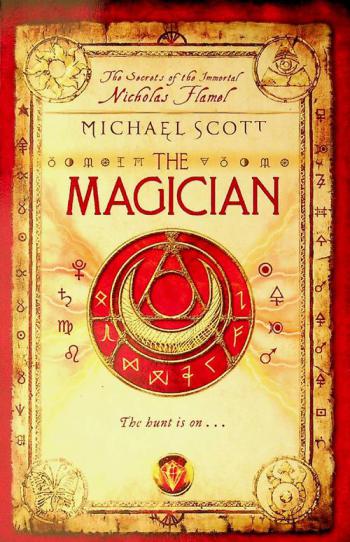
The magician
Fifteen-year-old twins Sophie and Josh Newman continue their magical training in Paris with Nicholas Flamel, Scatty, and the Comte de Sant Germaine, pursued by Doctor Dee and the immortal Niccolo Machiavelli.


The necromancer
Back in London, fifteen-year-old twins Sophie and Josh Newman must determine whom they can and cannot trust as they search for both Scatty and an immortal who can teach Josh the magic of fire, while Doctor Dee and Machiavelli continue to seek power.
Book
