
Catalogue Search | MBRL


Are you sure you want to remove the book from the shelf?

{{itemTitle}}
5,177
result(s) for
"John Dewey"
Sort by:

The Oxford handbook of Dewey
John Dewey was the foremost philosophical figure and public intellectual in early to mid-twentieth century America. He is still the most academically cited Anglophone philosopher of the past century, and is among the most cited Americans of any century. In this comprehensive volume spanning thirty-five chapters, leading scholars help researchers access particular aspects of Dewey's thought, navigate the enormous and rapidly developing literature, and participate in current scholarship in light of prospects in key topical areas. Beginning with a framing essay by Philip Kitcher calling for a transformation of philosophical research inspired by Dewey, contributors interpret, appraise, and critique Dewey's philosophy under the following headings: Metaphysics;0Epistemology, Science, Language, and Mind; Ethics, Law, and the Starting Point; Social and Political Philosophy, Race, and Feminist Philosophy; Philosophy of Education; Aesthetics; Instrumental Logic, Philosophy of Technology, and the Unfinished Project of Modernity; Dewey in Cross-Cultural Dialogue; The American Philosophical Tradition, the Social Sciences, and Religion; and Public Philosophy and Practical Ethics.
Book

John Dewey's ethics : democracy as experience
John Dewey, widely known as \"America's philosopher,\" provided important insights into education and political philosophy, but surprisingly never set down a complete moral or ethical philosophy. Gregory Fernando Pappas presents the first systematic and comprehensive treatment of Dewey's ethics. By providing a pluralistic account of moral life that is both unified and coherent, Pappas considers ethics to be key to an understanding of Dewey's other philosophical insights, especially his views on democracy. Pappas unfolds Dewey's ethical vision by looking carefully at the virtues and values of ideal character and community. Showing that Dewey's ethics are compatible with the rest of his philosophy, Pappas corrects the reputation of American pragmatism as a philosophy committed to skepticism and relativism. Readers will find a robust and boldly detailed view of Dewey's ethics in this groundbreaking book.
eBook


The Problematic Public
Almost one hundred years have passed since Walter Lippmann and
John Dewey published their famous reflections on the \"problems of
the public,\" but their thoughts remain surprisingly relevant as
resources for thinking through our current crisis-plagued
predicament. This book takes stock of the reception history of
Lippmann's and Dewey's ideas about publics, communication, and
political decision-making and shows how their ideas can inspire a
way forward.
Lippmann and Dewey were only two of many twentieth-century
thinkers trying to imagine how a modern industrial democracy might
(or might not) come to pass, but despite that, the \"Lippmann/Dewey
debate\" became a symbol of the two alleged options: an epistocracy,
on the one hand, and grassroots participation, on the other. In
this book, distinguished scholars from rhetoric, communication,
sociology, and media and journalism studies reconsider this debate
in order to assess its contemporary relevance for our time, which,
in some respects, bears a striking resemblance to the 1920s. In
this way, the book explains how and why Lippmann and Dewey are
indispensable resources for anyone concerned with the future of
democratic deliberation and decision-making.
In addition to the editor, the contributors to this volume
include Nathan Crick, Robert Danisch, Steve Fuller, William Keith,
Bruno Latour, John Durham Peters, Patricia Roberts-Miller, Michael
Schudson, Anna Shechtman, Slavko Splichal, Lisa S. Villadsen, and
Scott Welsh.
eBook

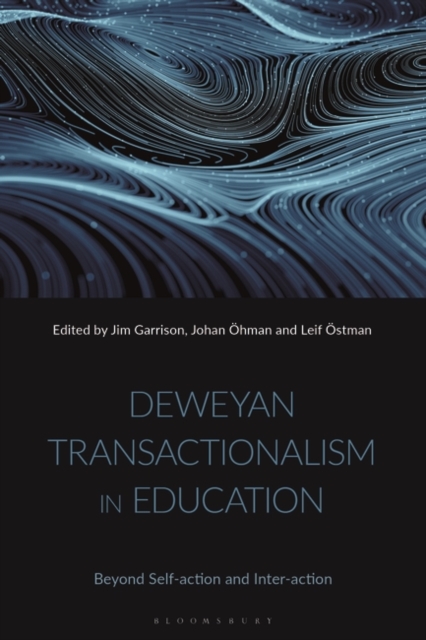
Deweyan Transactionalism in Education
Philosophers of education are largely unaware of Dewey’s concept of transactionalism, yet it is implicit in much of his philosophy, educational or otherwise from the late 1890s onwards. Written by scholars from Belgium, Italy, Norway, Sweden, and the USA, this book shows how transactionalism can offer an entirely new way of understanding teaching and learning, the sociocultural dimension of education, and educational research. The contributors show how the concept helps us to see beyond an array of false dualisms, such as mind versus body, self versus society, and organism versus environment, as well as an equally vast array of binaries, such as inside-outside, presence-absence, and male-female. They introduce the key critical ideas that transactionalism represents including emergence; living in a world without a within; the temporally and extensionally distributed nature of meaning, mind, and self. The theoretical discussion is grounded in practical discussions of educational issues and settings including museum education, coding and computer science, drama, teacher education, policy reform, and the Covid-19 pandemic.
eBook
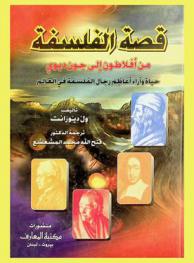
قصة الفلسفة من أفلاطون إلى جون ديوي : حياة وآراء أعاظم رجال الفلسفة في العالم /
الكتاب بدأ بأفلاطون وسقراط ثم أرسطو والعلم اليوناني وبعدها قفز إلى فرانسيس بيكون في القرن السادس عشر في تجاهل تام للفلاسفة المسلمين والأوروبيين منهم خصوصا مثل ابن رشد فهو قرطبي من الأندلس وكأن الفلسفة ماتت باندثار الحضارة اليونانية ولم تبعث إلا متأخرا لكن الكتاب بعمومه جميل فهو يتحدث عن الفلاسفة وفلسفتهم وفي آخر الفصل يقدم نقدا للفلسفة وإن كان أحيانا النقد يظهرفي بعض المقاطع في فصول عرض الأفكارابتدأ بأفلاطون وأرسطو وسقراط ثم فرانسيس بيكون يليه سبينوزا ثم فولتير وعصر التنوير ثم كانت وشوبنهاور وهنري سبنسر يليهم نيتشه لينتقل بعد ذلك إلى الفلاسفة المعاصرون في أوروبا وهم برجسون وكروتشي وبرتراند رسل وأخيرا فلاسفة أمريكا وهم سنتيانا ووليم جيمس وأخيرا ديوي الذي ختم به الكتاب.
Book

The Handbook of Dewey's Educational Theory and Practice
Part 1: Dewey and Educational Theory -- Dewey's Social Imaginary of Democratic Education: Democracy's Role in Educating a Democratic Citizenry / Patrick M. Jenlink -- What Is a Democracy?: What Does Education in a Democracy Need to Be According to Dewey? / Elizabeth Meadows -- Mindfulness and Progressive Education / Kyle A. Greenwalt and Cuong H. Nguyen -- John Dewey and Social Justice Education / Peter Nelsen -- John Dewey and Feminism / Barbara J. Thayer-Bacon -- Deweyan Pragmatism as Requisite to Postmodern Thought / Jessica A. Heybach and Eric C. Sheffield -- Critical Thinking and Democratic Schooling / Maura Striano -- Education for Democratic Citizenship from Critical Thinking to Inquiry Learning / William R. Caspary -- Part 2: Dewey and Educational Practice -- A Dewey Framework for Moral Training for Democracy in Education / Alison Taysum -- Examining Educative Versus Mis-Educative Experiences in Learning to Teach / Patrick M. Jenlink and Karen Embry Jenlink -- Souls in the Lab: Building Rich Practical Experiences for Student Teachers and Young Children / Stephanie Burdick-Shepherd -- A Deweyan Faith in Democratic Education: A Teacher's Dedication to Ensuring All Students Are Included / Michael E. Hess and Theodore J. Hutchinson -- Promoting Educational Equity through Democratizing Intelligence / Laura M. Harrison and Shah Hasan -- Living Curriculum as Commonplace / Margaret Macintyre Latta, Rhonda Draper, Kelly Hanson and Karen Ragoonaden -- Adaptive Challenge: Teachers as Lead Professionals for Democratic Living / Daniel J. Castner. -- Part 3: Dewey and the Scholar-Practitioner Educational Leader -- Educational Leadership for Democratic Culture / Robert Karaba -- Civic Efficiency as A Democratic Ideal: Social Renewal through Dewey's Continuous, Integrated Education / Charles L. Lowery and Connor Fewell -- Organic Pedagogy: Where Dewey's Democracy and Foucault's Poststructuralism Meet: Pedagogical Experiences, Applications, and Critique / Chetanath Guatam -- Experienced, but Not Yet Educated: How Dewey Should Still Contribute to Educational Philosophy / Chance D. Mays -- Implications of Dewey's Pragmatism for Digital Media Pedagogy / Lance E. Mason -- How the Dewey-Lippmann Debate Informs Contemporary Education Policy: How the Dewey-Lippmann Debate Informs Contemporary Education Policy / Monica Hatfield Price -- John Dewey and the \"Problem\" of the Mundane: Implications for Philosophy of Educational Administration / Ali H. Hachem -- \"In the last twenty-five years there has been a great deal of scholarship about John Dewey's work, as well as continued appraisal of his relevance for our time, especially in his contributions to pragmatism and progressivism in teaching, learning, and school learning. The Handbook of Dewey's Educational Theory and Practice provides a comprehensive, accessible, richly theoretical yet practical guide to the educational theories, ideals, and pragmatic implications of the work of John Dewey, America's preeminent philosopher of education. Edited by a multidisciplinary team with a wide range of perspectives and experience, this volume will serve as a state-of-the-art reference to the hugely consequential implications of Dewey's work for education and schooling in the 21st century. Organized around a series of concentric circles ranging from the purposes of education to appropriate policies, principles of schooling at the organizational and administrative level, and pedagogical practice in Deweyan classrooms, the chapters will connect Dewey's theoretical ideas to their pragmatic implications\".
eBook
The Handbook of Dewey's Educational Theory and Practice
\"In the last twenty-five years there has been a great deal of scholarship about John Dewey's work, as well as continued appraisal of his relevance for our time, especially in his contributions to pragmatism and progressivism in teaching, learning, and school learning. The Handbook of Dewey's Educational Theory and Practice provides a comprehensive, accessible, richly theoretical yet practical guide to the educational theories, ideals, and pragmatic implications of the work of John Dewey, America's preeminent philosopher of education. Edited by a multidisciplinary team with a wide range of perspectives and experience, this volume will serve as a state-of-the-art reference to the hugely consequential implications of Dewey's work for education and schooling in the 21st century. Organized around a series of concentric circles ranging from the purposes of education to appropriate policies, principles of schooling at the organizational and administrative level, and pedagogical practice in Deweyan classrooms, the chapters will connect Dewey's theoretical ideas to their pragmatic implications\"-- Provided by publisher.
Book

Understanding Technology-Induced Value Change: a Pragmatist Proposal
Abstract We propose a pragmatist account of value change that helps to understand how and why values sometimes change due to technological developments. Inspired by John Dewey’s writings on value, we propose to understand values as evaluative devices that carry over from earlier experiences and that are to some extent shared in society. We discuss the various functions that values fulfil in moral inquiry and propose a conceptual framework that helps to understand value change as the interaction between three manifestations of value distinguished by Dewey, i.e., “immediate value,” “values as the result of inquiry” and “generalized values.” We show how this framework helps to distinguish three types of value change: value dynamism, value adaptation, and value emergence, and we illustrate these with examples from the domain of technology. We argue that our account helps to better understand how technology may induce value change, namely through the creation of what Dewey calls indeterminate situations, and we show how our account can integrate several insights on (techno)moral change offered by other authors.
Journal Article