
Catalogue Search | MBRL


Are you sure you want to remove the book from the shelf?

{{itemTitle}}
192,610
result(s) for
"John McCain"
Sort by:

Obama at war : Congress and the imperial presidency
\"During President Barack Obama's first term in office, the United States expanded its military presence in Afghanistan and increased drone missile strikes across Pakistan, Yemen, and Somalia. The administration also deployed the military to combat piracy in the Indian Ocean, engaged in a sustained bombing operation in Libya, and deployed U.S. Special Forces in Central Africa to capture Joseph Kony. In these cases, President Obama decided to use force without congressional approval. Yet, this increased executive power has not been achieved simply by the presidential assertion of such powers. It has also been supported by a group of senators and representatives who, for political reasons, seek to avoid responsibility for military action abroad. Hendrickson examines President Obama's use of force in his first term with four major case studies. He demonstrates that, much like his predecessors, Obama has protected the executive branch's right not only to command, but also to determine when and where American forces are deployed. He also considers the voting records of Democrat John Kerry and Republican John McCain in the Senate, detailing how both men have played leading roles in empowering the commander-in-chief while limiting Congress's influence on military decision-making. Obama at War establishes that the imperial presidency poses significant foreign policy risks, and concludes with possible solutions to restore a more meaningful balance of power. The first book on the constitutional and political relationship between President Obama and the U.S. Congress and the use of military force, this reassessment of war powers provides a lucid examination of executive privilege and legislative deference in the modern American republic\"--Provided by publisher.
Book

Admiral John S. McCain and the triumph of naval air power
Admiral John S. McCain and the Triumph of Naval Air Power covers the life and professional career of Adm. John S. McCain Sr. (1884-1945). McCain was among the select few officers who reached the heights of carrier task force command during World War II in the Pacific. Spanning most of the first half of the twentieth century McCain's life and career highlight the integration of aviation into the Navy emphasizing the evolution of the aircraft carrier from a tactical element of the fleet stressing sea control to a strategic force capable of long-range power projection. Although much of the book focuses on carrier aviation McCain was instrumental in the emergence of flying boats (VPs) considered essential for long-range reconnaissance in the Pacific. One of the senior officers branded as \"\"Johnny-Come-Latelys\"\" by pioneer aviators McCain nevertheless brought fresh approaches and innovation to naval aviation during the interwar and war years. His prewar and initial wartime commands encompassed tender-based and shore-based aviation which were critical to early operations in the Pacific. Yet McCain also understood the power and potential of carrier-based aviation initially as commanding officer of the Ranger before the war then as a carrier task force commander under Adm. William F. Halsey in the Pacific in 1944 and 1945. Moreover he served tours as Chief of the Bureau of Aeronautics and the first Deputy Chief of Naval Operations (Air) in 1942-1944. In these varied capacities he witnessed and played a role in the culmination of naval air power as a means of delivering crippling blows to the enemy's homeland. McCain was among only a handful of officers who achieved prominence during the war who had experience in all of these varied and challenging levels of command.
eBook

Game change : Obama and the Clintons, McCain and Palin, and the race of a lifetime
From two of the best political reporters in the country comes the gripping inside story of the historic 2008 presidential election.
Book
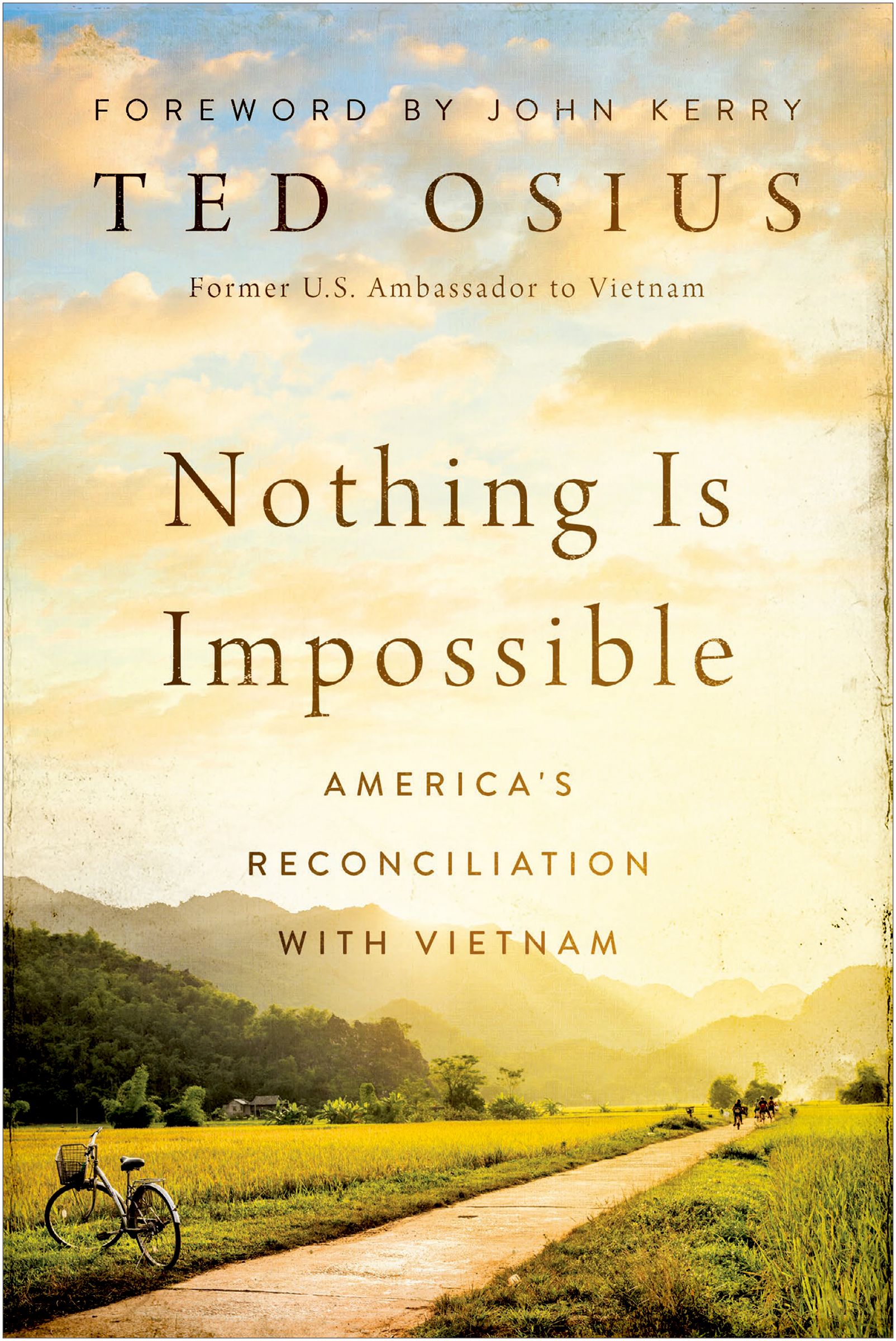
Nothing is Impossible
Today Vietnam is one of America's strongest international partners, with a thriving economy and a population that welcomes American visitors. How that relationship was formed is a twenty-year story of daring diplomacy and a careful thawing of tensions between the two countries after a lengthy war that cost nearly 60,000 American and more than two million Vietnamese lives. Ted Osius, former ambassador during the Obama administration, offers a vivid account, starting in the 1990s, of the various forms of diplomacy that made this reconciliation possible. He considers the leaders who put aside past traumas to work on creating a brighter future, including senators John McCain and John Kerry, two Vietnam veterans and ideological opponents who set aside their differences for a greater cause, and Pete Peterson-the former POW who became the first U.S. ambassador to a new Vietnam. Osius also draws upon his own experiences working first-hand with various Vietnamese leaders and traveling the country on bicycle to spotlight the ordinary Vietnamese people who have helped bring about their nation's extraordinary renaissance. With a foreword by former Secretary of State John Kerry, Nothing Is Impossible tells an inspiring story of how international diplomacy can create a better world.
eBook

The use of imagery in the campaign speeches of Barack Hussein Obama and John McCain during the 2008 US Presidential Election
Purpose
– The use of imagery in leadership speeches is becoming increasingly important in shaping the beliefs and actions of followers. The purpose of this paper is to investigate the use of speech imagery and linguistic features employed during the 2008 US Presidential Election campaign.
Design/methodology/approach
– The authors analysed a total of 264 speeches (160 speeches from Obama and 104 speeches from McCain) delivered throughout the 2008 US Presidential Election and identified 15 speech images used by the two candidates. Both descriptive coding and axial coding approaches were applied to the data and speech images common to both candidates were further subjected to Pennebaker et al. (2003) linguistic inquiry methodology.
Findings
– The analysis revealed a number of important differences with Obama using inclusive language and nurturing communitarian values, whereas McCain focusing on personal actions and strict, conservative individualistic values. The use of more inclusive language by Obama was found to be significant in three of the five speech images common to both candidates.
Research limitations/implications
– The research acknowledges the difficulty of measuring the effectiveness of speech images without taking into account wider factors such as tone of voice, facial expression and level of conviction. It also recognises the heavy use of speechwriters by presidential candidates whilst on the campaign trail, but argues that candidates still exert a strong influence through instructions to speechwriters and that speeches should reflect the candidate’s values and beliefs.
Originality/value
– The research findings contribute to the emerging stream of leadership research that addresses language content issues surrounding and embedded in the leadership process. The research argues that leaders’ speeches provide a fertile ground for conducting research and for examining the evolving relationship between leaders and followers.
Journal Article

Admiral John S. Mccain and the Triumph of Naval Ai
\"William Trimble's new biography of Adm. John S. McCain is one of the finest naval history books to appear in years. . . . The work is exceptionally well researched and scrupulously objective . . .\" --John B. Lundstrom, author of Black Shoe Carrier Admiral: Frank Jack Fletcher at Coral Sea, Midway, and Guadalcanal.
eBook
'I say what I say:' Trump defends comments about John McCain
During a White House briefing on Sept. 4, President Trump says he disagreed with John McCain, but still respected him.
Streaming Video

Polarizing Cues
People categorize themselves and others, creating ingroup and outgroup distinctions. In American politics, parties constitute the in- and outgroups, and party leaders hold sway in articulating party positions. A party leader's endorsement of a policy can be persuasive, inducing co-partisans to take the same position. In contrast, a party leader's endorsement may polarize opinion, inducing out-party identifiers to take a contrary position. Using survey experiments from the 2008 presidential election, I examine whether in- and out-party candidate cues—John McCain and Barack Obama—affected partisan opinion. The results indicate that in-party leader cues do not persuade but that out-party leader cues polarize. This finding holds in an experiment featuring President Bush in which his endorsement did not persuade Republicans but it polarized Democrats. Lastly, I compare the effect of party leader cues to party label cues. The results suggest that politicians, not parties, function as polarizing cues.
Journal Article
How Trump has attacked McCain over the years
Former president Donald Trump has attacked the late Arizona Republican senator John McCain over the years.
Streaming Video

The West's Appointments to U.N. Lack Credibility, Not to Mention Integrity
Being tapped for a UN post that deals in any way with Israel must be like waking up to find a camel's head stuffed next to you in the bed. If the position concerns human rights, then you can throw in the hump as well. The rule is proven both by those who go and those who hang on. Successive human rights officers, from the former Irish president Mary Robinson to former New York human rights liaison Craig Mokhiber, have paid the price for taking the Universal Declaration of Human Rights too seriously. An ability to ignore, excuse or forget Israeli breaches of human standards is an essential job requirement, but even people who start off sympathetic to Israel can be provoked into objectivity, as we discovered with Kofi Annan and Ban Ki-moon.
Journal Article