
Catalogue Search | MBRL


Are you sure you want to remove the book from the shelf?

{{itemTitle}}
3,771
result(s) for
"John Rawls"
Sort by:


Reconstructing Rawls
Reconstructing Rawls has one overarching goal: to reclaim Rawls for the Enlightenment—more specifically, the Prussian Enlightenment. Rawls’s so-called political turn in the 1980s, motivated by a newfound interest in pluralism and the accommodation of difference, has been unhealthy for autonomy-based liberalism and has led liberalism more broadly toward cultural relativism, be it in the guise of liberal multiculturalism or critiques of cosmopolitan distributive-justice theories. Robert Taylor believes that it is time to redeem A Theory of Justice’s implicit promise of a universalistic, comprehensive Kantian liberalism. Reconstructing Rawls on Kantian foundations leads to some unorthodox conclusions about justice as fairness, to be sure: for example, it yields a more civic-humanist reading of the priority of political liberty, a more Marxist reading of the priority of fair equality of opportunity, and a more ascetic or antimaterialist reading of the difference principle. It nonetheless leaves us with a theory that is still recognizably Rawlsian and reveals a previously untraveled road out of Theory—a road very different from the one Rawls himself ultimately followed.
eBook

Rawls's A theory of justice : an introduction
\"A Theory of Justice, by John Rawls, is widely regarded as the most important twentieth-century work of Anglo-American political philosophy. It transformed the field by offering a compelling alternative to the dominant utilitarian conception of social justice. The argument for this alternative is, however, complicated and often confusing. In this book Jon Mandle carefully reconstructs Rawls's argument, showing that the most common interpretations of it are often mistaken. For example, Rawls does not endorse welfare-state capitalism, and he is not a \"luck egalitarian\" as is widely believed.Mandle also explores the relationship between A Theory of Justice and the developments in Rawls's later work, Political Liberalism, as well as discussing some of the most influential criticisms in the secondary literature. His book will be an invaluable guide for anyone seeking to engage with this ground-breaking philosophical work\"--Provided by publisher.
BOOK
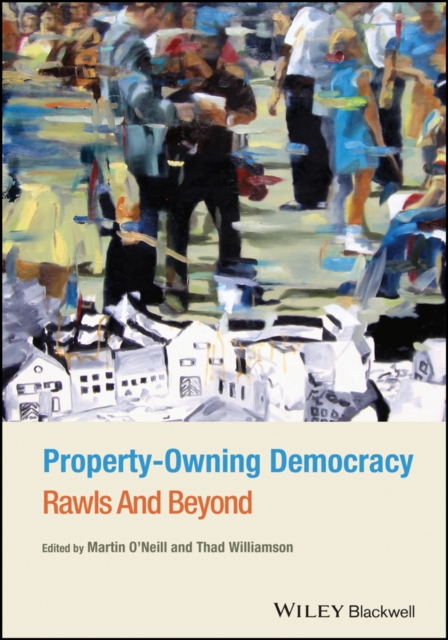
Property-Owning Democracy
Property-Owning Democracy: Rawls and Beyond features a collection of original essays that represent the first extended treatment of political philosopher John Rawls' idea of a property-owning democracy.
eBook


Liberal legitimacy and future citizens
If the legitimate exercise of political power requires justifiability to all citizens, as John Rawls’s influential
Liberal Principle of Legitimacy
states, then what should we say about the legitimacy of institutions and actions that have a significant impact on the interests of future citizens? Surprisingly, this question has been neglected in the literature. This paper questions the assumption that it is only justifiability to presently existing citizens that matters, and provides reasons for thinking that legitimacy requires justifiability to future citizens as well. Further, it is argued that the presently dominant interpretation of Rawls’s principle is unable to take future citizens into account in an adequate way. Therefore, the inclusion of these citizens among those to whom justifiability is owed gives us good reasons to reject this interpretation, and to adopt a different understanding of the view.
Journal Article

Rawls's egalitarianism
A new analysis of John Rawls's theory of distributive justice, focusing on the ways his ideas have both influenced and been misinterpreted by the current egalitarian literature.
Book

Ideal and Nonideal Theory
One of the many distinctions introduced in John Rawls's monumental work, A Theory of Justice, was that between the ideal and the nonideal theories of justice. Like many of Rawls's dichotomies, this one has come to frame much subsequent discussion in moral and political philosophy, and use of the Rawlsian terminology has become perfectly commonplace. Here, Simmons examines some possible alternative approaches to the ideal-nonideal distinction and suggests some reasons for favoring the Rawlsian approach.
Journal Article


On Scepticism About Intergenerational Legitimacy
Most of us believe that future people – i.e., people who do not yet exist, but who will exist in the future – are directly relevant for questions of justice. Most of us also believe that those who rule should not only rule justly, but also legitimately. This invites the question: if future people matter for what counts as ruling justly, is the same true for ruling legitimately? Though it has recently been argued that future people matter for determining what is legitimate in the present, there appear to be reasons for scepticism about this possibility. It can be argued that our inability to rule future people makes it the case that we cannot act (il)legitimately towards them, and that therefore they are not directly morally relevant for what counts as ruling (il)legitimately in the present. This paper is devoted to responding to this sceptical challenge. I argue that even if we cannot act (il)legitimately towards future people, they might nevertheless have direct moral relevance for what is (il)legitimate in the present. Hence, the question of who we can act (il)legitimately towards settles no important questions on its own. This result has significant implications for the general question of how future people may feature in our theories about political legitimacy.
Journal Article