
Catalogue Search | MBRL


Are you sure you want to remove the book from the shelf?

{{itemTitle}}
3,873
result(s) for
"Jonathan Demme"
Sort by:
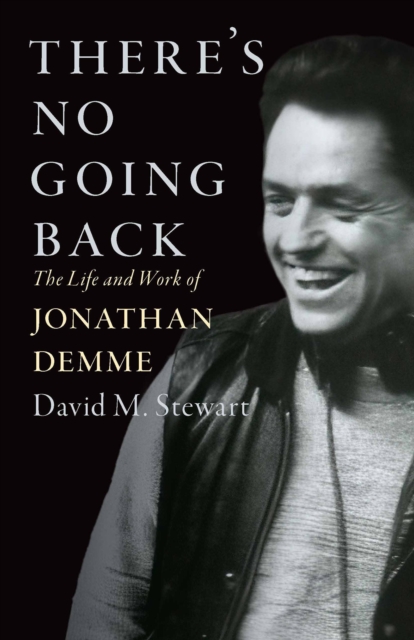
There's No Going Back
Jonathan Demme, one of the most influential and dynamic
directors of the twentieth century, was a fearless and radical
filmmaker, screenwriter, and producer—a compassionate
artist, advocate, and humanist who was compelled to tell the
stories of marginalized communities. His intense passion and
appreciation of music, culture, and art were interwoven
throughout his life and extraordinary body of work.
There's No Going Back is the first complete biography
of an auteur whose remarkable and versatile career encompassed
acclaimed narratives, documentaries, and films spanning nearly
five decades. Best known for
Melvin and Howard (1980),
The Silence of the Lambs (1991),
Philadelphia (1993), and
Beloved (1998), Demme was an Oscar-winning filmmaker
with a recognizable style and voice. He often used that voice
to champion women's rights and amplify social and environmental
justice issues. Demme was also well regarded for the loyalty,
devotion, and collegiality shown to the actors, camera crew,
and technical staff he employed in his projects.
Cinephile and journalist David M. Stewart affirms that Demme
was more than just a quirky filmmaker or a product of 1970s New
Hollywood; he was ceaseless and earnest in his approach to
capturing humanity in all its complexities. Drawing from
interviews with Demme's collaborators and colleagues, Stewart
presents the many facets of the filmmaker's life as seen
through the eyes of those who were in his warm, eclectic orbit.
There's No Going Back is a compelling and fitting
tribute to the brilliance and breadth of the man behind the
camera.
eBook


O melancholii święta
W swych rozważaniach nad melancholijnym wymiarem świętowania autorka poddaje analizie cztery filmy: Godziny (2002) Stephena Daldry’ego, Margot jedzie na ślub (2007) Noaha Baumbacha, Rachel wychodzi za mąż (2008) Jonathana Demme’a i Melancholię (2011) Larsa von Triera. W każdej z tych produkcji Korczarowska tropi ewidentnie melancholijne nacechowanie fabuły i rysów głównych bohaterów. Partie analityczne tekstu, odnoszące się także do warstwy ikonograficznej tych filmów, pozwalają autorce na konstatację, że choć święto potrzebuje radosnego nastroju, a w swej istocie ma łączyć wspólnotę, pozwalać jednostkom i grupom – za pomocą rytuałów – „przechodzić” bezpiecznie ze zwykłego trwania czasowego do czasu sakralnego, to jednak w trakcie świętowania z destrukcyjną siłą objawia się właśnie melancholia. Dzieje się tak prawdopodobnie dlatego, że w trakcie przyjęcia urodzinowego, weselnej fety lub uroczystego rodzinnego obiadu niespodziewanie uświadamiamy sobie, że coś odeszło od nas raz na zawsze.
Journal Article
Caribbean
A brief history of Haiti is offered. By the twentieth century, the island had become a tourist destination, falling under what's been called the \"colossal shadow\" of the United States.
Journal Article

\They don't have a name for what he is\: The strategic decharacterization of J. Demme's Hannibal Lecter
This essay challenges the myth of Hannibal Lecter, in Demme's The Silence of the Lambs, as an enigmatic and unclassifiable character. Lecter's enigma is generated through a largely unexplored process of decharacterization, i.e. by recurrently presenting him through the speech of other characters who describe him as unknowable. After considering Lecter's case against the background of well-known literary unknowabilities, a deductive phenomenological exploration of Lecter's de-characterization is carried out with the assistance of tools from the disciplines of personality and social psychology, and supported by empirical evidence from those fields. The demystifying of Lecter's unreadability does not entail a debasement of the film or the character. On the contrary, Lecter's de-characterization, albeit a form of narrative manipulation, is viewed as responsible for much of the film's impact and success. It produces sensitivity-boosting effects; it mediates the indirect characterization of the other characters; and it engages the spectators' self-image thus contributing importantly to the enjoyment and appreciation of the film.
Journal Article
Becoming Unknown: Hannibal and Queer Epistemology
Hannibal centers on the glamor and mystery of queer villainy to proudly defy a rhetoric of knowable normativity. 5Hannibal is the television incarnation, under the creative direction of Bryan Fuller, of a substantial corpus of characters and plotlines, introduced in novels by Thomas Harris, and later transferred to cinematic adaptation, most notably Jonathan Demme's 1991 film of the second novel, The Silence of the Lambs, which found immense success critically and at the box office. The Silence of the Lambs flaunts a central villain, the male serial killer Buffalo Bill (Ted Levine), that makes dresses out of women's skin to wear in an act of gender transformation, without Harris' novel nor Demme's film ever specifying an exact gender identity category for the character.
Journal Article

Golden film
When he and Neil Young got together to film the first show of music from Young's \"Prairie Wind\"album, director Jonathan Demme said he conceived of the project as creating \"a Neil Young dream concert - a revered songwriter imagines a perfect film.\" Standing alongside Demme's Talking Heads movie, \"Stop Making Sense,\"as one of the best concert films ever, \"Heart of Gold\" captures Young at a pivotal moment in his life, just a few months after the death of his father and after Young himself had been diagnosed with and had surgery for a brain aneurysm. Not surprisingly, the mercurial Young has already changed directions and is now railing against the war in Iraq and calling for the impeachment of the president on his garage-rocking new album \"Living With War.\" In Austin, he said he can play the acoustic stuff only so long before the rocker in his head needs to come out. Maybe he can get Demme to do another movie, and this time crank up the volume.
Newspaper Article

Code Violations: \Chicago Review\ in the 1990s
Many of the staff of Chicago Review were graduate student poets and fiction writers who had inexplicably chosen to attend a university with no graduate creative writing program. Instead of sitting in a circle critiquing their own poems Iowa-style, the staff do something even more instructive: reading contemporary poems by other people. The mail tray overflowed with odes, panegyrics, pantoums, and of course loads of confessional free verse. Here, Sorby shares her most vivid memories of Chicago Review.
Journal Article
The untold story
That [Jean Dominique] survived as long as he did under the repression of Francois \"Papa Doc\" Duvalier and his son \"Baby Doc\" is amazing.But it is also worth noting that Dominique spent years in exile in the United States, where he was befriended by [Jonathan Demme Jonathan Demme], who has repeatedly demonstrated his affection for Haiti, its people and its culture in films and in getting Haitian music released in this country. In 1968, Dominique acquired the lease to Radio Haiti-Inter, the country's oldest, most important radio station. It was there that Dominique became a journalistic folk hero, broadcasting in Creole, the language of the people, rather than the French of the aristocracy and dictatorship. Encouraged by the election of U.S. President Jimmy Carter in 1976 and his emphasis on human rights, Dominique stepped up his criticism of the government - so much so that when Ronald Reagan defeated Carter, Radio Haiti-Inter was shut down and Dominique was sent into the first of his New York exiles. Six years later, he returned to Haiti and was greeted by 60,000 people on his arrival.
Newspaper Article