
Catalogue Search | MBRL


Are you sure you want to remove the book from the shelf?

{{itemTitle}}
175
result(s) for
"Joyce, James, 1882-1941 Family."
Sort by:
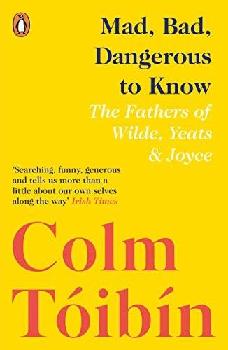
Mad, bad, dangerous to know : the fathers of Wilde, Yeats and Joyce
In 'Mad, Bad, Dangerous to Know', the author turns his incisive gaze to three of Ireland's greatest writers, Oscar Wilde, W.B. Yeats and James Joyce, and their earliest influences: their fathers.
BOOK

Female Body as a Source of Shared (Hi)stories: On Munro’s Del and Joyce’s Eveline
Every society and culture has its own social conventions that provide specific models for ways of behaving, thinking, and communicating. According to Cordelia Fine (2012), such values are shared and reflected on and by our body (through our social roles and positions, expressions, and behaviour). This paper elicits and compares shared (hi)stories told on and by the bodies of two female characters – Del Jordan in Alice Munro’s short story cycle Lives of Girls and Women (1971) and Eveline Hill from James Joyce’s short story “Eveline” from the collection Dubliners (1914). The paper approaches Del’s and Eveline’s body as a source for a broader semantic notion: a (re)source for (re)creating and understanding both characters’ sociocultural and family surroundings that, consequently, act as a (re)source for all their silenced desires, life choices and identities. Although geographically set in different spatiotemporal contexts, the stories and their characters share other elements.
Journal Article

It Skips a Generation: Spirituality in David Foster Wallace and James Joyce
Much scholarship recognizes David Foster Wallace’s break with postmodern literature, particularly his identification of John Barth as a “patriarch for my patricide,” and his role establishing a new movement in writing, sometimes identified as “New Sincerity.” But part of Wallace’s new ethos included a return to modernist literature as a model for spirituality and ethics. This essay explores correspondences between Wallace and James Joyce. Across a variety of works, both authors present intellectually gifted but spiritually unmoored characters, balanced by characters who are less intellectually engaged, but more grounded thanks to a naïve, intuitive spirituality.
Journal Article

Cannibalism in Joyce and Mo Yan: Famine Memory in Ulysses, The Republic of Wine, and Frog
[...]in The Republic of Wine,1 which begins with Ding Gou'er's arrival in the fictional town of Liquorland to investigate the reports that \"infants are being braised and eaten\" at the Coal Mine (21), the \"narrow road [that] twist [s] and turn[s]\" to the mine is visualized as \"an intestinal tract\" digesting all creatures (5). In one of Yidou's stories, it is said that the Party officials in Liquorland \"eat children\" because \"they've grown tired of eating beef, lamb, pork, dog, donkey, rabbit, chicken, duck, pigeon, mule, camel, horse, hedgehog, sparrow, swallow, wild goose, common goose, cat, rat, weasel, and lynx\" (100). Social stability has been \"a part of Confucian feudal ideology for thousands of years,\" as summarized in the teachings of \"loyalty (zhong) and filial piety (xiao)\" (Tsai 95). [...]in Frog, the writer Tadpole criticizes the people's \"feudal preference for boys over girls\" (329) to fulfill filial piety, which makes them \"def[y] the [family planning] policy\" (310), inducing countless deaths of unborn babies and often their mothers by forced abortion. [...]I will argue that Joyce's and Mo Yan's views of cannibalistic power structures reveal that their histories of the Famine and forced family planning cannot be blamed solely on hegemonic ideologies; they acknowledge that they themselves are symptomatic.
Journal Article

‘Dying’: what medicine can learn from fiction
In order to make such learning appear more relevant, the reading lists often include works written by physicians, giving accounts of illness and medical care, especially in the form of short stories. Schnitzler himself qualified in medicine at Vienna University in 1885 and went on to combine a career as a physician with writing plays, novels and short stories, until success as a dramatist allowed him to give up his medical practice. To read ‘Dying’ may not be a comfortable experience, but is a perfect antidote to the idea that you can learn about the mind, relationships, illness, dying or the human condition solely through science and medical textbooks.
Journal Article

Genetic Connections in Finnegans Wake: Lucia Joyce and Issy Earwicker
The subject of Lucia Joyce's alleged schizophrenia and her role in her father's writing have gained popular attention since the publication of Carol Shloss's controversial biography Lucia Joyce: To Dance in the Wake (2003). However, Shloss's text has inspired a series of interpretations that do not verify her biographical claims: there is as of yet little academic scholarship on how Lucia can be understood as a direct influence on Joyce's work. In this article, I seek to overcome the discrepancy through the use of genetic criticism, arguing that Lucia's first breakdown in February 1932 and her increasing mental instability during the mid-1930s impacted the composition of portions of Finnegans Wake. I cross-reference available biographical material with draft changes in the James Joyce Archive, the pre-book publications of Finnegans Wake, issues of the modernist journal transition and artwork Lucia created for Joyce's texts. In doing so I provide original and tangible scholarship on how Lucia Joyce contributed to the compositional development of Finnegans Wake.
Journal Article

Queering the Family, Reclaiming the Father: Proustian Evocations in Alison Bechdel's Fun Home
[...]she makes frequent intertextual references to the literary canon of the fin-de-siecle and the early-twentieth century, invoking the works of Oscar Wilde, Marcel Proust, and James Joyce, to name just a few.2 Her comics, infused with intertextual references to Remembrance, allow for the structuring of queer subjects and representations of denaturalized gender and sexuality that can cause Butlerian trouble, ultimately reuniting Alison with her father in the realm of the graphic memoir.3 Fun Home thus contributes to queer life writing by illustrating the potential of comics for mediating positive accounts of queer lives, while also revealing the value of intertextual readings for the identification of such accounts within the field of autographics, as defined by Gillian Whitlock (995). Intertextual references can be identified in the visual and the verbal register, as well as in the space that is created through the interpretive combination of the two. Because of the graphic memoir's explicit references to Proust's life and art, the reader may become inclined to identify further and subtler allusions. Reading Fun Home intertextually, however, reveals how Bechdel turns Bruce's approach to fiction and reality, to literature, and to things and family members into a positive means that enables her autobiographical subject's reclaiming of her father. Bruce's conflation between the real, the fictional, and the artificial is also reflected via his obsession with preserving the anachronistic Gothic Revival style of the house, his imagining of himself as a \"nineteenth-century aristocrat,\" and his seduction of some of his high school students within the domestic domain (60).
Journal Article
A Self-Portrait of the Armenian Artist as Homo Sacer: The Biopolitical Limits of Hagop Mintzuri's Life Writing
In 1916, when James Joyce published his semi-autobiographical novel A Portrait of the Artist as A Young Man while leading a self-induced exilic life in Europe, Hagop Demirjian, an Ottoman-Armenian from eastern Anatolia, was struggling to reorganize his own life after becoming a hostage in Istanbul in the immediate aftermath of the Armenian Genocide in 1915. In the first part, I analyze two distinct periods of Istanbul's history (the decline of the Ottoman Empire and the formation of the republican Turkish state) that resonate with the author's childhood and adult years respectively. [...]characterizing his childhood days in the imperial capital city in terms of the politics of hospitality allows us to see that the latter period and its new politics could not resemble, let alone repeat, a similar politics of hospitality or recognition. [...]after this point in time, he was relegated to a myriad of states (foreigner-hostage, ghost, \"sacred man\"), which gradually put his being on the limit. Not only Places, which is examined in this essay, but all of his literary output can be seen in a monolithic structure of lifewriting practice. [...]his death in 1978, an abundance of short stories mainly about his past life in the village before 1915 comprised an afterlife inside the retelling fragments of village life.8 In becoming the writer of his own life story, Hagop Demirjian, as the ghostly sacred man in the new republic, carves out a place for his afterlife as Hagop Mintzuri, the pen name he chose, thus gaining his own form of agency.
Journal Article

Pulling at Threads: Re-framing the Archetypal Family Relationship through the Castor and Pollux Myth for the Young Adult Audience
This dissertation explores how the sibling archetype and, more specifically, the twin archetype plays a symbolic role in the process of individuation, especially by expanding the Self/Other relationship to include a horizontal dimension. It includes a depth psychological exploration of the stories associated with Castor and Pollux, twins who play a central role in classical mythology. The theoretical portion of this dissertation examines the importance of retelling myths—stories that illumine the timeless experience of being human—as YA novels that speak to contemporary adolescents. It explores the positive and negative aspects of what Jungians call the puer, the perpetual adolescent, and the inescapability of grief even for young people. Finally, this portion of the dissertation argues that stories exploring horizontal relationships, particularly those geared toward teenaged readers, may help them negotiate the progression away from the period in their lives dominated by familial bonds and promote a deeper connection to a wider world. The production portion of the dissertation is a retelling of the Castor and Pollux myth as a contemporary Young Adult novel where the two main characters explore familial and sibling archetypes, the latter serving as the model of all horizontal relationships. Both are teens searching for friendship and companionship while navigating their own journey toward individuation. Pax is a seventeen-year-old foster child who faces the decision of accepting his foster family’s adoption offer or fulfilling the promise he made to his older foster brother that he would live with him once the foster brother is released from jail. Sixteen-year-old Cassie is an only child who discovers her parents almost gave her up for adoption when she was born. Pax and Cassie are connected through Emily, Cassie’s best friend and Pax’s foster sister. Through their relationships with each other, as well as other teens, Pax and Cassie find a path that leads them toward individuation as well as each other.
Dissertation

READING LESSONS IN ALISON BECHDEL'S \FUN HOME: A FAMILY TRAGICOMIC\
Alison Bechdel's award-winning graphic memoir, Fun Home: A Family Tragicomic, has been widely recognized for its literary sophistication. Themes familiar in the memoir genre—the author's intellectual and sexual development and her relationship with her father—are invariably filtered through her adventures in reading. This essay presents the different modes of reading Alison's encounters: reading for identification, reading for parallels and symbolic meanings, reading for the sensual pleasure of language. Bechdel arrives ultimately at her own understanding of reading as an ongoing struggle. Bechdel teaches her readers to be attentive, in particular, to the often-overlooked materiality of reading: the book as object and the page in its spatial layout, language as sensuous sound and rhythm, and the experience of both writers and readers as embodied participants in the process.
Journal Article