
Catalogue Search | MBRL


Are you sure you want to remove the book from the shelf?

{{itemTitle}}
70
result(s) for
"Judaism and literature -- United States -- History -- 20th century"
Sort by:

Telling the Little Secrets
Janet Burstein argues that American Jewish writers since the 1980s have created a significant literature by wrestling with the troubled legacy of trauma, loss, and exile. Their ranks include Cynthia Ozick, Todd Gitlin, Art Spiegelman, Pearl Abraham, Aryeh Lev Stollman, Jonathan Rosen, and Gerda Lerner. Whether confronting the massive losses of the Holocaust, the sense of “home” in exile, or the continuing power of Jewish memory, these Jewish writers search for understanding within “the little secrets” of their dark, complicated, and richly furnished past.
eBook

Race, Rights, and Recognition
InRace, Rights, and Recognition, Dean J. Franco explores the work of recent Jewish American writers, many of whom have taken unpopular stances on social issues, distancing themselves from the politics and public practice of multiculturalism. While these writers explore the same themes of group-based rights and recognition that preoccupy Latino, African American, and Native American writers, they are generally suspicious of group identities and are more likely to adopt postmodern distancing techniques than to presume to speak for \"their people.\" Ranging from Philip Roth's scandalous 1969 novel Portnoy's Complaint to Gary Shteyngart's Absurdistan in 2006, the literature Franco examines in this book is at once critical of and deeply invested in the problems of race and the rise of multicultural philosophies and policies in America.
Franco argues that from the formative years of multiculturalism (1965-1975), Jewish writers probed the ethics and not just the politics of civil rights and cultural recognition; this perspective arose from a stance of keen awareness of the limits and possibilities of consensus-based civil and human rights. Contemporary Jewish writers are now responding to global problems of cultural conflict and pluralism and thinking through the challenges and responsibilities of cosmopolitanism. Indeed, if the United States is now correctly-if cautiously-identifying itself as a post-ethnic nation, it may be said that Jewish writing has been well ahead of the curve in imagining what a post-ethnic future might look like and in critiquing the social conventions of race and ethnicity.
eBook

Israel through the Jewish-American imagination : a survey of Jewish-American literature on Israel, 1928-1995
Examines eight Jewish-American writers--Meyer Levin, Leon Uris, Saul Bellow, Hugh Nissenson, Chaim Potok, Philip Roth, Anne Roiphe, and Tova Reich--who have imagined Israel in their work. Analyzing a wide array of Jewish-American fiction on Israel, Andrew Furman explores the evolving relationship between the Israeli and American Jew. He devotes individual chapters to eight Jewish-American writers who have “imagined” Israel substantially in one or more of their works. In doing so, he gauges the impact of the Jewish state in forging the identity of the American Jewish community and the vision of the Jewish-American writer.
Furman devotes individual chapters to Meyer Levin, Leon Uris, Saul Bellow, Hugh Nissenson, Chaim Potok, Philip Roth, Anne Roiphe, and Tova Reich. To chart the evolution of the Jewish-American relationship with Israel from pre-statehood until the present, he considers works from 1928 to 1995, examining them in their historical and political contexts. The writers Furman examines address the central issues which have linked and divided the American and Israeli Jewish communities: the role of Israel as both safe haven and spiritual core for Jews everywhere pitted against its secularism, militarism, and entrenched sexism.
While the writers Furman examines depict contrasting images of the Middle East, the very persistence of Israel in occupying that imagination reveals, above all, how prominent a role Israel played and continues to play in shaping the Jewish-American identity.
eBook
Magical American Jew
Analyzing contemporary works of short fiction and film, this book highlights the complexities and contradictions of Jewish American identity and demonstrates how magical realist techniques enable uniquely cogent portrayals of enigmatic elements of difference.
eBook
Jewish Writers/Irish Writers
These essays on representative Jewish and Irish writers are true to the form's definition as an attempt or experiment rather than a credo. Wohlgelernter defines the author's \"excited imagination\" by thoroughgoing analysis of the work's constituent parts.
eBook

Imagining each other : Blacks and Jews in contemporary American literature
Explores the complex ways in which Blacks and Jews have portrayed each other in recent American literature. Imagining Each Other explores Black-Jewish relations by examining the complex ways they have portrayed each other in recent American literature. It illuminates their dramatic alliances and conflicts and their dilemmas of identity and assimilation, and addresses the persistent questions of ethnic division and economic inequality that have so encompassed the Black-Jewish narrative in America. Focusing primarily on the 1960s and its aftermath, the book reveals how Jewish and African Americans view each other through a complex dialectic of identification and difference, channeled by ever-shifting positions within American society. Through the works of Richard Wright, Saul Bellow, Bernard Malamud, Amiri Baraka, Paule Marshall, Grace Paley, and others, Goffman unfolds a story of two peoples with powerful biblical and mythic connections that replay themselves in contemporary circumstances. In doing so, he uncovers layers of meaning in works that dramatize this turbulent, paradoxical relationship, and reveals how this relationship is paradigmatic of multicultural American self-invention.
eBook
Ethical Diversions
First Published in 2005. This study focuses on a group of related texts which have struggled to rescue, rather than eliminate, the paradox of answering the original question: Why ethics rather than nothing?.
eBook

“Vicious Bastards and Complete Bores”: Trends in Jewish-American crime history since World War Two
While Jewish-American crime was primarily a matter of sociological study prior to World War Two, post-war sociologists allowed historians to take near-total ownership of the subject by the 1960s. Despite the subfield’s rapid development throughout the 1970s, the first generation of historians to study this topic in depth did not build on the “bottom-up” approaches to crime and deviance popular within the New Social History, instead favouring narratives that focused on celebrity gangsters and major urban crime syndicates. Throughout the late-twentieth century, research into Jewish-American crime generally focused on powerful individuals, positioning gangsters as symbols of Jewish masculinity and as protectors of their communities. Scholars also leaned into literary notions of a Jewish crime existing within an archetypal “underworld,” wherein career criminals operated apart from normal Jewish life. These sentimental and stylized approaches to the study of Jewish-American crime monopolized the field until the twenty-first century, when a new generation of historians began to develop a competing literature that was more grounded in the realities of everyday life. This paper tracks the development of Jewish-American crime scholarship into the present and discusses important recent innovations within the field. It concludes by highlighting potential areas for future research and advocating for greater collaboration between historians and social scientists.
Journal Article

The Melting-Pot and Its Legacies
Abstract This article examines Israel Zangwill's 1908 play The Melting-Pot as a document in American immigration history, and the role of its most contested tropes – interfaith marriage and the melting-pot itself – in his efforts to rescue suffering Jews of Europe. Through close readings of the play and with reference to other works by Zangwill in the early twentieth century, the article looks at the play as a pragmatic work in a time of international upheaval and American nativism. A discussion of the play's reception by critics and audiences indicates that what was most controversial at the time of its production was not necessarily what Zangwill was most desirous to convey. But a look at its varied meanings over time reveals the persistence of the melting-pot metaphor in discussions of immigration, identity, ethnicity and nationhood, especially in the American imaginary.
Journal Article
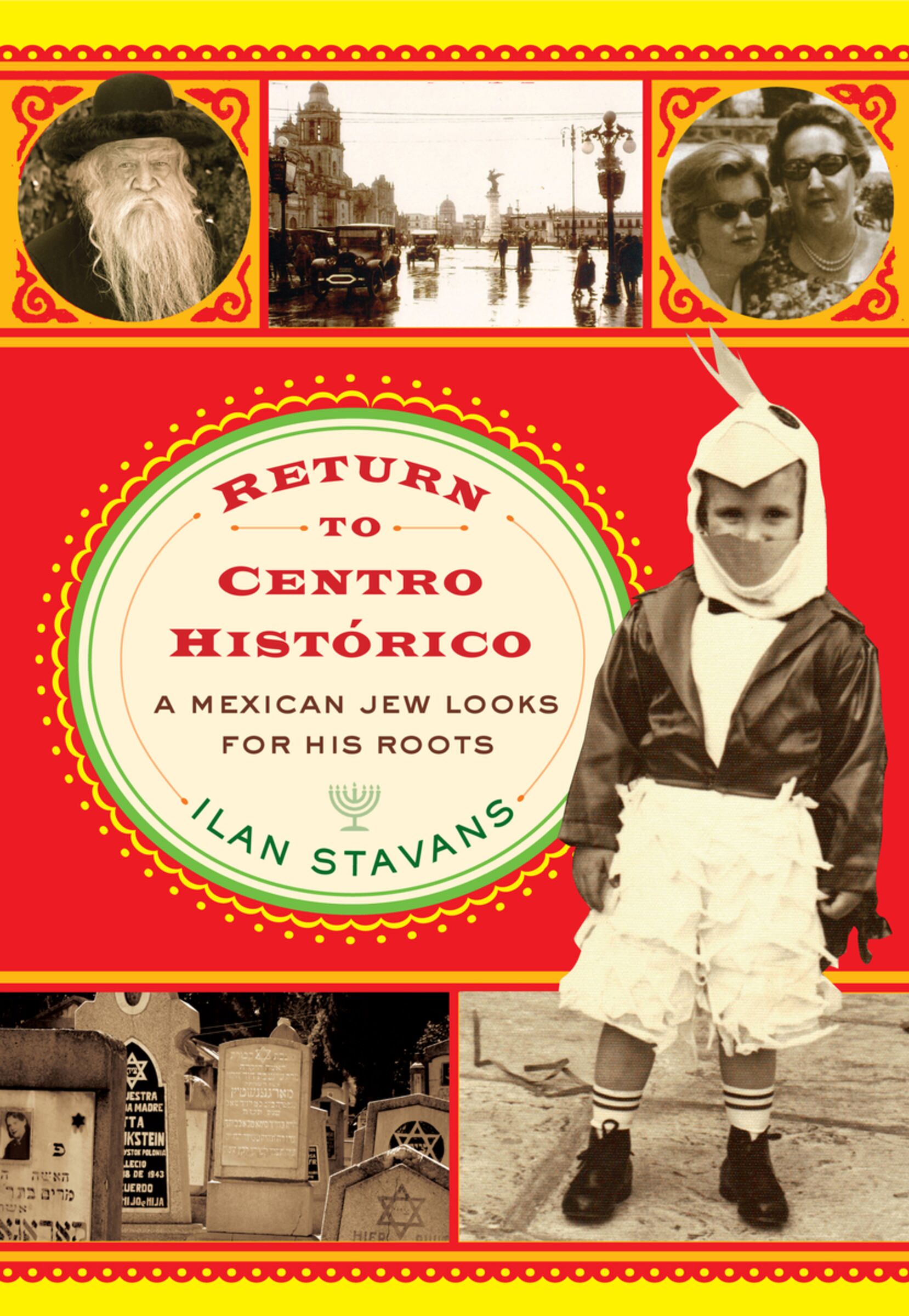
Return to Centro Histórico
After a stirring e-mail exchange with his father, awardwinning essayist and cultural commentator Ilan Stavans decided to do something bizarre: revisit his hometown, Mexico City, accompanied by a tourist guide. But rather than seeking his roots in the neighborhood where he grew up, he headed to the Centro Histórico, the downtown area at the heart of the world’s largest metropolis. It was there that conversos, the hidden Jews escaping the might of the Holy Office of the Inquisition, were burned at the stake. And, centuries later, it was the same section where Jewish immigrants, both Yiddish-speaking Ashkenazim and Sephardim from the Ottoman Empire, made their homes as peddlers. In a sense, Centro Histórico is to Mexico what the Lower East Side is to the United States: a platform for reinventing one’s self in the New World. With the same linguistic verve and insight that has made him one of the most distinguished voices in American literature today, Ilan Stavans invites readers along for a personal journey that is not only his own, but that of an entire culture. In Return to Centro Histórico he makes it possible to understand the intimate role that Jews have played in the development of Hispanic civilization.
eBook