
Catalogue Search | MBRL


Are you sure you want to remove the book from the shelf?

{{itemTitle}}
7,209
result(s) for
"Judicial corruption"
Sort by:

The whistler
\"Lacy Stoltz is an investigator for the Florida Board on Judicial Conduct. She is a lawyer, not a cop, and it is her job to respond to complaints dealing with judicial misconduct. After nine years with the Board, she knows that most problems are caused by incompetence, not corruption. But a corruption case eventually crosses her desk. A previously disbarred lawyer is back in business with a new identity. He now goes by the name Greg Myers, and he claims to know of a Florida judge who has stolen more money than all other crooked judges combined\"--Dust jacket flap.
Book

Corruption as a Self-Fulfilling Prophecy: Evidence from a Survey Experiment in Costa Rica
An influential literature argues that corruption behaves as a self-fulfilling prophecy. Its central claim is that the individual returns to corruption are a function of the perceived corruptibility of the other members of society. Empirically, this implies that if one were to exogenously increase beliefs about societal levels of corruption, willingness to engage in corruption should also increase. We evaluate this implication by utilizing an information experiment embedded in a large-scale household survey recently conducted in the Gran Área Metropolitana of Costa Rica. Changes in beliefs about corruption were induced via the random assignment of an informational display depicting the increasing percentage of Costa Ricans who have personally witnessed an act of corruption. Consistent with the self-fulfilling prophecy hypothesis, we find that internalizing the information from the display on average increased the probability that a respondent would be willing to bribe a police officer by approximately .05 to .10.
Journal Article

Junk science and the American criminal justice system
\"From CSI to Forensic Files to the celebrated reputation of the FBI crime lab, forensic scientists have long been mythologized in American popular culture as infallible crime solvers. Juries put their faith in \"expert witnesses\" and innocent people have been executed as a result. Innocent people are still on death row today, condemned by junk science. In 2012, the Innocence Project began searching for prisoners convicted by junk science, and three men, each convicted of capital murder, became M. Chris Fabricant's clients. Junk Science and the American Criminal Justice System chronicles the fights to overturn their wrongful convictions and to end the use of the \"science\" that destroyed their lives. Weaving together courtroom battles from Mississippi to Texas to New York City and beyond, Fabricant takes the reader on a journey into the heart of a broken, racist system of justice and the role forensic science plays in maintaining the status quo. At turns gripping, enraging, illuminating, and moving, Junk Science is a meticulously researched insider's perspective of the American criminal justice system. Previously untold stories of wrongful executions, corrupt prosecutors, and quackery masquerading as science animate Fabricant's true crime narrative.\" -- Provided by publisher.
Book

Electoral Accountability and Corruption: Evidence from the Audits of Local Governments
We show that political institutions affect corruption levels. We use audit reports in Brazil to construct new measures of political corruption in local governments and test whether electoral accountability affects the corruption practices of incumbent politicians. We find significantly less corruption in municipalities where mayors can get reelected. Mayors with reelection incentives misappropriate 27 percent fewer resources than mayors without reelection incentives. These effects are more pronounced among municipalities with less access to information and where the likelihood of judicial punishment is lower. Overall our findings suggest that electoral rules that enhance political accountability play a crucial role in constraining politician's corrupt behavior.
Journal Article

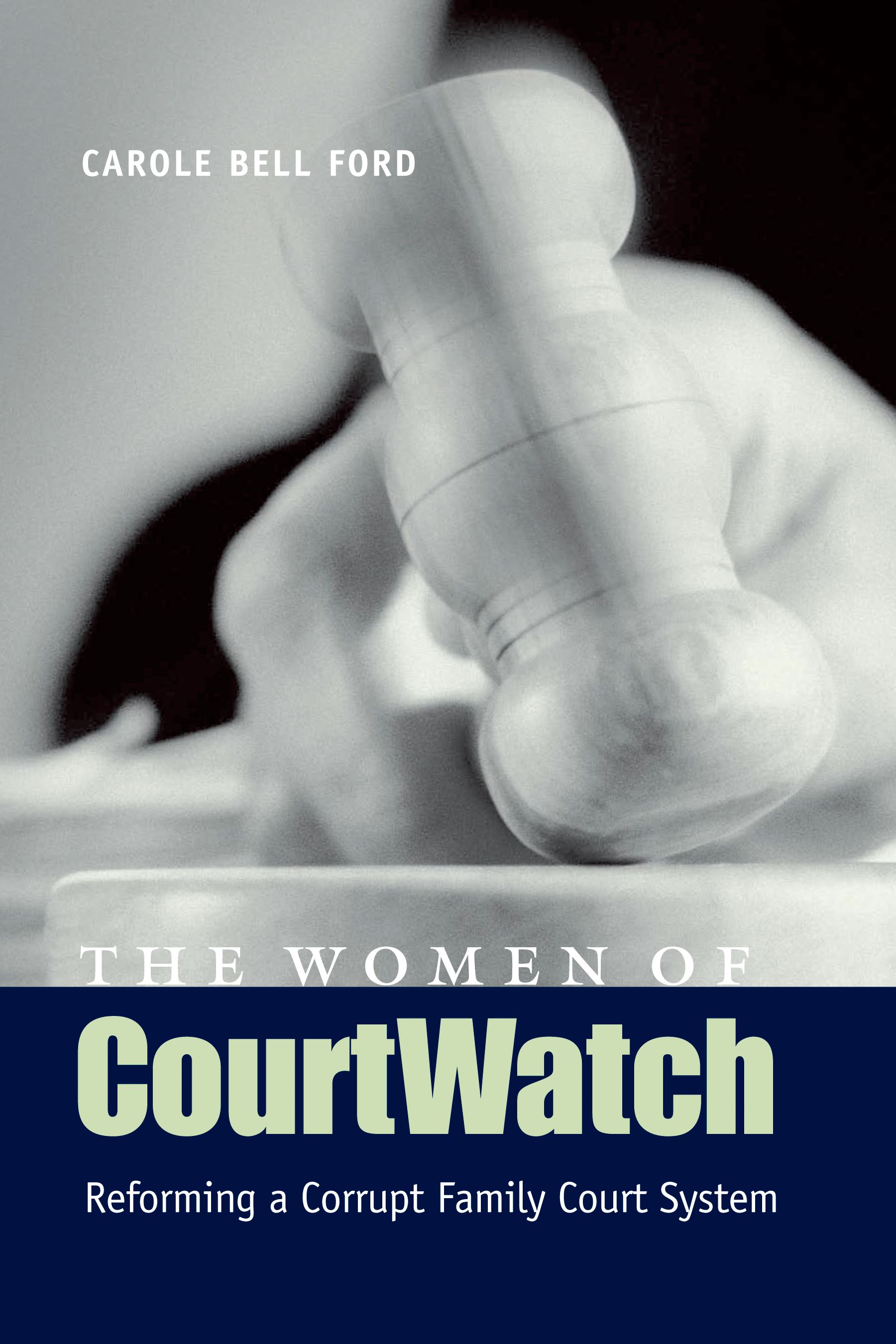
The Women of CourtWatch
Houston was a terrible place to divorce or seek child custody in the 1980s and early 1990s. Family court judges routinely rendered verdicts that damaged the interests of women and children. In some especially shocking cases, they even granted custody to fathers who had been accused of molesting their own children. Yet despite persistent allegations of cronyism, incompetence, sexism, racism, bribery, and fraud, the judges wielded such political power and influence that removing them seemed all but impossible. The family court system was clearly broken, but there appeared to be no way to fix it. This book recounts the inspiring and courageous story of women activists who came together to oppose Houston's family court judges and whose political action committee, CourtWatch, played a crucial role in defeating five of the judges in the 1994 judicial election. Carole Bell Ford draws on extensive interviews with Florence Kusnetz, the attorney who led the reform effort, and other CourtWatch veterans, as well as news accounts, to provide a full history of the formation, struggles, and successes of a women's grassroots organization that overcame powerful political interests to improve Houston's family courts. More than just a local story, however, this history of CourtWatch provides a model that can be used by activists in other communities in which legal and social institutions have gone astray. It also honors the heroism of Florence Kusnetz, whose commitment to the Jewish concept of tikkun olam (\"repairing and improving the world\") brought her out of a comfortable retirement to fight for justice for women and children.
eBook


Worse than the Devil
In 1917 a bomb exploded in a Milwaukee police station, killing nine officers and a civilian. Those responsible never were apprehended, but police, press, and public all assumed that the perpetrators were Italian. Days later, eleven alleged Italian anarchists went to trial on unrelated charges involving a fracas that had occurred two months before. Against the backdrop of World War I, and amidst a prevailing hatred and fear of radical immigrants, the Italians had an unfair trial. The specter of the larger, uncharged crime of the bombing haunted the proceedings and assured convictions of all eleven. Although Clarence Darrow led an appeal that gained freedom for most of the convicted, the celebrated lawyer's methods themselves were deeply suspect. The entire case left a dark, if hidden, stain on American justice. Largely overlooked for almost a century, the compelling story of this case emerges vividly in this meticulously researched book by Dean A. Strang. In its focus on a moment when patriotism, nativism, and terror swept the nation, Worse than the Devil exposes broad concerns that persist even today as the United States continues to struggle with administering criminal justice to newcomers and outsiders.
eBook

Down the river unto the sea
After serving time in Rikers Island solitary for assault, Joe King Oliver, who is an ex-NYPD investigator working as a private detective, receives a note from a woman who admits she was paid to frame him, compelling him to investigate.
Book

Rethinking Corruption: Hocus-Pocus, Locus and Focus
Although there has been a significant increase in research on the phenomenon of corruption over the last quarter-century, there is little evidence that this has resulted in effective policy interventions, nor in any significant reduction in its scope and extent. This article argues that three main reasons account for this failure to develop effective anticorruption measures. First, the dominance of economistic analyses of the role of incentives in decision-making has given rise to proposed institutional fixes that are too abstracted from reality to gain purchase. That dominance was partly prompted by a misplaced assumption that market-based liberal democracies would become the modal regime type following the collapse of Communism. Second, an emphasis on the nation state as the primary unit of analysis has not kept pace with significant changes in how some forms of corruption operate in practice, nor with the changing nature of states themselves. Third, different types of corruption are insufficiently disaggregated according not just to kind and form, but also to the locations in which they occur (sectoral, organizational, geographical), the actors involved, and the dependencies that enable them. This reflects an overuse of the term ‘corruption’ in both academic literature and policy recommendations; insufficient attention is paid to what exactly is being addressed and ultimately, the notion of corruption, without adjectives, is a poor guide both to analysis and to policy prescription.
Journal Article