
Catalogue Search | MBRL


Are you sure you want to remove the book from the shelf?

{{itemTitle}}
10
result(s) for
"Jugendprotest"
Sort by:
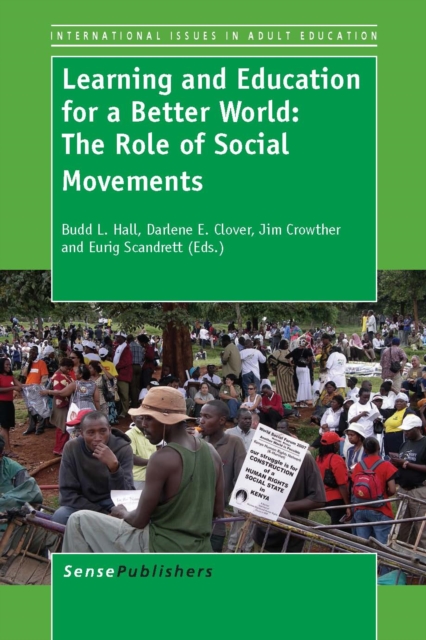
Learning and education for a better world
The book offers contemporary theoretical and practical insights into the learning that happens both within and outside of social movements. Social movement scholars present work linked to the arts, to organic farming, to environmental action, to grassroots activists in the Global South, to the Arab Spring, the Occupy movement, the shackdwellers movements, school reform and the role of Marx, Gramscii and Williams in understanding social movement learning.
eBook
Between marx and coca-cola
In the 1960s and 1970s, Western Europe's \"Golden Age\" (Eric Hobsbawm), a new youth consciousness emerged, which gave this period its distinctive character. Offering rich and new material, this volume moves beyond the easy conflation of youth culture and \"Americanization\" and instead sets out to show, for the first time, how international developments fused with national traditions to produce specific youth cultures that became the leading trendsetters of emergent post-industrial Western societies. It presents a multi-faceted portrait of European youth cultures, colored by differences in gender, class, and education, and points out the tension between emerging consumerism and growing politicisation, succinctly expressed by Jean-Luc Godard in his 1967 pairing of \"Marx and Coca-Cola.\"
eBook

Partizipationswahrnehmungen und -praktiken von Jugendlichen und jungen Erwachsenen auf dem Land. Sozialräumliche Analysen in zwei kleinen Mittelstädten
Der Beitrag beschäftigt sich mit Entwicklungsperspektiven, Herausforderungen und Gestaltungsmöglichkeiten bezogen auf sozialräumliche Aspekte von Partizipation junger Menschen in zwei kleinen Mittelstädten in ländlich geprägten Regionen. In der diesem Beitrag zugrundeliegenden Studie wird untersucht, welche vorpolitisch und politisch relevanten, sozialräumlichen Vorstellungen und Positionierungen von Jugendlichen sich gegenüber ihrem Lebensumfeld rekonstruieren lassen. Hierfür wird Material aus Gruppendiskussionen mit politischen bzw. religiösen Jugendgruppen herangezogen, welches rekonstruktiv ausgewertet wurde. Zentral betrachtet werden hierbei die Aspekte der Selbstbeschreibung der Gruppen, Gemeinsamkeiten und Abgrenzungen von anderen jungen Menschen im Sozialraum sowie die Deutungen des eigenen Lebensumfeldes.
Journal Article

Die Fridays for Future-Bewegung als Herausforderung für die Schule
Der gegenwärtigen Schule stellt sich durch den Schulstreik der Fridays for Future-Bewegung die Frage nach ihrer Funktion in neuer Dringlichkeit. Angesichts der drohenden sozialökologischen Krisen ist zu fragen, inwieweit Schule diese Ansprüche realisiert. Denn einerseits sind die Erwartungen an Bildung mit Blick auf die globalen Herausforderungen hoch. Gleichzeitig dokumentiert der Schulstreik der Fridays for Future-Bewegung aber auch, dass zumindest ein Teil der Schüler*innen Protest (zumindest tageweise) für relevanter hält als die angebotenen Inhalte und Formen schulischen Lernens. Der Protest der Schüler*innen richtet sich dabei nicht auf die Schule, sondern durch den Streik verschaff en sich Schüler*innen Gehör für ihr Anliegen, Gesellschaft und Politik damit zu konfrontieren, dass der nachwachsenden Generation die Zukunft genommen wird. Auf diese Weise wird eine politische Artikulation gesellschaftlich wahrnehmbar, die andernfalls möglicherweise innerhalb der Schulen verblieben wäre, in denen sich Kinder und Jugendliche aufzuhalten haben. Weiter ruft das Thema aber nicht nur die Möglichkeiten, sondern auch die Grenzen pädagogischen Handelns auf und verweist auf die Probleme, die eine Pädagogisierung politischer Konflikte mit sich bringt. Dabei wird die These vertreten, dass Unterricht, welcher die heutigen Kinder und Jugendlichen auf die ungewisse Gewissheit sozialökologischer Krisen und Herausforderungen wie Post-Wachstum oder zivilisierte Vergemeinschaftung bei verschärfter Ressourcenknappheit vorbereiten will, dies mit traditionellen Formen des Wissens, der Vermittlung, aber auch mit der erzieherischen Einübung in die Leistungsgesellschaft in der vorliegenden Form kaum wird realisieren können. (DIPF/Orig.).
The school strike of the Fridays for Future initiative has given new priority to the question of the function of the current school. In view of the upcoming socio-ecological crises, the question is to what extent schools are realizing these demands. For on the one hand, expectations in education are high in view of the global challenges. At the same time, the school strike of the Fridays for Future movement also documents that a part of the students consider protest (at least on a daily basis) more relevant than learning at school. The protest of the students is not primarily directed at the school, but through the strike students make themselves heard for their concern to confront society and politics with the fact that the future is being taken away from the upcoming generation. In this way, a political demand becomes perceptible which might otherwise have remained within the schools in which children and young people have to stay. Furthermore, the topic not only calls up the opportunities, but also the limits of pedagogical activity and points to the problems that a pedagogization of political conflicts brings with it. The thesis is that teaching which aims to prepare today's children and young people for the uncertainties of socio-ecological crises and challenges such as post-growth or civilized communitization in the face of increasing scarcity of resources will hardly be able to achieve this with traditional forms of knowledge, mediation, and education to meritocracy. (DIPF/Orig.).
Journal Article

Changing the World, Changing Oneself
A captivating time, the 60s and 70s now draw more attention than ever. The first substantial work by historians has appeared only in the last few years, and this volume offers an important contribution. These meticulously researched essays offer new perspectives on the Cold War and global relations in the 1960s and 70s through the perspective of the youth movements that shook the U.S., Western Europe, and beyond. These movements led to the transformation of diplomatic relations and domestic political cultures, as well as ideas about democracy and who best understood and promoted it. Bringing together scholars of several countries and many disciplines, this volume also uniquely features the reflections of former activists.
eBook

Globales Bewusstsein und religiöse Identität: Positionen evangelischer Schülerinnen und Schülern in vier Kontinenten
Dieser Beitrag erörtert die Frage, wie Jugendliche globale Zusammenhänge wahrnehmen und welche Rolle religiöse Überzeugungen dabei spielen. Hierfür werden Statements von Schülerinnen und Schülern evangelischer Schulen aus vier Kontinenten analysiert und hinsichtlich deren Überzeugungen bezüglich gesellschaftlicher Fragen, Schule und Bildung, Religion und Kirche interpretiert. Darin zeigen sich zahlreiche Werte und Visionen, die teilweise religiös begründet werden; es werden aber auch regionale Unterschiede zwischen den Kontinenten erkennbar. In den pädagogischen Schlussfolgerungen wird eine Förderung der Sensibilisierung junger Menschen für globale Herausforderungen empfohlen.
Journal Article

May '68 and its afterlives
During May 1968, students and workers in France united in the biggest strike and the largest mass movement in French history. Protesting capitalism, American imperialism, and Gaullism, 9 million people from all walks of life, from shipbuilders to department store clerks, stopped working. The nation was paralyzed—no sector of the workplace was untouched. Yet, just thirty years later, the mainstream image of May '68 in France has become that of a mellow youth revolt, a cultural transformation stripped of its violence and profound sociopolitical implications. Kristin Ross shows how the current official memory of May '68 came to serve a political agenda antithetical to the movement's aspirations. She examines the roles played by sociologists, repentant ex-student leaders, and the mainstream media in giving what was a political event a predominantly cultural and ethical meaning. Recovering the political language of May '68 through the tracts, pamphlets, and documentary film footage of the era, Ross reveals how the original movement, concerned above all with the question of equality, gained a new and counterfeit history, one that erased police violence and the deaths of participants, removed workers from the picture, and eliminated all traces of anti-Americanism, anti-imperialism, and the influences of Algeria and Vietnam. May '68 and Its Afterlives is especially timely given the rise of a new mass political movement opposing global capitalism, from labor strikes and anti-McDonald's protests in France to the demonstrations against the World Trade Organization in Seattle.
eBook
The spirit of '68
In virtually all corners of the Western world, 1968 witnessed a highly unusual sequence of popular rebellions. In Italy, France, Spain, Vietnam, the United States, West Germany, Czechoslovakia, Mexico, and elsewhere, millions of individuals took matters into their own hands to counter imperialism, capitalism, autocracy, bureaucracy, and all forms of hierarchical thinking. Recent reinterpretations have sought to play down any real challenge to the socio-political status quo in these events, but Gerd-Rainer Horn's book offers a spirited counterblast. 1968, he argues, opened up the possibility that economic and political elites on both sides of the Iron Curtain could be toppled from their position of unnatural superiority to make way for a new society where everyday people could, for the first time, become masters of their own destiny. Furthermore, Horn contends, the moment of crisis and opportunity culminating in 1968 must be seen as part of a larger period of experimentation and revolt. The ten years between 1956 and 1966, characterised above all by the flourishing of iconoclastic cultural rebellions, can be regarded as a preparatory period which set the stage for the non-conformist cum political revolts of the subsequent 'red' decade (1966-1976). Horn's geographic centres of attention are Western Europe, including the first full examination of Mediterranean revolts, and North America. He placed particular emphasis on cultural nonconformity, the student movement, working class rebellions, the changing contours of the Left, and the meaning of participatory democracy. His book will make fascinating reading for anyone interested in this turbulent period and the fundamental changes that were wrought upon societies either side of the Atlantic.
eBook

