
Catalogue Search | MBRL


Are you sure you want to remove the book from the shelf?

{{itemTitle}}
30
result(s) for
"Jung, Emma."
Sort by:

Labyrinths : Emma Jung, her marriage to Carl, and the early years of psychoanalysis
\"A sensational, eye-opening narrative nonfiction account of Emma Jung's complex marriage to Carl Gustav Jung, and her critical impact on the early years of the psychoanalytic movement\"-- Provided by publisher.
BOOK
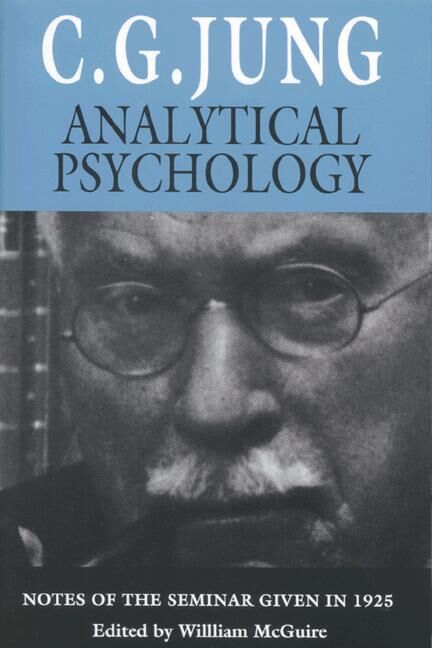
Analytical Psychology
For C. G. Jung, 1925 was a watershed year. He turned fifty, visited the Pueblo Indians of New Mexico and the tribesmen of East Africa, published his first book on the principles of analytical psychology meant for the lay public, and gave the first of his formal seminars in English. The seminar, conducted in weekly meetings during the spring and summer, began with a notably personal account of the development of his thinking from 1896 up to his break with Freud in 1912. It moved on to discussions of the basic tenets of analytical psychology--the collective unconscious, typology, the archetypes, and the anima/animus theory. In the elucidation of that theory, Jung analyzed in detail the symbolism in Rider Haggard's She and other novels. Besides these literary paradigms, he made use of case material, examples in the fine arts, and diagrams.
eBook

The Jung-Ferenczi Dossier
The acquaintance between Sándor Ferenczi and C G Jung pre-dates their first encounter with Sigmund Freud. Later, a triangular relationship developed when the three men crossed the Atlantic together and spent an extended period in one another's company. Ferenczi's friendship with Jung could not survive the latter's break with Freud, but its development between 1907 and 1913 is evidenced by unpublished letters from Jung to Ferenczi, found in the Ferenczi Archive, now at the Freud Museum.
Journal Article

Emma Jung and Toni Wolff
In Marion Woodman's 1981 interview of Jane Hollister Wheelwright (1905-2004), Wheelwright shares her impressions of Emma Jung, Toni Wolff, and C. G. Jung. Wheelwright believes that Jung's theories of individuation, the animus and the anima, and psychological types liberated some women of her generation. She reflects on succeeding generations of women who have increasing freedom to be themselves and do not resonate with Jung's view of feminine psychology. Wheelwright is frustrated with the patriarchal aspect of some Jungian theory, but believes that Jung's emphasis on individuation freed women to be themselves.
Journal Article

Labyrinths: Emma Jung, Her Marriage to Carl and the Early Years of Psychoanalysis by Catrine Clay -- review
Catrine Clay takes the title of her biography of the Jungs' partnership from Carl's 1925 paper, Marriage as a Psychological Relationship, in which he argues that one's relationship with one's parents -- bad or good -- has a direct influence on one's choice of marital partner. A typical union, he argues, often consists of one party who experienced a positive relationship with their parents, the other the opposite, \"burdened with hereditary traits that are sometimes very difficult to reconcile\". Managing the latter's delicate psychology can be a notable drain on the former, who, as a consequence, \"can easily lose themselves in such a labyrinthine nature, sometimes in not a very agreeable way, since their sole occupation then consists in tracking the other through all the twists and turns of his character\". As Clay's vibrant and engrossing study illustrates, [Carl Jung] could easily have been describing his own marriage, specifically the fate of his intelligent and highly capable wife as she struggled with the caprices of her precociously gifted, but neurotic and infamously mercurial husband.
Newspaper Article
Passion but no progress for this pilgrim
Pilgrim By Timothy Findley (Faber, #10.99) At the centre of Timothy Findley's novel Pilgrim is another book, this one a journal. It belongs to the title character, Pilgrim, a morose art historian who's either cursed with the inability to die or mad enough to think he is. After his latest in a series of unsuccessful suicide attempts, all this in 1912, Pilgrim winds up in a Zurich psychiatric hospital under the care of Carl Jung. Jung reads his journal. This is Findley at his best. Jung's detective work takes us through abstruse speculations and fantastic conceptual vistas, linking together remote landscapes and hermetic lore until it culminates in Jung's theory of the collective unconscious: \"All time - all space - is mine. The collective memory of the whole human race is beside me, sitting in this cave - my brain.\" Along the way Jung's character is laid bare as he ceases trying to cure Pilgrim and begins to learn from him. By the end Jung, too, dreams beyond his years. The affinity with Jung's theory of a collective unconsciousness seems striking. If Findley had, in creating Pilgrim's journal, demonstrated this autonomy of fiction, then the source of Jung's astonishment would not be the journal's vividness but its otherness, its utter irreducibility to the language Jung, [Emma, Jung] and Pilgrim already know. This astonishment is one the reader could share.
Newspaper Article

Book reviews roundup: Nutshell; Labyrinths: Flaneuse
It takes a special kind of writer to pull off a modern interpretation of Hamlet narrated by a sardonic foetus from inside a womb. Fortunately, according to reviewers of his latest novel, [Ian McEwan] is one, and Nutshell is a hit. \"Brilliantly brazen ... a stroke of genius,\" wrote Claire Lowdon in the Sunday Times. \"McEwan is a pentathlete at the top of his game, doing several very different things equally well. Current literary culture rarely awards gold medals for comedy, but this is one performance -- agile, muscular, swift -- you should not miss.\" Others were more guarded. \"The conceit of a foetus racked by conscience is not the only part of this novel that is hard to take entirely seriously,\" wrote Robert Douglas-Fairhurst in the Times, referring to \"narrative detail that papers over the cracks\". Only John Harding in the Daily Mail thought that \"the literary device of an unborn baby narrating a novel from the womb is hardly original\". Most agreed with the Mail on Sunday's Hephzibah Anderson : \"Thanks to the author's linguistic chops, it's a creative gamble that pays off brilliantly ...
Book Review

The Jung offenders: Psychoanalyst's descendants sully his reputation by trying to control it
The atmosphere of nervous embarrassment that's surrounded the reputation of Carl Gustav Jung (1875-1961) in recent years was only deepened last week by the frantic efforts of his family to protect him from a distinguished American biographer, Deirdre Bair. The author of earlier books on Samuel Beckett, Anais Nin and Simone de Beauvoir, she spent 10 years working on Jung, the Swiss psychoanalyst who began his career as a colleague of Sigmund Freud's but then went his own way after their angry breakup in 1913. The result, Jung: A Biography (Little, Brown), appeared two years ago in English to mostly admiring reviews. In 1914, about the time Emma Jung was carrying their fifth child, Carl started a liaison with [Toni Wolff], who was 13 years younger. As a husband, Jung was a scoundrel. Two weeks after Emma gave birth, Jung and his new girlfriend went on a two-week holiday together, leaving his wife and her mother to look after the baby while his own mother cared for the older children. Later, Jung explained: \"Back then I was in the midst of the anima problem,\" the word \"anima\" being his term for the inner personality and also the feminine element in a male personality. He added, \"What could you expect from me? The anima bit me on the forehead and would not let go.\" Canada was among the places that felt Jung's effect. Robertson Davies began reading him in the 1950s and eventually became so caught up in Jungian theory that he built his 1972 novel, The Manticore, around an unlikely but highly detailed Jungian analysis. Because astrology interested Jung, Davies (who usually scorned the fads of the ignorant) consulted an astrologer in New York. Northrop Frye used Jungian terminology as a way of structuring his own ideas. Frye reworked concepts like synchronicity and collective subconscious into terms he found useful. He warmed to Jung's belief that humans desperately need myths and can't function without them.
Newspaper Article

Emma Jung's Marriage to a Tortured Genius
In the 1925 paper \"Marriage as a Psychological Relationship,\" Jung stipulated that in a typical union, one partner has a positive relationship with his or her parents; the other has a more complex tie and is therefore \"burdened with hereditary traits that are sometimes very difficult to reconcile.\" Any semi-sentient observer of American politics has a pretty good idea of what it's like for a smart woman to bind her fortune to a charismatic man with a wandering eye, a fellow who creates a gravitational warp so pronounced that all objects go rolling in his direction.
Book Review

FUNERALS SERVICES AND MEMORIALS
As a Jewish refugee from Hitler's Germany and Mussolini's Italy, where she finished her degrees in medicine and philosophy in Pisa, [EDITH WALLACE] eventually passed through England on her way to New York City. During those at times tumultuous years, she met C.G. Jung and did analytic work with Emma Jung. These encounters were life altering for her. In New York, she decided to become a Jungian analyst herself. Edith was one of the last of the generation of \"Jungians\" who became so out of personal encounters with him, Emma, and others in that \"first generation\" of Jung's circle. She had a long career as a Jungian analyst with a private practice in New York and then in Santa Fe, up to the final year of her life. She brought a timeless appreciation and articulation of Jungian psychological thought along with a poetic grace which was so often reflected in her art work and in her playshops (she did not like the term \"workshop.\") She is survived by her children: Pita Garcia and husband [Jesus Maclean] of Rio Rancho, NM, Caroline Roane and husband Tom of Hobbs, NM, Larry Garduno and wife Lorraine of Widefield, CO, Alfonso Garduno of Denver, CO, Rita Martinez and husband John of Santa Fe, NM, Jose Garduno and wife Judy of Lakewood, CO, Lita Saunders and husband Jim of Tucson, AZ, Geraldine Garduno of Santa Fe, NM, Lorraine Leger of Las Vegas, NV, Lawrence \"BoBo\" Garduno of Las Vegas, NM, Elaine Wilber and husband Scott of Springfield, VA, Leonard Garduno and wife Eloise of Santa Fe, NM, Joann Garduno, Rick Garduno and wife Carla all of Las Vegas, NM, and Ron Garduno and wife Bonnie of Rio Rancho, NM. Oh most beautiful flower of Mt. Carmel, fruitful vine, splendor of Heaven, blessed Mother of the Son of God, Immaculate Virgin, assist me in my necessity. Oh, Star of the Sea, help me and show me herein you are my Mother. Oh Holy Mary, Mother of God, Queen of Heaven and Earth! I humbly beseech you from the bottom of my heart to succor me in this necessity. There are none that can withstand Your power, OH, show me herein you are my mother. Oh [Mary Margaret], conceived without sin, pray for us who have recourse to thee (3x). Holy Mother, I place this cause --- in your hands (3x). Holy Spirit, you who solve all problems, light all roads so that I can attain my goal. You who gave me the Divine gift to forgive all evil against me and that in all instances in my life you are with me. I want in this short prayer to thank you in eternal glory. Thank you for your mercy toward me and mine. The person must say this prayer three consecutive days.
Newspaper Article