
Catalogue Search | MBRL


Are you sure you want to remove the book from the shelf?

{{itemTitle}}
37,237
result(s) for
"Junk bonds"
Sort by:

Insolvency Resolution and the Missing High-Yield Bond Markets
In many countries, poorly functioning bankruptcy procedures force viable but insolvent firms to restructure out of court, where banks may have a bargaining advantage over other creditors. We model the choice of restructuring process and derive implications for the corporate mix of bank and bond financing. Empirical patterns match the model: inefficient bankruptcy in a country is associated with less bond issuance by risky, but not by safe, borrowers. This pattern holds for both levels of and changes in bankruptcy recovery. Our results establish a link between bankruptcy reform and corporate bond markets, especially high-yield markets.
Journal Article

An Index of the Yields of Junk Bonds, 1910–1955
We present a new monthly index of the yields on junk bonds (high risk, high yield bonds) for the period 1910–1955. This index supplements the indexes of government bond yields, and Aaa and Baa corporate bond yields economic historians have relied on previously to describe the long-term risk spectrum. First, we describe our sources and methods. Then we show that our junk bond index contains information that is not in the closest alternative, and suggest some ways that the junk bond index could be used to enrich our understanding of the turbulent middle years of the twentieth century.
Journal Article

The Illiquidity of Corporate Bonds
This paper examines the illiquidity of corporate bonds and its asset-pricing implications. Using transactions data from 2003 to 2009, we show that the illiquidity in corporate bonds is substantial, significantly greater than what can be explained by bid-ask spreads. We establish a strong link between bond illiquidity and bond prices. In aggregate, changes in market-level illiquidity explain a substantial part of the time variation in yield spreads of high-rated (AAA through A) bonds, overshadowing the credit risk component. In the cross-section, the bond-level illiquidity measure explains individual bond yield spreads with large economic significance.
Journal Article
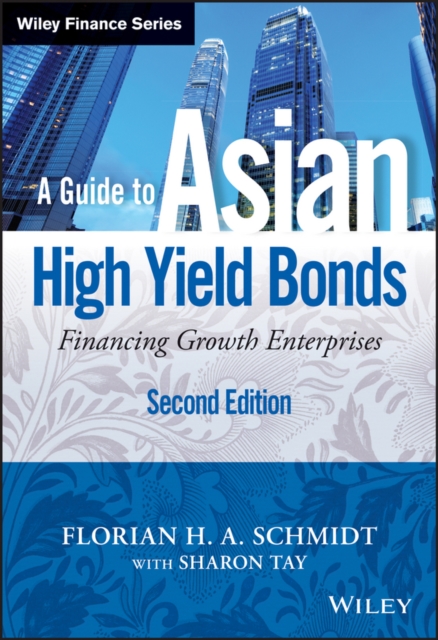
A Guide to Asian High Yield Bonds
An up-to-date, comprehensive analysis of the high-yield bond market in Asia
Beginning with a general definition of high-yield bond products and where they reside within the corporate capital structure, this newly updated guide looks at the development of high-yield bonds in the United States and Europe before analysing this sector in Asia. It covers issuer countries and industries, ratings, and size distributions, and also covers the diversification of the high-yield issuer universe. It includes a thorough technical analysis of high-yield bond structures commonly employed in Asian transactions, including discussion of the respective covenants and security packages that vary widely across the region. Chapters and sections new to this edition cover such subjects as high-yield bond restructuring, the new high-yield \"Dim Sum\" market, and the high-yield placement market shutdown of 2008 – 2009. Finally, the book looks at the new characteristics of Asian economies for indicators on how the high-yield market will develop there are the near future.
* Offers an extremely detailed analysis of Asia's high-yield bond market
* Features new and updated material, including new coverage of the key differences between Asian structures and United States structures
* Ideal for CFOs of companies contemplating high-yield issuance, as well as investment bankers, bank credit analysts, portfolio managers, and institutional investors
eBook

A three-stage model of the volatility-volume relation in the Junk bond market during the 2007-2008 financial crisis
Purpose
The purpose of this paper is to examine the joint dynamics of volatility–volume relation in the high-yield (junk) corporate bond market during the 2007–2008 financial crisis.
Design/methodology/approach
The author proposes a new empirical model of three-stage equations to better estimate the volume–volatility relation that helps in alleviating three econometrical problems. In Stage 1, the author estimates the fitted values of trading volume using a censored regression model, to alleviate the truncation problems of using Transaction Reporting and Compliance Engine data. In Stage 2, the author calculates the fitted values of bond return volatility using asymmetric Sign-GARCH model, to control for the asymmetric volatility in return series. In Stage 3, the author uses the fitted values of trading volume from the censored regression model (Stage 1) and the fitted values of return volatility from the GARCH model (Stage 2), to better alleviate the endogeneity problems between both variables.
Findings
The central finding is that conclusions about the statistical significance and the direction of the volume–volatility relationship in the junk bond market are dependent on the econometric methodology used.
Originality/value
From a practitioner perspective, it is important for professional traders holding positions in fixed income securities in their trading accounts to be aware of their asymmetric time-varying volume–volatility shifting trends. Such knowledge helps traders diversify their positions and manage their portfolios more appropriately.
Journal Article
Issuer Quality and Corporate Bond Returns
We show that the credit quality of corporate debt issuers deteriorates during credit booms and that this deterioration forecasts low excess returns to corporate bondholders. The key insight is that changes in the pricing of credit risk disproportionately affect the financing costs faced by low-quality firms, so debt issuance of low-quality firms is particularly useful for forecasting bond returns. We show that a significant decline in issuer quality is a more reliable signal of credit market overheating than rapid aggregate credit growth. We use these findings to investigate the forces driving time variation in expected corporate bond returns.
Journal Article
Measuring Abnormal Bond Performance
We analyze the empirical power and specification of test statistics designed to detect abnormal bond returns in corporate event studies, using monthly and daily data. We find that test statistics based on frequently used methods of calculating abnormal monthly bond returns are biased. Most methods implemented in monthly data also lack power to detect abnormal returns. We also consider unique issues arising when using the newly available daily bond data, and formulate and test methods to calculate daily abnormal bond returns. Using daily bond data significantly increases the power of the tests, relative to the monthly data. Weighting individual trades by size while eliminating noninstitutional trades from the TRACE data also increases the power of the tests to detect abnormal performance, relative to using all trades or the last price of the day. Further, value-weighted portfolio-matching approaches are better specified and more powerful than equal-weighted approaches. Finally, we examine abnormal bond returns to acquirers around mergers and acquisitions to demonstrate how the abnormal return model and use of daily versus monthly data can affect inferences.
Journal Article

High yield debt
\"Examine the high yield market for a clear understanding of this evolving asset class High Yield Debt is the one-stop resource for wealth advisors seeking an in-depth understanding of this misunderstood asset class. The high yield market provides a diverse opportunity set, including fixed and floating rate debt, high and low quality debt issues and both short- and long-term duration; but many fail to understand that not all high yield exposure is the same, and that different market segments and strategies work best at different points in the economic cycle. This guide addresses the confusion surrounding high yield debt. You'll find the information you need to decide whether or not to buy in to a high yield fund, and how to evaluate the opportunities and risks without getting lost in the jargon. The U.S. corporate high yield market is worth $2.4 trillion--more than the stock markets of most developed countries. Market growth has increased the number of funds with high yield exposure, as well as the types of debt products available for investment. This book breaks it down into concrete terms, providing the answers advisors need to effectively evaluate the opportunities on offer. Understand the high yield asset class Learn the debt structures, performance and defaults Evaluate risk and investment opportunities Penetrate the jargon to make sense of high yield investment Over 300 publicly traded funds provide exposure to U.S. high yield, but despite it's size and ubiquity, understanding of the asset class as a whole remains somewhat of a rarity--even among participants. A lack of transparency is partially to blame, but the market's evolution over the past fifteen years is the larger issue. High Yield Debt explains the modern high yield market in real terms, providing a much-needed resource for the savvy investor\"--
Book

Are Capital Market Anomalies Common to Equity and Corporate Bond Markets? An Empirical Investigation
Corporate bond returns exhibit predictability in a manner consistent with efficient pricing. Many equity characteristics, such as accruals, standardized unexpected earnings, and idiosyncratic volatility, do not impact bond returns. Profitability and asset growth are negatively related to corporate bond returns. Because firms that are profitable or have high asset growth (and hence more collateral) should be less risky, with lower required returns, the evidence accords with the risk–reward paradigm. Past equity returns are positively related to bond returns, indicating that equities lead bonds. Cross-sectional bond return predictors generally do not provide materially high Sharpe ratios after accounting for trading costs.
Journal Article
Corporate Yield Spreads and Bond Liquidity
We find that liquidity is priced in corporate yield spreads. Using a battery of liquidity measures covering over 4,000 corporate bonds and spanning both investment grade and speculative categories, we find that more illiquid bonds earn higher yield spreads, and an improvement in liquidity causes a significant reduction in yield spreads. These results hold after controlling for common bond-specific, firm-specific, and macroeconomic variables, and are robust to issuers' fixed effect and potential endogeneity bias. Our findings justify the concern in the default risk literature that neither the level nor the dynamic of yield spreads can be fully explained by default risk determinants.
Journal Article