
Catalogue Search | MBRL


Are you sure you want to remove the book from the shelf?

{{itemTitle}}
612
result(s) for
"Juvenile delinquents Psychology."
Sort by:

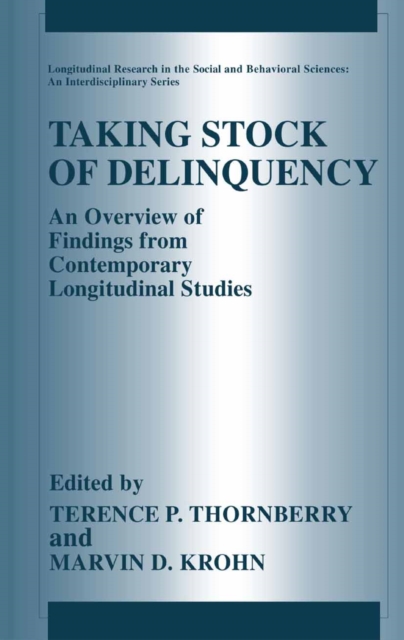
Taking stock of delinquency : an overview of findings from contemporary longitudinal studies
A comprehensive synthesis of the empirical findings of seven important ongoing longitudinal studies of delinquency. The seven projects included in this volume represent much of the diversity found in individual-based panel studies of antisocial behaviour. Individually and collectively, the results of these investigations have been published in a wide range of disciplinary outlets, thus making it difficult to identify common themes and general principles. This volume intends to provide a comprehensive and unified picture of empirical results, both within these studies and across them. One of the fundamental purposes of the text is to examine the extent to which these studies answer the basic question of the origins of delinquent and criminal careers despite their varying guiding theories, methods and settings. 'Taking Stock in Delinquency' is a resource for criminologists, psychologists, sociologists, and upper-level students on juvenile delinquency, criminology, developmental psychology, and deviant behaviour.
eBook

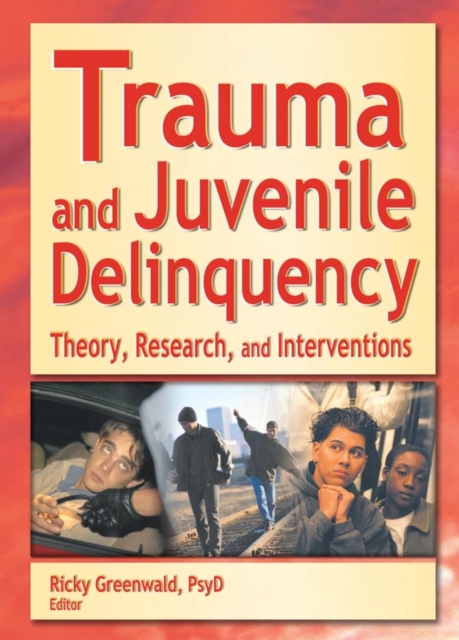
Trauma and Juvenile Delinquency
Learn how and why trauma is relevant to juvenile delinquency-and what to do about it!
This groundbreaking book addresses the connection between childhood trauma and juvenile delinquency. Trauma and Juvenile Delinquency: Theory, Research, and Interventions begins with two chapters presenting theoretical models of the relationship between trauma and the development/persistence of antisocial behavior. Another chapter addresses trauma-related assessment issues for juveniles, and several chapters present cutting-edge research on various aspects of the relationship between trauma and delinquency. Finally, several chapters focus on theory-based and empirically supported trauma-focused therapeutic interventions for juvenile delinquents. No other single source provides such breadth and depth of coverage on this topic!
From the editor: 'Disruptive behavior disorders are by far the largest type of mental health referral for children and adolescents, while juvenile crime and violence continue to be major social concerns. Several bodies of literature have converged to suggest that trauma is more than incidental to the problem of juvenile delinquency, it contributes to the problem.'
Trauma and Juvenile Delinquency: Theory, Research, and Interventions explores:
how trauma relates to conduct disorder
the connection between traumatic victimization and oppositional/defiance problems
ways to assess PTSD in adolescents
how exposure to violence, delinquent activity, and posttraumatic stress symptomatology are related
the unique trauma histories of incarcerated girls and the problems they have adjusting to life within the juvenile justice system
how to develop group therapy services for incarcerated male juvenile offenders with PTSD
This valuable book also examines the effectiveness of EMDR (Eye Movement Desensitization and Reprocessing) for boys with conduct problems, MASTR (Motivation - Adaptive
eBook

What Have I Done?
What Have I Done? is a photocopiable resource with downloadable online content to encourage empathy in young people who commit crimes or hurt others through their actions. It is designed to be used directly with young people who have committed a specific crime or caused harm and distress to others through their actions.
eBook


The female offender : girls, women, and crime
Scholarship in criminology over the last few decades has often left little room for research and theory on how female offenders are perceived and handled in the criminal justice system. In truth, one out of every four juveniles arrested is female, and the population of women in prison has tripled in the past decade. Co-authored by Meda Chesney-Lind, one of the pioneers in the development of the feminist theoretical perspective in criminology, The Female Offender: Girls, Women and Crime, Third Edition redresses these issues.In an engaging style, authors Meda Chesney-Lind and Lisa Pasko explore gender and cultural factors in women's lives that often precede criminal behavior and address the question of whether female offenders are more violent today than in the past. The authors provide a revealing look at how public discomfort with the idea of women as criminals significantly impacts the treatment received by this offender population. The text covers additional topics such the interaction of sexism, racism, and social class inequalities that results in an increase of female offenders, as well as the imprisonment binge that has resulted in an increasing number of girls and women being incarcerated.
eBook

Miller's children : why giving teenage killers a second chance matters for all of us
\"Miller's Children is a comprehensive look at the consequences of the US Supreme Court's decision in the case of Miller v. Alabama, which outlawed mandatory life-without-parole sentences for juvenile murderers. This book describes the author's fieldwork as a psychological expert witness in more than forty resentencing cases of juveniles affected by the Miller decision (and follow-up rulings), providing a wide-ranging review of research on human development in adolescence and early adulthood. It focuses on how and why convicted teenage murderers have been able to accomplish dramatic rehabilitation and transformation, emphasizing the role of spiritual development, education, reflection, and mentoring in that process.\"--Provided by publisher.
Book
Delinquency, Development, and Social Policy
In this book, David E. Brandt examines the legal, psychological, and cultural issues relevant to understanding antisocial behavior in adolescence. Based on his own research and a broad analysis of recent work in the field, Brandt identifies the factors that are common in cases of delinquency.
The discussion considers the long-term effects of social issues such as poverty as well as psychological issues such as the high levels of stress and anxiety suffered during childhood by many delinquents. He shows how a failure to meet the developmental needs of children-at both the family level and at a broader social and political level-is at the core of the problem of juvenile delinquency. Brandt concludes with an inquiry into how best to prevent delinquency. Programs that address the developmental needs of children, Brandt argues, are more effective than policing, juvenile courts, or incarceration.
eBook