
Catalogue Search | MBRL


Are you sure you want to remove the book from the shelf?

{{itemTitle}}
61
result(s) for
"Kafka, Franz, 1883–1924"
Sort by:

Franz Kafka : the drawings
\"The year 2019 brought a sensational discovery: hundreds of drawings by the writer Franz Kafka (1883-1924) were found in a private collection that for decades had been kept under lock and key. Until now, only a few of Kafka's drawings were widely known. Although Kafka is renowned for his written work, his drawings are evidence of what his literary executor Max Brod termed his \"double talent.\" Irresistible and full of fascinating figures, shifting from the realistic to the fantastic, the grotesque, the uncanny, and the carnivalesque, they illuminate a previously unknown side of the quintessential modernist author. Kafka's drawings span his full career, but he drew most intensively in his university years, between 1901 and 1907. An entire booklet of drawings from this period is among the many new discoveries, along with dozens of loose sheets. Published for the first time in English, these newly available materials are collected with his known works in a complete catalogue raisonnâe of more than 240 illustrations, reproduced in full color. Essays by Andreas Kilcher and Judith Butler provide essential background for this lavish volume, interpreting the drawings in their own right while also reconciling their place in Kafka's larger oeuvre\"-- Provided by publisher.
BOOK

Lambent Traces
On the night of September 22, 1912, Franz Kafka wrote his story \"The Judgment,\" which came out of him \"like a regular birth.\" This act of creation struck him as an unmistakable sign of his literary destiny. Thereafter, the search of many of his characters for the Law, for a home, for artistic fulfillment can be understood as a figure for Kafka's own search to reproduce the ecstasy of a single night.
InLambent Traces: Franz Kafka, the preeminent American critic and translator of Franz Kafka traces the implications of Kafka's literary breakthrough. Kafka's first concern was not his responsibility to his culture but to his fate as literature, which he pursued by exploring \"the limits of the human.\" At the same time, he kept his transcendental longings sober by noting--with incomparable irony--their virtual impossibility.
At times Kafka's passion for personal transcendence as a writer entered into a torturous and witty conflict with his desire for another sort of transcendence, one driven by a modern Gnosticism. This struggle prompted him continually to scrutinize different kinds of mediation, such as confessional writing, the dream, the media, the idea of marriage, skepticism, asceticism, and the imitation of death.Lambent Traces: Franz Kafkaconcludes with a reconstruction and critique of the approaches to Kafka by such major critics as Adorno, Gilman, and Deleuze and Guattari..
eBook

Konundrum : selected prose
\"In this new selection and translation, Peter Wortsman mines Franz Kafka's entire opus of short prose--including works published in the author's brief lifetime, stories published posthumously, journals, and letters--for narratives that sound the imaginative depths of the great German-Jewish scribe from Prague. It is the first volume in English to consider his deeply strange, resonantly humane letters and journal entries alongside his classic short fiction and lyrical vignettes. 'Transformed' is a vivid retranslation of one of Kafka's signature stories, 'Die Verwandlung,' commonly rendered in English as 'The Metamorphosis.' Composed of short, black-comic parables, fables, fairy tales, reflections, as well as classic stories like 'In the Penal Colony,' Kafka's uncanny foreshadowing of the Twentieth Century's nightmare, Konundrum refreshes the writer's mythic storytelling powers for a new generation of readers.\"-- Provided by publisher
BOOK
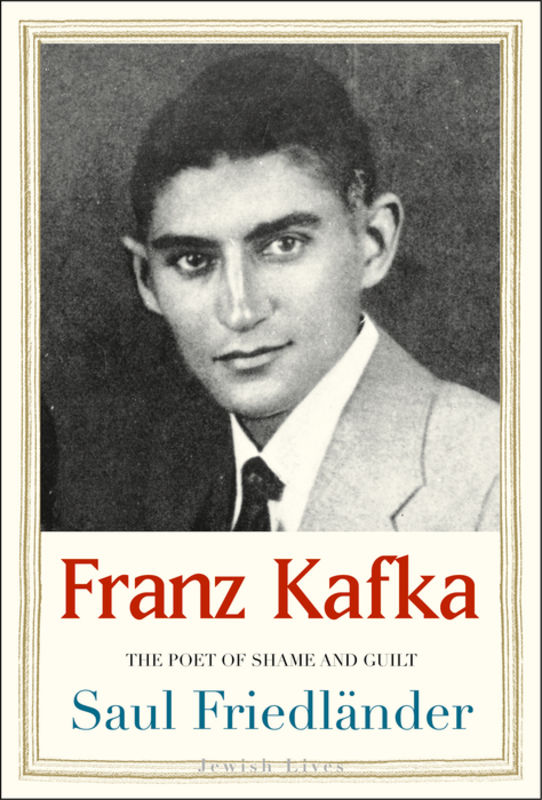
Franz Kafka
Franz Kafka was the poet of his own disorder. Throughout his life he struggled with a pervasive sense of shame and guilt that left traces in his daily existence-in his many letters, in his extensive diaries, and especially in his fiction. This stimulating book investigates some of the sources of Kafka's personal anguish and its complex reflections in his imaginary world.
In his query, Saul Friedländer probes major aspects of Kafka's life (family, Judaism, love and sex, writing, illness, and despair) that until now have been skewed by posthumous censorship. Contrary to Kafka's dying request that all his papers be burned, Max Brod, Kafka's closest friend and literary executor, edited and published the author's novels and other works soon after his death in 1924. Friedländer shows that, when reinserted in Kafka's letters and diaries, deleted segments lift the mask of \"sainthood\" frequently attached to the writer and thus restore previously hidden aspects of his individuality.
eBook

Mediamorphosis : Kafka and the moving image
\"The idea of a visual manifestation of the work of Franz Kafka was denied by many--first and foremost by Kafka himself, who famously urged his publisher to avoid an image of the insect on the cover of The Metamorphosis. Be that as it may, it is unlikely that a central progenitor of twentieth-century art and thought as Kafka can be fully understood without reference to the revolutionary artistic medium of his century: cinema. This volume compiles essays by some of today's leading forces in the scholarship of Kafka as well as film studies to provide a thorough investigation of the reciprocal relations between the work of Kafka and the cinematic medium. This collection approaches the theoretical integration of Kafka and cinema via such issues as the cinematic qualities in Kafka's prose and the possibility of a visual manifestation of the Kafkaesque. Alongside these debates the volume investigates the capacity of cinema to incorporate and express the unique qualities of the Kafkaesque world through an analysis of cinematic adaptations of Kafka's prose, such as Michael Haneke's The Castle and Straub-Huillet's Class Relations, as well as of films which carry a more subtle relation to Kafka's oeuvre, such as the cinematic works of David Cronenberg, the films of the Coen brothers, Chris Marker's 'film-essay', Charlie Chaplin's tramp and others.\"--Page 4 of cover.
BOOK

The Imperative to Write: Destitutions of the Sublime in Kafka, Blanchot and Beckett
Is writing haunted by a categorical imperative? Does the Kantian sublime continue to shape the writer's vocation, even for twentieth-century authors? What precise shape, form, or figure does this residue of sublimity take in the fictions that follow from itand that leave it in ruins? This book explores these questions through readings of three authors who bear witness to an ambiguous exigency: writing as a demanding and exclusive task, at odds with life, but also a mere compulsion, a drive without end or reason, even a kind of torture. If Kafka, Blanchot, and Beckett mimic a sublime vocation in their extreme devotion to writing, they do so in full awareness that the trajectory it dictates leads not to metaphysical redemption but rather downward, into the uncanny element of fiction. As this book argues, the sublime has always been a deeply melancholy affair, even in its classical Kantian form, but it is in the attenuated speech of narrative voices progressively stripped of their resources and rewards that the true nature of this melancholy is revealed.
eBook


Transforming Kafka
Lyrical, mysterious, and laden with symbolism, Franz Kafka's novels and stories have been translated into more than forty languages ranging from Icelandic to Japanese. InTransforming Kafka, Patrick O'Neill approaches these texts through the method he pioneered inPolyglot JoyceandImpossible Joyce, considering the many translations of each work as a single, multilingual \"macrotext.\"
Examining three novels -The Trial,The Castle, andAmerica- and two short stories - \"The Judgment\" and \"The Metamorphosis\" - O'Neill offers comparative readings that consider both intertextual and intratextual themes. His innovative approach shows how comparing translations extends and expands the potential meanings of the text and reveals the subtle differences among the hundreds of translations of Kafka's work. A sophisticated analysis of the ways in which translation shapes, rearranges, and expands our understanding of literary works,Transforming Kafkais a unique approach to reading the works of a literary giant.
eBook

Apocalyptic Futures:Marked Bodies and the Violence of the Text in Kafka, Conrad, and Coetzee
The primary argument that Russell Samolsky makes in this book is that certain modern literary texts have apocalyptic futures. His contention, however, is not, as many eminent thinkers have claimed, that great writers have clairvoyant powers; rather he examines the ways in which a text might be written so as to incorporate an apocalyptic event into the orbit of its future reception. He is thus concerned with the way in which apocalyptic works might be said to solicit their future receptions. In analyzing this dialectic between an apocalyptic book and a future catastrophic event, Apocalyptic Futures also sets out to articulate a new theory and textual practice of the relation between literary reception and embodiment. Deploying the double register of marksto display the means by which a text both codes as well as targets mutilated bodies, his specific focus is on the way in which these bodies are incorporated into the field of texts by Franz Kafka, Joseph Conrad and J.M. Coetzee. Situating In the Penal Colonyin relation to the Holocaust, Heart of Darkness to the Rwandan genocide and Waiting for the Barbarians to the revelations of torture in apartheid South Africa and contemporary Iraq, he argues for the ethical and political importance of reading these literary works' apocalyptic futuresnow in our own urgent and perilous situation. To this end, he draws on contemporary messianic discourse to establish the ethical and political resistance of the marked body to its apocalyptic incorporation. In this regard, what is finally at stake in his analysis is his hope of finding the possibility of a hidden countervailing redemptive force at work in these and other texts.
eBook