
Catalogue Search | MBRL


Are you sure you want to remove the book from the shelf?

{{itemTitle}}
42
result(s) for
"Kaifeng"
Sort by:

The Chinese Jews of Kaifeng
This scholarly collection examines the origins, history, and contemporary nature of Chinese Judaism in the community of Kaifeng. These essays, written by a diverse, international team of contributors, explore the culture and history of this thousand-year-old Jewish community, whose synthesis of Chinese and Jewish cultures helped guarantee its survival. Part I of this study analyzes the origin and historical development of the Kaifeng community, as well as the unique cultural synthesis it engendered. Part II explores the contemporary nature of this Chinese Jewish community, particularly examining the community’s relationship to Jewish organizations outside of China, the impact of Western Jewish contact, and the tenuous nature of Jewish identity in Kaifeng.
eBook

Towards an Operational Use of Geophysics for Archaeology in Henan (China): Methodological Approach and Results in Kaifeng
One of the major issues in buried archeological sites especially if characterized by intense human activity, complex structures, and several constructive phases, is: to what depth conduct the excavation? The answer depends on a number of factors, among these one of the most important is the a priori and reliable knowledge of what the subsoil can preserve. To this end, geophysics (if used in strong synergy with archaeological research) can help in the planning of time, depth, and modes of excavation also when the physical characteristics of the remains and their matrix are not ideal for archaeo-geophysical applications. This is the case of a great part of the archaeological sites in Henan, the cradle of the most important cultures in China and the seat of several capitals for more than two millennia. There, the high depth of buried remains covered by alluvial deposits and the building materials, mainly made by rammed earth, did not favor the use of geophysics. In this paper, we present and discuss the GPR and ERT prospection we conducted in Kaifeng (Henan, China), nearby a gate of the city walls dated to the Northern Song Dynasty. The integration of GPR and ERT provided useful information for the identification and characterization of archaeological remains buried at different depths. Actually, each geophysical technique, GPR frequency (used for the data acquisition) as well as each way to analyze and visualize the results (from radargrams to time slice) only provided partial information of little use if alone. The integration of the diverse techniques, data processing and visualization enabled us to optimize the penetration capability, the resolution for the detection of archaeological features and their interpretation. Finally, the results obtained from the GPR and ERT surveys were correlated with archaeological stratigraphy, available nearby the investigated area. This enabled us to further improve the interpretation of results from GPR and ERT survey and also to date the anthropogenic layers from Qing to Yuan Dynasty.
Journal Article

The Image of Jews in Contemporary China
Bookstores in Chinese cities are stocked with dozens of Chinese-language books on how Jews conduct business, manage the world, and raise their children. At least ten universities throughout China offer popular Jewish Studies programs, some with advanced degrees. Yet there are virtually no Jews in China. The Chinese are constructing an identity for a people that the large majority of them will never meet. This edited volume critically examines the image of Jews from the contemporary perspective of ordinary Chinese citizens. It includes chapters on Chinese Jewish Studies programs, popular Chinese books and blogs about Jews, China’s relations with Israel, and innovative examinations of the ancient Jewish community of Kaifeng.
eBook
Assessment of Ecosystem Services Supply and Demand (Mis)matches for Urban Ecological Management: A Case Study in the Zhengzhou–Kaifeng–Luoyang Cities
Accurate supply and demand matching of ecosystem services (ESs) is important for managing regional ecosystems. On the basis of remote-sensing, meteorological, and socio-economic data, we mapped the supply, demand, and matching status of four ESs (i.e., water production, carbon sequestration, food supply, and soil conservation) using biophysical models and the ArcGIS spatial analysis module within the Zhengzhou–Kaifeng–Luoyang (ZKL) urban agglomeration in 2018. Four-quadrant analysis was employed to identify the spatial matching types of supply-demand relationships within the study region. The results are as follows. The supply-demand ratios of different ESs in the cell scale exhibit different spatial characteristics because of major influencing factors, including the natural environment (e.g., precipitation and temperature) and social development (e.g., urbanization level). Analysis of the supply-demand imbalances of the four ESs indicates that water production is deficient across the entire research area, whereas the whole research area’s carbon sequestration, food supply, and soil conversation are in the surplus state. Regarding the spatial matching types for supply and demand of the four ecosystem services, water production is dominated by the “low–low (low supply and low demand)” type. Carbon sequestration is dominated by the “low–low” and “high–low (high supply and low demand)” types. The “low–low” type dominates food supply and soil conservation. Due to the severity of the deficit in water production, all districts and counties in the ZKL urban agglomeration are identified as areas requiring ecological conservation, ecological restoration, or ecological improvement. Development guidance strategies and planning suggestions are proposed in different ecological areas. These policies could also be applied in other similar urban agglomerations.
Journal Article


A Framework for Optimizing Green Infrastructure Networks Based on Landscape Connectivity and Ecosystem Services
Optimizing the layout of green infrastructure (GI) is an effective way to alleviate the fragmentation of urban landscapes, coordinate the relationship between urban development and urban ecosystem services, and ensure the sustainable development of cities. This study provides a new technical framework for optimizing GI networks based on a case study of Kaifeng, an exemplar of many ancient cities along the Yellow River in China. To do this, we used a morphological spatial pattern analysis (MSPA) methodology and combined it with Procedure for mAthematical aNalysis of lanDscape evOlution and equilibRium scenarios Assessment (PANDORA) model to determine the hubs of the GI network. Then we employed a least-cost path approach to simulate potential corridors linking the hubs. We further identify the key ‘pinch points’ of the GI network that need priority protection based on circuit theory. Altogether, this framework takes patches that have a high level of ecosystem services and are more important in maintaining overall connectivity as hubs, thereby improving the accuracy of hub identification. Moreover, it establishes a direct connection between GI construction and ecosystem services, and improves biodiversity conservation by optimizing the network structure of GI. The results of the case study show that this framework is suitable for GI planning and construction, and can provide effective technical support for the formulation of urban sustainable development strategies.
Journal Article
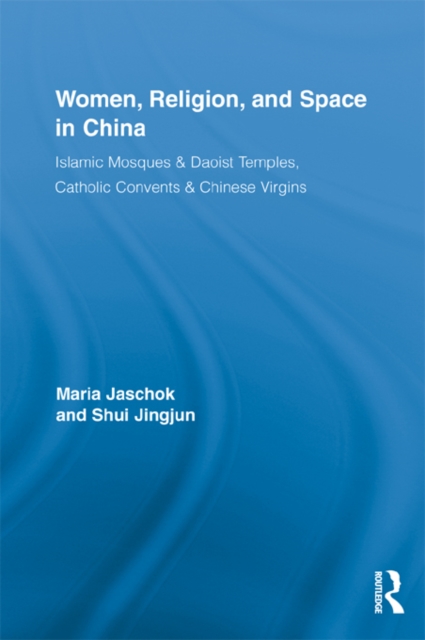
Women, Religion, and Space in China
What enables women to hold firm in their beliefs in the face of long years of hostile persecution by the Communist party/state? How do women withstand daily discrimination and prolonged hardship under a Communist regime which held rejection of religious beliefs and practices as a patriotic duty? Through the use of archival and ethnographic sources and of rich life testimonies, this book provides a rare glimpse into how women came to find solace and happiness in the flourishing, female-dominated traditions of local Islamic women's mosques, Daoist nunneries and Catholic convents in China. These women passionately - often against unimaginable odds - defended sites of prayer, education and congregation as their spiritual home and their promise of heaven, but also as their rightful claim to equal entitlements with men.
eBook

Correlation Analysis of Wetland Pattern Changes and Groundwater in Kaifeng Downstream of the Yellow River, China
(1) Background: This study aims to provide a viable theoretical framework for wetland ecological restoration in the lower reaches of the Yellow River within the city of Kaifeng, China. (2) Methods: Using remote sensing and image interpretation to identify the long-term evolution characteristics of wetlands in the study area and analyzing the impact of runoff, riverway changes, and groundwater flow fields in the lower reaches of the Yellow River on wetland conditions along the Yellow River. (3) Results: With natural wetland as its major wetland type, the study area saw an increase in the total wetland area from 2000–2021. Among others, the total area of artificial wetlands increased by 43%, while that of flooding wetlands in natural wetlands decreased by 37%. Surface water discharge and water level saw a year-by-year drop. Moreover, the significant wandering and oscillations of riverways led to a direct impact on the area and stability of tidal flat wetlands. After 2010, affected by rainfall and exploitation, the groundwater level declined sharply. The degraded areas of artificial wetlands were mainly distributed at the northern embankment of the Yellow River, where the groundwater burial depth decreased significantly. In contrast, at the southern embankment, for the sake of the irrigation canal diverted from the Yellow River, new back river depressions had formed and helped build a more stable ecological environment. Yellow River water levels and discharge directly impacted the area of rivers and flooding wetlands. The decline in groundwater levels led to the degradation of ponds in artificial wetlands. (4) Conclusions: The reduction of groundwater exploitation and an adequate supply of diverted Yellow River water were conducive to the development of wetlands in the back river depressions on the outside of the Yellow River embankment.
Journal Article

Research on quantification method of water pollution ecological environment losses
Economic and social development have worsened the situation of water pollution and even the ecological environment. It is helpful to quantify the water pollution ecological environment losses for decision-makers to formulate reasonable pollution control plans. However, the current quantitative analyses led by economic methods are not comprehensive and systematic. Therefore, based on the emergy theory and method system of eco-economics, this study analyzed the internal energy flow process of the water-polluted ecosystem, discussed the composition of water-polluted ecological environment loss, and proposed a quantitative model of water-polluted ecological environment loss based on the emergy analysis method. It can reasonably quantify the ecological environment loss caused by water pollution and provide a reference for optimizing regional industrial layout, scientifically formulating pollution control planning, and promoting the sustainable development of the ecosystem. Taking Kaifeng City in Henan Province as an example, the rationality of the model is verified. The results show that the annual average total energy value of water pollution ecological environment loss in Kaifeng City is 3.83 × 10²⁰sej, equivalent to 145 million yuan (0.76) of Kaifeng's gross domestic product (GDP) in 2018.
Journal Article
Rise and Fall of the Grand Canal in the Ancient Kaifeng City of China: Role of the Grand Canal and Water Supply in Urban and Regional Development
In the long history of the feudal society of China, Kaifeng played a vital role. During the Northern Song Dynasty, Kaifeng became a worldwide metropolis. The important reason was that the Grand Canal, which was excavated during the Sui Dynasty, became the main transportation artery for the political and military center of the north and the economic center of the south. Furthermore, Kaifeng was located at the center of the Grand Canal, which made it the capital of the later Northern Song Dynasty. The Northern Song Dynasty was called “the canal-centered era.” The development of the canal caused a series of major changes in the society of the Northern Song Dynasty that were different from the previous ones, which directly led to the transportation revolution, and in turn, promoted the commercial revolution and the urbanization of Kaifeng. The development of commerce contributed to the agricultural and money revolutions. After the Northern Song Dynasty, the political center moved to the south. During the Yuan Dynasty, the excavation of the Grand Canal made it so that water transport did not have to pass through the Central Plains. The relocation of the political center and the change in the canal route made Kaifeng lose the value of connecting the north and south, resulting in the long-time fall of the Bianhe River. Kaifeng, which had prospered for more than 100 years, declined gradually, and by the end of the Qing Dynasty, it became a common town in the Central Plains. In ancient China, the rise and fall of cities and regions were closely related to the canal, and the relationship between Kaifeng and the Grand Canal was typical. The history may provide some inspiration for the increasingly severe urban and regional sustainable development issues in contemporary times.
Journal Article