
Catalogue Search | MBRL


Are you sure you want to remove the book from the shelf?

{{itemTitle}}
265
result(s) for
"Kairo"
Sort by:


‘Where are the prophets?’: How academic theology failed us
Against the backdrop of precarious global and local politics – a threat to democracy, global wars, xenophobic violence, oppressions of sexual minorities and a permanent youth precariat in South Africa – do academic theologies foster prophetic responses or succumb to imperial co-option? Departing from the Kairos Document’s threefold call to conversion, this article laments the lack of a Kairos consciousness today, with reference to five areas of concern. Contribution: This study explores what theological formation for prophetic communities might look like, marked by Le Bruyns’ three elements of criticality, contextuality and change; participating in concrete sites of struggle and sustained by a ‘lived faith’. It imagines theological schools as ‘schools of prophets, servants and healers’, not only breaking the silence but also going beyond prophetic rhetoric through embodied theologising.
Journal Article

The Literary Atlas of Cairo : One Hundred Years on the Streets of the city
Unlike The Literary Atlas of Cairo, which focuses on the literary geopolitics of the cityscape, this companion volume immerses the reader in the complex network of socioeconomic and cultural lives in the city. The seven chapters first introduce the reader to representations of some of Cairo's prominent profiles, both political and cultural, and their impact on the city's literary geography, before presenting a spectrum of readings of the city by its multiethnic, multinational, and multilingual writers across class, gender, and generation. Daunting images of colonial school experiences and startling contrasts of postcolonial educational realities are revealed, while Cairo's moments of political participation and oppression are illustrated, as well as the space accorded to women within the city across history and class. The city's marginals are placed on its literary map, alongside representations of the relationship between writing and drugs, and the places, paraphernalia, and products of the drug world across class and time.
Book
Towards a Kairos theology
This article proposes that the theology of Moltmann – particularly his reflections on time, eschatology and the Trinity – offers profound resources for reimagining Kairos theology in the present. Moltmann’s theology enables us to think of time not only as a moment of rupture and crises, but as promise and hope, relationality and participation, rhythm and direction, fulfilment and discernment. Time is deeply theological. Read alongside the Kairos Document, Moltmann’s work helps us move from kairos as moment to kairos as grammar.ContributionThrough a close reading of Moltmann’s major works, this article seeks to demonstrate how his timely theology may extend the legacy of kairos for a new generation of theological reflection and public witness in South Africa.
Journal Article

Synodality and interreligious developments in Kairos theology: Pathways for today’s Catholic Church
In April 2021, the late Pope Francis approved the initial programme for the celebration of the 16th Ordinary General Assembly of the Synod of Bishops within the Catholic Church with the theme ‘For a Synodal Church: Communion, Participation, and Mission’. While the timeline for the Synod on Synodality, the colloquial appellation given to this event, was extended until 2024, its goals did not deviate from those laid out in this initial programme. In this article, the author takes one of these goals, and a neglected one at that – dialogue in church and society, with a particular focus on interreligious engagement – as his point of departure. In doing so, the author examines the import of the 1985 South African Kairos Document and the interreligious developments in Kairos theology it spawned in the 2009 Israel-Palestine Kairos Document for more faithfully enacting the synodal missional ecclesiology called for by the 2021–2024 Synod on Synodality within the Catholic Church today.ContributionThe author argues that Kairos theology offers a number of promising interreligious pathways for furthering the development of a Catholic synodal missional ecclesiology in the present, in part because its means of production is inherently of the people – operating as a protological and prototypical form of what an authentic Catholic synodal missional ecclesiology is and can be – and also because this form of being and doing church has practical, pastoral, and theological applications for advancing the shared experiences of dialogue and commitment that Christian believers share with those of other religions and with non-believers alike.
Journal Article
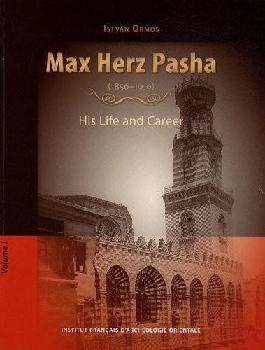
Max Herz Pasha 1856-1919 : his life and career
Max Herz was a Hungarian architect who came to Egypt in 1880 and stayed until 1914. He joined the Technical Bureau of the Ministry of Waqf in 1881 and in 1890 was made the primary architect of the Comité. He was the de facto head of the Comité and for about twenty-five years the one responsible for the restoration and conservation of the Islamic monuments in Egypt. The methodology he used in his restoration and conservation work was to restore those elements that he had accurate historical information on. He also used the single-monument approach, which handled individual monuments instead of several ones in the same vicinity. Examples of his work: The Rifa?i Mosque, Museum of Islamic Art (Bab al-Khalq).
BOOK

Cairo collages
Cairo is a city of collective exhaustion. From the 2011 revolution to Sisi's seizure of power in 2013, like millions of others, Mona Abaza was swallowed by a draining and exhausting daily life of a city caught up in the aftermath of revolt - a daily life that transformed countless people into all-embracing apolitical subjects.Cairo collages narrates four parallel tales about Cairo's urban transformations in the twenty-first century, examining everyday life and resilience after 2013. Weaving personal narrative with incisive theoretical discussions of the quotidian and the everyday, Abaza raises essential sociological questions regarding global orientations pertaining to emerging military urbanism. With reflections on the long hours of commuting to the gated communities in the desert east of Cairo and the daily material lives and social interactions of residents in decaying middle-class buildings, Abaza's collage of landscapes weaves together the transmutations underway in the various Cairene geographies.With the military seizing overt power in Egypt, Cairo's grand and dramatic urban reshaping during and after 2011 is reflected upon under the lens of a smaller story narrating everyday interactions of a middle-class building in the neighbourhood of Doqi.
eBook
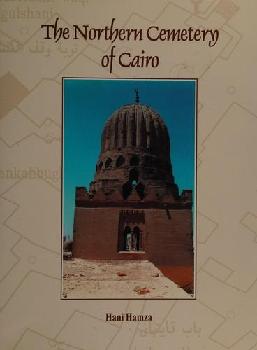
The Northern Cemetery of Cairo
\"The Northern Cemetery of Cairo deals with the beginnings, growth and decline of one of the most important cemeteries of Cairo, which is quintessentially a product of Mamluk patronage. The Northern Cemetery was a separate entity isolated on all sides; to the south the steep descent of Bab al-Wazir and the Citadel complex separated it from the Qarafa; to the west the Barqiyya mounds and the Cairo wall separated it from the city proper; to the east al-Gabal al-Ahmar fixed its physical limit; its northern boundaries, however, are not clearly defined.\"
BOOK
in Poso: Towards a contextual theology of peace after religious conflict
The communal conflict that struck Poso, Central Sulawesi, in the early 2000s left deep social and spiritual wounds. This article aims to construct a contextual theology of peace in response to that trauma. Employing a qualitative approach with narrative and reflective analysis of historical accounts, theological literature and local reconciliation efforts, this study interprets the Poso conflict as a kairos – a moment of crisis demanding theological response. The study draws on biblical reflection (Is 58; Lk 4), systematic theology (theology of the cross and reconciliation) and contextual theology (local values such as Sintuwu Maroso) to build a peace theology rooted in real-life suffering, relational restoration and the Church’s active role in justice. The study finds that the local Protestant churches in Poso, especially GKST, have developed a contextual theology of peace by integrating biblical teaching, the lived experience of post-conflict communities and cultural values such as Sintuwu Maroso. This integration has shaped a practical framework for reconciliation, interreligious dialogue and community resilience in the aftermath of the conflict.ContributionThis article not only proposes a framework relevant to the Indonesian context but also enriches global theological discourse on post-conflict reconciliation.
Journal Article