
Catalogue Search | MBRL


Are you sure you want to remove the book from the shelf?

{{itemTitle}}
609
result(s) for
"Kanon"
Sort by:

Testing the canon of ancient Near Eastern art and archaeology
'Testing the Canon of Ancient Near Eastern Art and Archaeology' invites readers to reconsider the contents and agendas of the art historical and world-culture canons by looking at one of their most historically enduring components : the art and archaeology of the ancient Near East. Ann Shafer, Amy Rebecca Gansell, and other top researchers in the field examine and critique the formation and historical transformation of the ancient Near Eastern canon of art, architecture, and material culture. Contributors flesh out the current boundaries of regional and typological sub-canons, analyze the technologies of canon production (such as museum practices and classroom pedagogies), and voice first-hand heritage perspectives. Each chapter, thereby, critically engages with the historiography behind our approach to the Near East and proposes alternative constructs. Collectively, the essays confront and critique the ancient Near Eastern canon's present configuration and re-imagine its future role in the canon of world art as a whole. This expansive collection of essays covers the Near East's many regions, eras, and types of visual and archaeological materials, offering specific and actionable proposals for its study. 'Testing the Canon of Ancient Near Eastern Art and Archaeology' stands as a vital benchmark and offers a collective path forward for the study and appreciation of Near Eastern cultural heritage. This book acts as a model for similar inquiries across global art historical and archaeological fields and disciplines.
Book
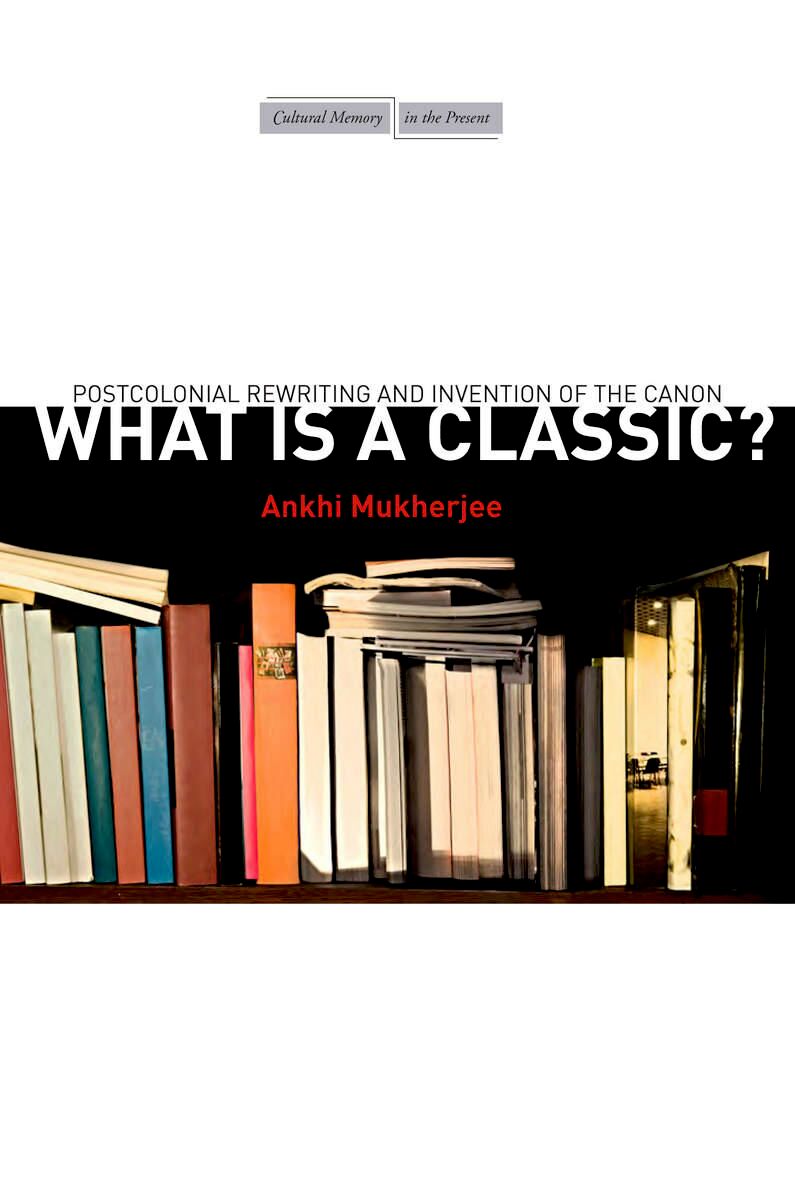
What Is a Classic?
What Is a Classic? revisits the famous question posed by critics from Sainte-Beuve and T. S. Eliot to J. M. Coetzee to ask how classics emanate from postcolonial histories and societies. Exploring definitive trends in twentieth- and twenty-first century English and Anglophone literature, Ankhi Mukherjee demonstrates the relevance of the question of the classic for the global politics of identifying and perpetuating so-called core texts. Emergent canons are scrutinized in the context of the wider cultural phenomena of book prizes, the translation and distribution of world literatures, and multimedia adaptations of world classics. Throughout, Mukherjee attunes traditional literary critical concerns to the value contestations mobilizing postcolonial and world literature. The breadth of debates and topics she addresses, as well as the book's ambitious historical schema, which includes South Asia, Africa, the Middle East, the West Indies, Australia, New Zealand, Europe, and North America, set this study apart from related titles on the bookshelf today.
eBook
Canonizing Hypertext
This innovative monograph focuses on a contemporary form of computer-based literature called 'literary hypertext', a digital, interactive, communicative form of new media writing. Canonizing Hypertext combines theoretical and hermeneutic investigations with empirical research into the motivational and pedagogic possibilities of this form of literature. It focuses on key questions for literary scholars and teachers: How can literature be taught in such a way as to make it relevant for an increasingly hypermedia-oriented readership? How can the rapidly evolving new media be integrated into curricula that still seek to transmit ‘traditional' literary competence? How can the notion of literary competence be broadened to take into account these current trends? This study, which argues for hypertext's integration in the literary canon, offers a critical overview of developments in hypertext theory, an exemplary hypertext canon and an evaluation of possible classroom applications.
eBook

Otras miradas
La Historia y la Historia de la Literatura se han dejado en el tintero a la mitad de las protagonistas que han contribuido a conformar la vida tal y como la conocemos hoy: mujeres que el canon tradicional decidió dejar en los márgenes de lo hegemónico. La academia no tiene -o no ha querido tener- memoria. La recuperación de las muy distintas voces de las autoras que a lo largo de los siglos han conseguido romper con la constante desvalorización hacia sus producciones artísticas, forma parte del ideario feminista para la creación de una memoria histórica y literaria ad aeternam, en la que se reconstruye la cultura y se contruye la memoria futura de las mujeres. Las aportaciones del volumen Otras miradas: desafiar al canon desde las aulas pretenden crear, tejer (y destejer) toda una serie de saberes y aprendizajes desde la perspectiva de los estudios de género. Se presenta en estas páginas una serie de propuestas, metodologías y, sobre todo, experiencias que cuestionan la ausencia de las escritoras en los libros de texto y en las planificaciones didácticas de la literatura. Sin escritoras no es posible una enseñanza de la literatura que no se vea sesgada y fuertemente reducida. Los diferentes proyectos de investigación que se están realizando en distintos países y distintas universidades señalan que las escritoras, aunque son una minoría en algunas épocas, representan la polifonía, la disidencia y muchas veces la rebelión y la protesta. Su presencia a lo largo de los siglos propicia la creación de nuevos géneros, de nuevas perspectivas, de nuevos temas literarios. Las contribuciones presentes en este volumen nos hacen viajar, a través de la palabra, a las diferentes aulas y escuelas del mundo: España, Italia, Egipto o Francia de épocas anteriores, pero también con una mirada hacia un futuro en el que nuestra sociedad sea mucho más inclusiva, igualitaria y reflexiva.
eBook
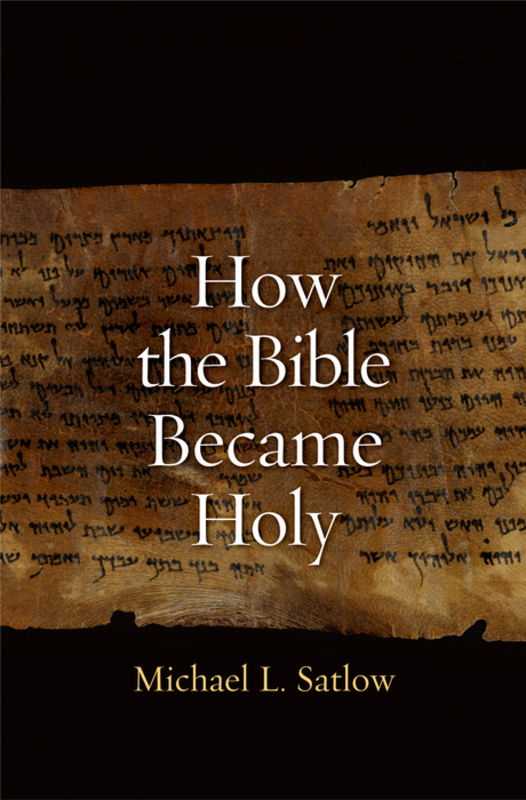
How the Bible Became Holy
In this sweeping narrative, Michael Satlow tells the fascinating story of how an ancient collection of obscure Israelite writings became the founding texts of both Judaism and Christianity, considered holy by followers of each faith. Drawing on cutting-edge historical and archeological research, he traces the story of how, when, and why Jews and Christians gradually granted authority to texts that had long lay dormant in a dusty temple archive. The Bible, Satlow maintains, was not the consecrated book it is now until quite late in its history.He describes how elite scribes in the eighth and seventh centuries B.C.E. began the process that led to the creation of several of our biblical texts. It was not until these were translated into Greek in Egypt in the second century B.C.E., however, that some Jews began to see them as culturally authoritative, comparable to Homer's works in contemporary Greek society. Then, in the first century B.C.E. in Israel, political machinations resulted in the Sadducees assigning legal power to the writings. We see how the world Jesus was born into was largely biblically illiterate and how he knew very little about the texts upon which his apostles would base his spiritual leadership.Synthesizing an enormous body of scholarly work, Satlow's groundbreaking study offers provocative new assertions about commonly accepted interpretations of biblical history as well as a unique window into how two of the world's great faiths came into being.
eBook
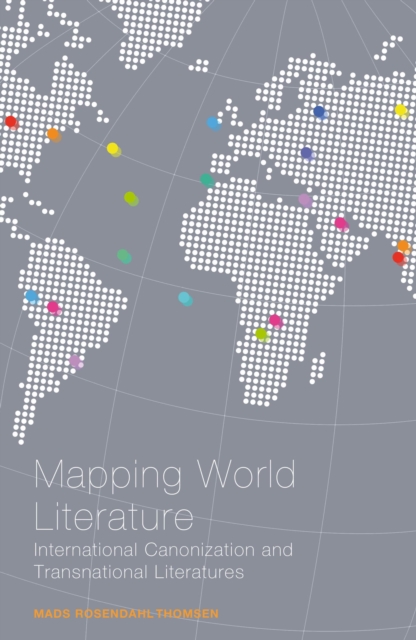
Mapping world literature : international canonization and transnational literatures
Mapping World Literature explores the study of literature and literary history in light of global changes, looking at what defines world literature in the 21st century.Surveying ideas of literature from Goethe to the present, Thomsen devises a compelling concept of literary constellations.
eBook

Intercultural translations of Christian canonical Scriptures
Christian canonical Scriptures may include books from Tanakh, Septuagint and New Testament. Several theories have guided the translation of those books into different languages within the canonical boundaries of Catholic, Orthodox or Protestant churches. Those theories have mostly been more recently inspired by Nida's functional equivalence theory. However, the Skopos or functionalist theory, as championed by Nord, is now emerging as a new approach without necessarily rejecting all the achievements of functional equivalence. This article aims to show how an intercultural approach goes beyond functional and functionalist theories to integrate canonical insights into the production of the Bible translations.
Journal Article

Zahodnoslovanske književnosti v sodobnem šolskem literarnem kanonu
Članek obravnava razvoj literarnega kanona, kot so ga v 20. stoletju sooblikovali kulturni in družbeni vplivi, s poudarkom na zahodnoslovanskih književnostih. V tem kontekstu posebej izpostavi spremenljivost kanonov, ki preizprašuje tradicionalne kanonizacije književnosti in hkrati omogoča morebitne revizije slovenskega šolskega kanona z vključitvijo zahodnoslovanskih književnosti, s čimer bi (srednješolski) bralci pridobili celovitejši razgled po literarnem razvoju. V razpravi povzemamo značilnosti ter razvoj poljskega, češkega in slovaškega (šolskega) literarnega kanona, razmišljamo o vzporednicah s slovenskim ter za njegovo obogatitev predlagamo izbrana literarna dela iz poljske, češke in slovaške književnosti. Kriterija za utemeljitev tega izbora sta po eni strani reprezentativnost teh del za njihove nacionalne književnosti ter po drugi ekskluzivnost v smislu visoke estetske kakovosti in možnosti njihovih novih, sodobnih interpretacij. S teh vidikov predstavljamo literarna dela S. Lema, K. Čapka in D. Tatarke. The article deals with the development of the literary canon as it was shaped by cultural and social influences in the 20th century, with a focus on the West Slavic literatures. In this context, particular emphasis is placed on the variability of the canon, which calls into question the traditional canonizations of literature and at the same time allows for a possible revision of the Slovenian school literary canon by including West Slavic literatures, which would provide (secondary school) readers with a more comprehensive view of literary development. In the discussion, we summarize the characteristics and development of the Polish, Czech and Slovak (school) literary canon, reflect on parallels with the Slovenian canon and propose selected literary works from Polish, Czech and Slovak literature to enrich it. The criteria that justify this selection are, on the one hand, the representativeness of these works for their national literatures and, on the other hand, their exclusivity in the sense of high aesthetic quality and the possibility of new, contemporary interpretations of these works. Regarding to these aspects, we present the literary works of S. Lem, K. Čapek and D. Tatarka.
Journal Article

Not by Paul alone : the formation of the Catholic epistle collection and the Christian canon
Not by Paul Alone explores the historical reasons for the creation of the book of James and the implications for the creation of the Christian canon. Nienhuis makes a compelling case that James was written in the mid-second century and is, like 2 Peter, an attempt to provide a distinctive shape to the emerging New Testament. This book bolsters the claim that the Catholic Epistles not only have a distinct witness individually, but that collectively they are also a considered theological agenda within the Christian church.
eBook

Die uitbouing van die Bybelse kanon in antieke Judaïsme en die vroeë Christendom
The development of the biblical canon in ancient Judaism and early Christianity. A brief account of the process of the development of both the Jewish and the bipartite Christian canon is given. It is argued that due to insights gained from recent textual discoveries, especially the Dead Sea Scrolls (Qumran texts), earlier theories about the history of canonisation had to be reviewed. With the New Testament canon the authors focus on the influence of Marcion as well as the various other factors that played a role in the process of canonisation. It is shown that canonisation was the result of a complicated and variegated canonical process. But in spite of the problems of the criteria used and other factors involved, the biblical canon is theologically valuable and ‘well-chosen’.
Journal Article