
Catalogue Search | MBRL


Are you sure you want to remove the book from the shelf?

{{itemTitle}}
419
result(s) for
"Karachi"
Sort by:

Zenana : everyday peace in a Karachi apartment building
Ethnic violence is a widespread concern, but we know very little about
the micro-mechanics of coexistence in the neighborhoods around the world where
inter-group peace is maintained amidst civic strife. In this ethnographic study of a
multi-ethnic, middle-class high-rise apartment building in Karachi, Pakistan, Laura
A. Ring argues that peace is the product of a relentless daily labor, much of it
carried out in the zenana, or women's space. Everyday rhythms of life in the
building are shaped by gender, ethnic and rural/urban tensions, national culture,
and competing interpretations of Islam. Women's exchanges between households --
visiting, borrowing, helping -- and management of male anger are forms of creative
labor that regulate and make sense of ethnic differences. Linking psychological
senses of tension with anthropological views of the social significance
of exchange, Ring argues that social-cultural tension is not so much resolved as
borne and sustained by women's practices. Framed by a vivid and highly personal
narrative of the author's interactions with her neighbors, her Pakistani in-laws,
and other residents of the city, Zenana provides a rare glimpse into contemporary
urban life in a Muslim society.
eBook

The upstairs wife : an intimate history of Pakistan
\"A memoir of Karachi through the eyes of its women. Rafia Zakaria's Muslim-Indian family immigrated to Pakistan from Bombay in 1962, feeling the situation for Muslims in India was precarious and that Pakistan represented enormous promise. And for some time it did. Her family prospered, and the city prospered. But in the 1980s, Pakistan's military dictators began an Islamization campaign designed to legitimate their rule--a campaign that particularly affected women. The political became personal for Zakaria's family when her Aunt Amina's husband did the unthinkable and took a second wife, a betrayal of kin and custom that shook the foundation of her family. The Upstairs Wife dissects the complex strands of Pakistani history, from the problematic legacies of colonialism to the beginnings of terrorist violence to increasing misogyny, interweaving them with the arc of Amina's life to reveal the personal costs behind ever-more restrictive religious edicts and cultural conventions. As Amina struggles to reconcile with a marriage and a life that had fallen below her expectations, we come to know the dreams and aspirations of the people of Karachi and the challenges of loving it not as an imagined city of Muslim fulfillment but as a real city of contradictions and challenges\"-- Provided by publisher.
Book
Transforming Karachi into a livable and competitive megacity
With a population of 16 million, Karachi is the largest megacity in Pakistan. Despite being a large city that is home to many, it has seen a substantial decline in quality of life and economic competitiveness in recent decades. Basic service delivery is very poor, with very low indicators for water supply, sanitation, public transport and public spaces. Pollution levels are high, and the city is vulnerable to disasters and climate change. A highly complex political economy, institutional fragmentation, land contestation, crime and security issues and social exclusion exacerbate these issues and make city management challenging. The Karachi City Diagnostic and Transformation Strategy attempts to present detailed data on the economy, livability and key urban services of the city, by identifying and quantifying the requirements to bridge the services gap in the city. It also proposes pathways towards the transformation of Karachi into a more livable, inclusive and economically competitive city by outlining policy actions that the city can undertake. The first part of the report provides an in-depth review of Karachi and is organized into three themes focused on key aspects of city management: (i) city growth and prosperity – discussing city economy, competitiveness, business environment and poverty; (ii) city livability – discussing urban and spatial planning, urban governance and municipal service delivery (water and sanitation, public transport and solid waste); and (iii) sustainability and inclusiveness – discussing the city’s long term resilience based on fiscal management, disaster resilience and climate change, and social inclusion. In each section, a diagnostic is provided on the issues, along with possible prioritized actions to resolve them. The second part of the report concludes by identifying four pillars for city transformation. These include: (i) building inclusive, coordinated and accountable institutions; (ii) greening Karachi for sustainability and resilience; (iii) leveraging on the city's economic, social and environmental assets; and (iv) creating a smart city through smart policies and technology.
eBook
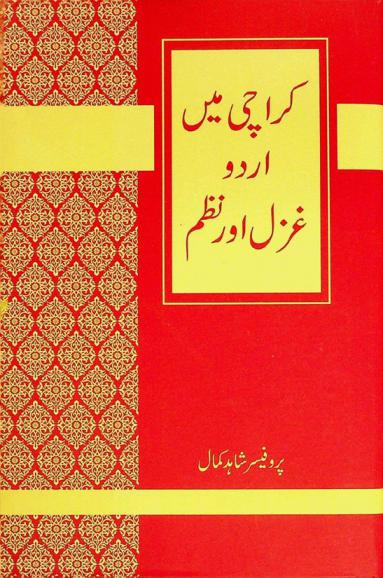
Karācī men̲ Urdū g̲h̲azal aur naz̤m = Karachi mein Urdu ghazal aur nazam
Critical appreciation on the works of Urdu poets from Karachi, Pakistan.
Book

Karachi : ordered disorder and the struggle for the city
With an official population approaching fifteen million, Karachi is one of the largest cities in the world. It is also the most violent. Since the mid-1980s, it has endured endemic political conflict and criminal violence, which revolve around control of the city and its resources (votes, land and bhatta--'protection' money). These struggles for the city have become ethnicised. Karachi, often referred to as a 'Pakistan in miniature,' has become increasingly fragmented, socially as well as territorially. Despite this chronic state of urban political warfare, Karachi is the cornerstone of the economy of Pakistan. Gayer's book is an attempt to elucidate this conundrum. Against journalistic accounts describing Karachi as chaotic and ungovernable, he argues that there is indeed order of a kind in the city's permanent civil war. Far from being entropic, Karachi's polity is predicated upon organisational, interpretative and pragmatic routines that have made violence 'manageable' for its populations. Whether such 'ordered disorder' is viable in the long term remains to be seen, but for now Karachi works despite--and sometimes through--violence.
eBook

Our Lady of Alice Bhatti
The patients of the Sacred Heart Hospital for All Ailments are looking for a miracle, and healer Alice Bhatti may be just what they need.
Book

Spatial Analysis of Urbanization Patterns in Four Rapidly Growing South Asian Cities Using Sentinel-2 Data
The rapid and dominant urbanization in Asian cities has fueled concerns regarding the local and global efforts toward urban sustainability. Specifically, South Asian cities have been a topical issue concerning ecological and environmental threats due to their unplanned and haphazard urban development. However, comparative urbanization studies in South Asian cities remain uncommon. Therefore, in this study, we sought to comparatively examine the land use and land cover (LULC) dynamics and to detect the urbanization patterns of four rapidly developing South Asian lowland cities: Mumbai (India), Colombo (Sri Lanka), Karachi (Pakistan), and Dhaka (Bangladesh). Sentinel-2 (10 m) data and various geospatial approaches, including urban–rural gradient and grid-based methods, statistics, and urban landscape metric techniques, were used to facilitate the analysis. The study revealed that Mumbai, Karachi, and Dhaka had larger built-up landscapes compared to Colombo. Mumbai had the highest percentage of green spaces, followed by Colombo. Dhaka and Karachi had relatively small percentages of green spaces. Colombo and Dhaka had more croplands, which consistently increased along the urban–rural gradient compared to Mumbai and Karachi. Karachi showed that the only major land use was built-up, while most of the areas were left as open lands. On the other hand, Colombo’s urban setup was more fragmented than the other three cities. Mumbai and Karachi had larger patches of urban footprints compared to Colombo and Dhaka. Thus, this study provides vital information on the past land utilization priorities in the four cities, and comparatively proffers guidance on certain critical areas of focus for local, regional, and global future sustainable urban planning.
Journal Article


The Determinants of Capital Structure of the Chemical Industry in Pakistan
This study is an attempt to determine the capital structure of listed firms in the chemical industry of Pakistan. The study finds that by studying a specific industry's capital structure, one can ascertain unique attributes, which are usually not apparent in the combined analysis of many sectors as done by Shah and Hijazi (2004). This study analyzed 26 of 39 firms in the chemical sector, listed at the Karachi Stack Exchange for the period 1993-2004 using pooled regression in a panel data analysis. Six regressors i.e. firm size, tangibility of assets, profitability, income variation, non-debt tax shield (NDTS) and growth were employed to examine their effects on leverage. The results show that these six independent variables explain 90% of variation in the dependent variable and, except for firm tangibility, results were found to be highly significant. The study has policy implications of importance for researchers, investors, analysts and managers.
Journal Article