
Catalogue Search | MBRL


Are you sure you want to remove the book from the shelf?

{{itemTitle}}
21
result(s) for
"Kazakhstan History 21st century."
Sort by:

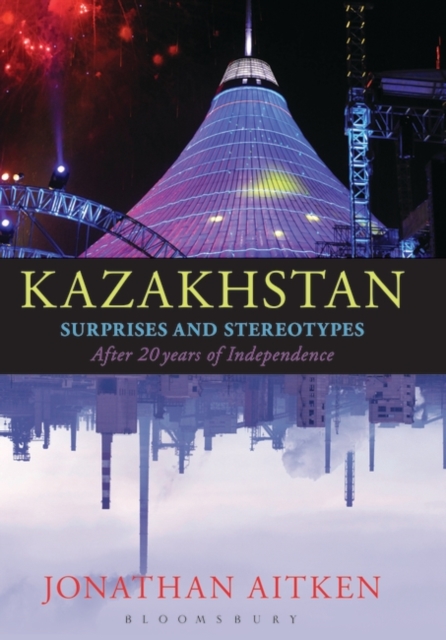
Kazakhstan : surprises and stereotypes after 20 years of independence
Jonathan Aitken has written an insightful and illuminating portrait of 21st Century Kazakhstan as it approaches its 20th Anniversary of independence from the former Soviet Union.Surprises abound in Aitken's lively pages as he captures the creative tensions between Old and New Kazakhstan.
eBook


Historical Assessment and Mapping of Human Plague, Kazakhstan, 1926–2003
Understanding Kazakhstan's plague history is crucial for early warning and effective health disaster management. We used descriptive-analytical methods to analyze spatial data for human cases in natural plague foci in Kazakhstan during 1926-2003. The findings revealed 565 human cases across 82 outbreaks in Almaty (32.22%), Aktobe (1.59%), Atyrau (4.42%), Mangystau (21.24%), and Kyzylorda (40.53%) oblasts. Before antibiotic drugs were introduced in 1947-1948, major plague outbreaks occurred in 1926, 1929, 1945, 1947, and 1948, constituting 80.7% of human transmission. Plague spread through flea bites, camel handling, wild animal contact, aerosol transmissions, and rodent bites. Patients were up to 86 years of age; 49.9% were male and 50.1% female. Pulmonary cases were reported most frequently (72.4%), and person-to-person infection occurred at an incidence rate of 0.29 cases/10,000 population. Risk increased with human expansion into natural plague foci areas. Swift diagnosis and treatment are essential for curbing plague outbreaks in Kazakhstan.
Journal Article

Comparison of spatiotemporal patterns of historic natural Anthrax outbreaks in Minnesota and Kazakhstan
Disease spread in populations is a consequence of the interaction between host, pathogen, and environment, i.e. the epidemiological triad. Yet the influences of each triad component may vary dramatically for different settings. Comparison of environmental, demographic, socio-economic, and historical backgrounds may support tailoring site-specific control measures. Because of the long-term survival of Bacillus anthracis, Anthrax is a suitable example for studying the influence of triad components in different endemic settings. We compared the spatiotemporal patterns of historic animal Anthrax records in two endemic areas, located at northern latitudes in the western and eastern hemispheres. Our goal was to compare the spatiotemporal patterns in Anthrax progression, intensity, direction, and recurrence (disease hot spots), in relation to epidemiological factors and potential trigger events. Reported animal cases in Minnesota, USA (n = 289 cases between 1912 and 2014) and Kazakhstan (n = 3,997 cases between 1933 and 2014) were analyzed using the spatiotemporal directionality test and the spatial scan statistic. Over the last century Anthrax occurrence in Minnesota was sporadic whereas Kazakhstan experienced a long-term epidemic. Nevertheless, the seasonality was comparable between sites, with a peak in August. Declining number of cases at both sites was attributed to vaccination and control measures. The spatiotemporal directionality test detected a relative northeastern directionality in disease spread for long-term trends in Minnesota, whereas a southwestern directionality was observed in Kazakhstan. In terms of recurrence, the maximum timespans between cases at the same location were 55 and 60 years for Minnesota and Kazakhstan, respectively. Disease hotspots were recognized in both settings, with spatially overlapping clusters years apart. Distribution of the spatiotemporal cluster radii between study sites supported suggestion of site-specific control zones. Spatiotemporal patterns of Anthrax occurrence in both endemic regions were attributed to multiple potential trigger events including major river floods, changes in land use, agriculture, and susceptible livestock populations. Results here help to understand the long-term epidemiological dynamics of Anthrax while providing suggestions to the design and implementation of prevention and control programs, in endemic settings.
Journal Article
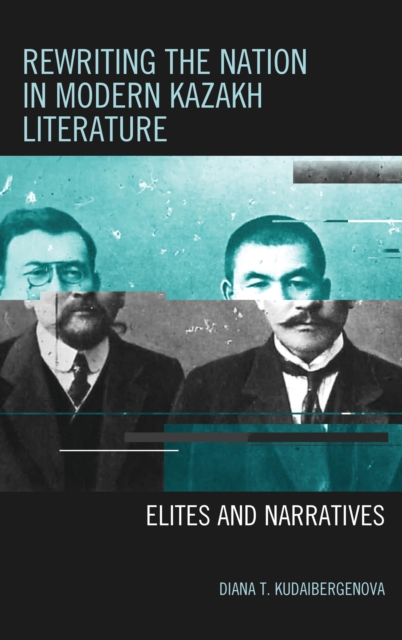
Rewriting the Nation in Modern Kazakh Literature
Rewriting the Nation in Modern Kazakh Literature is a book about cultural transformations and trajectories of national imagination in modern Kazakhstan. The book is a much-needed critical introduction and a comprehensive survey of the Kazakh literary production and cultural discourses on the nation in the twentieth and twenty first centuries. In the absence of viable and open forums for discussion and in the turbulent moments of postcolonial and cultural transformation under the Soviets, the Kazakh writers and intellectuals widely engaged with the national identity, heritage and genealogy construction in literature. This active process of national canon construction and its constant re-writing throughout the twentieth century will inform the readers of the complex processes of cultural transformations in forms, genres and texts as well as demonstrating the genealogical development of the national narrative. The main focus of this book is on the cultural production of the nation. The focus is on the narratives of historical continuities produced in the literature and cultural discontinuities and inter-elite competition which inform such production. The development of Kazakh literary production is an extremely interesting yet underrepresented field of study. Since the late nineteenth century it saw a rapid transformation from the traditional oral to print literature. This brought an unprecedented shift in genres and texts production as well as a rapid growth of the ‘writing’ class – urban colonial and first generations of Soviet intelligentsia. Kazakh literary production became the flagman of republic’s rapid cultural modernization and prior to the World War II local publishing industry produced up to 6 million print copies a year. By the 1960s and 1970s – the golden era of Kazakh literature, the most read literary journal Juldyz sold 50,000 copies all over the country. Literature became the mass provider of knowledge about the past, the present and of the future of the country. Because “Kazakh readers were hungry to find out about their pre-Soviet past and its national glory” national writers competed in genres, styles and ways to write out the nation in prose, poems, essays and historical novels.
eBook

Sustainability Challenges in Kazakhstan’s River Systems: Assessing Climate-Induced Hydrological Changes
Global and regional climate change and their water-related impacts are a key component in future development scenarios to guide sustainable water management. Climatic changes may lead to an undesirable redistribution of water supplies and potentially harmful extremities in river flows throughout the year. If we add to this the uneven spatial distribution of water resources in Kazakhstan, the importance of assessment of the intra-annual distribution of river flows under historical and present climatic conditions becomes evident. The presented scientific study analyzes decadal regional trends from 1985 to 2022 in the intra-annual distribution of river runoff in selected catchments in Kazakhstan, including Buktyrma River, Zhabay River, and Ulken-Kobda River. The river basins were selected to cover diverse regions in terms of geographical features and hydrological conditions, significantly affected by climate change. We applied statistical analysis methods using multiyear values of mean monthly and mean annual river flows, mean monthly air temperatures, and mean monthly precipitation. To analyze the intra-annual distribution of annual river flow in the context of climate change, a computational method was used, in which the actual current river flow (modern river flow taking into account non-stationarity of climatic changes) was compared with the conditionally natural flow obtained by modeling and corresponding to the natural regime of the river. The long-term dynamics of flow-forming factors and runoff parameters with regard to phases of different water content (25%, 50%, and 75%) were considered. Statistical analysis of seasonal changes in water content of modeled and actual river flow, taking into account climatic non-stationarity, allowed us to identify significant trends of flow redistribution within the year: indicating a decrease in the volume of spring floods, an increase in winter flow and increase in seasonal variability, especially for the Ulken Kobda River. It appears that atmospheric circulation significantly affects annual and seasonal variations of water availability. The shift in western circulation type (W) contributes to increased average annual river flow, while the shift in eastern circulation type (E) is associated with amplification of extreme flood-type events. The results obtained are important for adapting sustainable water management practices under a changing climate, helping to anticipate the availability of water resources and allowing pro-active measures to mitigate hydrological extremes.
Journal Article
Human response to live plague vaccine EV, Almaty region, Kazakhstan, 2014-2015
In Kazakhstan, a live plague vaccine EV 76 NIIEG has been used for plague prophylaxis since the mid-1930s. Vaccination is administered yearly among people living in plague-enzootic areas. Similar practices are used in other former Soviet Union countries. Yet, to this day, the effectiveness period of the vaccine is unknown. It is also not clear how different factors can affect the effectiveness of the vaccine over time.
We surveyed changes in antibody levels specific for F1 antigens of Yersinia pestis among vaccinated people 4, 8, and 12 months post- vaccination. Blood samples were taken from the participants of the study for producing sera, which was later analyzed using indirect hemagglutination reaction with antigenic erythrocyte assay (micromethod) for identifying antibodies to F1 Y.pestis.
In first-time-receivers of the plague vaccine, antibody titer reached the highest level of antibody that represents a conditionally protective titer after 4 months, dropped drastically after 8 months, and dropped again after 12 months. Similar results were obtained among those who have been vaccinated previously. However, in that group, the percentage of people with a level of antibody that represents a conditionally protective titer remained statistically significant even after 8 and 12 months.
Based on the results of this study, we recommend initiating vaccination campaigns for the medical and veterinary staff, as well as the general population four months prior to the springtime epizootics of plague among wild rodents.
Journal Article

From Alma-Ata to Astana: the path of Primary Health Care in Portugal, 1978-2018 and the genesis of Family Medicine
Throughout the twentieth century, the profound changes that have taken place in Medicine can only be wholly explained if observed from a historical perspective, for they have always occurred in response to external influences, some scientific and technological, others of a social nature. Modern Family Medicine is one of the many new disciplines that have developed during medical history, and we critically discuss the last 40 years of primary health care in Portugal, which started in 1971, long before the Alma-Ata Declaration (1978). Along the way, in 2005, the Primary Health Care Reform emerges in Portugal, along with the new family health facilities, which until September 2019, attended about 94 % of Portuguese citizens, i.e., 9,5 million people. At the end of this course, in solidarity and voluntarily, this Reform inspired another one in Brazil, in Rio de Janeiro, in 2009. Finally, we present the challenges pointed out in the 2018 Astana Declaration, among them, the issue of the workforce in primary health care as an essential factor for the performance and sustainability of health systems.
Journal Article
Family and Community Medicine in Uruguay from 1997 to 2019: how many kilometers will it take to reach that town?
The Family and Community Medicine Residency started in Uruguay in 1997. Through a self-managed process, the first generations were molded into training that integrated hospital knowledge and experience with territorial praxis in a community-based health service with a population of reference. The academic recognition of the specialty and the installation of the institutional areas for its management were achievements parallel to that process in the first decade. The second decade was marked by the territorial teaching-assistance expansion in the country, university decentralization and the active participation of Family and Community Medicine in the Health Reform, and the country's rights agenda. The third decade of the specialty begins with a crisis triggered by the sustained decline in the aspiration for residency. An initial approach to explanations reflects on the possibility of facing a more profound crisis and the need to find the keys to a 21st century Medicine that allows us to achieve the principles of Alma-Ata that are still current.
Journal Article