
Catalogue Search | MBRL


Are you sure you want to remove the book from the shelf?

{{itemTitle}}
22
result(s) for
"Kennewick Man"
Sort by:

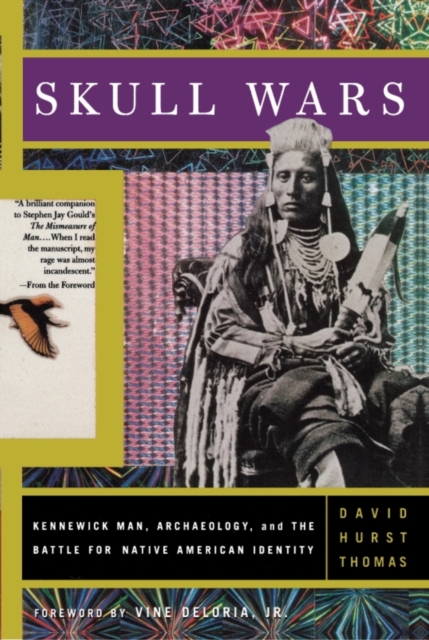
Skull wars : Kennewick Man, archaeology, and the battle for Native American identity
The 1996 discovery, near Kennewick, Washington, of a 9,000-year-old Caucasoid skeleton brought more to the surface than bones. The explosive controversy and resulting lawsuit also raised a far more fundamental question: Who owns history? Many Indians see archeologists as desecrators of tribal rites and traditions; archeologists see their livelihoods and science threatened by the 1990 Federal reparation law, which gives tribes control over remains in their traditional territories.In this new work, Thomas charts the riveting story of this lawsuit, the archeologists' deteriorating relations with American Indians, and the rise of scientific archeology. His telling of the tale gains extra credence from his own reputation as a leader in building cooperation between the two sides.
eBook

Ancient American genome rekindles legal row
'Kennewick Man' sequencing points to Native American ancestry.
Journal Article

Kennewick Man: coming to closure
Few human remains from the distant past have achieved the public visibility and notoriety of Kennewick Man (the Ancient One). Since his discovery in July 1996 in the state of Washington, he has appeared on one of America's best-known television news programmes, 60 Minutes . He has been on the cover of Time magazine and in the pages of People , Newsweek and The New York Times. He has been the subject of popular press books (Downey 2000; Thomas 2000; Chatters 2001), and for many years running there were almost annual updates on his whereabouts and status in Science (some 30 in the decade following his discovery). That is saying nothing of the scholarly notice and debate he has drawn (e.g. Swedlund & Anderson 1999; Owsley & Jantz 2001; Steele & Powell 2002; Watkins 2004; Burke et al . 2008), including a recently issued tome marking the culmination of almost a decade of study (Owsley & Jantz 2014a).
Journal Article
Lessons from the Ancient One
The decades-long battle over the fate of the remains of an 8,500-year-old human known as Kennewick Man may be nearing an end. Last week, the US government determined that the remains are Native American and are thus governed by a law that provides for the repatriation of Native American remains and cultural artefacts.
Journal Article


Complex Legal Legacies: The Native American Graves Protection and Repatriation Act, Scientific Study, and Kennewick Man
Debates over disposition options for an inadvertently discovered set of early Holocene human remains known as Kennewick Man have fueled discussions about the scientific, cultural, and ethical implications of the anthropological study of human remains. A high-profile lawsuit over Kennewick Man has led to the most extensive judicial analysis to date of the Native American Graves Protection and Repatriation Act (NAGPRA), the primary law affecting access to, and the ultimate disposition of, ancient human remains found in the United States. However, despite years of litigation, some key questions remain unanswered. The judicial decisions in Kennewick address important questions about determining Native American status and assessing cultural affiliation under the law. However, the court opinions fail to address the role of scientific study within NAGPRA's confines. This article examines NAGPRA and concludes that two provisions in the law expressly permit the scientific study of human remains if certain conditions are met. Significantly, Kennewick Man might have qualified for study under NAGPRA even if found to be Native American and culturally affiliated with the claimant tribes, which would have enabled study to proceed from the outset while the parties debated the issues of Native American status and potential cultural affiliation.
Journal Article
Sunday morning. Origins : mystery man
This segment of Sunday Morning is about Kennewick Man,the skeletal remains of a prehistoric Paleoamerican man found on a bank of the Columbia River in Kennewick, Washington.
Streaming Video
