
Catalogue Search | MBRL


Are you sure you want to remove the book from the shelf?

{{itemTitle}}
30,686
result(s) for
"Kenya"
Sort by:


Kenya's Engagement with China
In recent decades, Kenya has witnessed profound changes in its
economic, cultural, and environmental landscapes resulting from its
interactions with China. University students are competing for
scholarships to study in China, coastal artisanal fishers are
increasingly worried about Chinese-owned trawlers depleting fish
stocks, fishers on Lake Victoria are grappling with the impact of
frozen tilapia from China, and unemployed youth are seeking a fair
shot at working on one of Kenya's multimillion-dollar
Chinese-funded infrastructure projects. Anita Plummer's Kenya's
Engagement with China investigates the tension between
official Kenyan and Chinese state narratives and individual
Kenyans' reactions to China's presence to provide insight into how
everyday Kenyans exercise their political agency. The competing
discourses Plummer uncovers in person, in the news, and online
reveal how Kenyans use China to question local power structures,
demand policy change, and articulate different visions for their
country's future. This critical text represents the next step in
research on Sino-African relations.
eBook

The rough guide to Kenya
The Rough Guide to Kenya is the essential travel guide to East Africa's biggest travel destination.
Book

Uncertain tastes
This richly drawn ethnography of Samburu cattle herders in northern Kenya examines the effects of an epochal shift in their basic diet-from a regimen of milk, meat, and blood to one of purchased agricultural products. In his innovative analysis, Jon Holtzman uses food as a way to contextualize and measure the profound changes occurring in Samburu social and material life. He shows that if Samburu reaction to the new foods is primarily negative—they are referred to disparagingly as “gray food” and “government food”—it is also deeply ambivalent. For example, the Samburu attribute a host of social maladies to these dietary changes, including selfishness and moral decay. Yet because the new foods save lives during famines, the same individuals also talk of the triumph of reason over an antiquated culture and speak enthusiastically of a better life where there is less struggle to find food. Through detailed analysis of a range of food-centered arenas, Uncertain Tastes argues that the experience of food itself—symbolic, sensuous, social, and material-is intrinsically characterized by multiple and frequently conflicting layers.
eBook

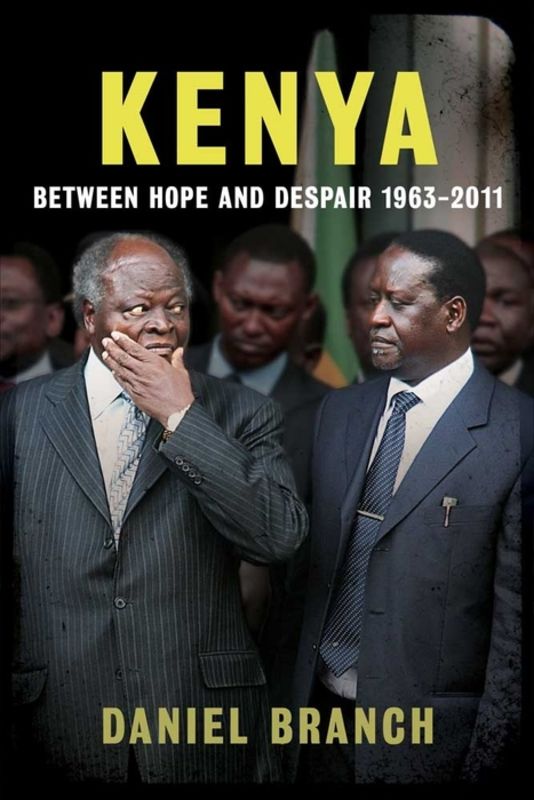
Kenya
On December 12, 1963, people across Kenya joyfully celebrated independence from British colonial rule, anticipating a bright future of prosperity and social justice. As the nation approaches the fiftieth anniversary of its independence, however, the people's dream remains elusive. During its first five decades Kenya has experienced assassinations, riots, coup attempts, ethnic violence, and political corruption. The ranks of the disaffected, the unemployed, and the poor have multiplied. In this authoritative and insightful account of Kenya's history from 1963 to the present day, Daniel Branch sheds new light on the nation's struggles and the complicated causes behind them.
Branch describes how Kenya constructed itself as a state and how ethnicity has proved a powerful force in national politics from the start, as have disorder and violence. He explores such divisive political issues as the needs of the landless poor, international relations with Britain and with the Cold War superpowers, and the direction of economic development. Tracing an escalation of government corruption over time, the author brings his discussion to the present, paying particular attention to the rigged election of 2007, the subsequent compromise government, and Kenya's prospects as a still-evolving independent state.
eBook


Mau Mau crucible of war
Mau Mau Crucible of War is a study of the social and cultural history of the mentalite of struggle in Kenya, which reached a peak during the Mau Mau War of the 1950s. This struggle continues to resonate in Kenya today through the ongoing demand for a decent standard of living and social justice for all.
eBook

Gender, ethnicity, and violence in Kenya’s transitions to democracy
Critiquing the valorization of democracy as a means of containing violence and stabilizing political contestation, this book draws links between the democratization process and sexual/gendered violence observed against women during electioneering periods in Kenya. The book shows the contradictory relationship between democracy and gendered violence as being largely influenced in the first instance by the capitalist interests vested in the colonial state and its imperative to exploit laboring women; secondly, in the nature of the postcolonial state and politics largely captured by ethnic, bourgeois class interests; and third, influenced by neoliberal political ideology that has remained largely disarticulated from women's structural positions in Kenyan society. It argues that colonial capitalist interests established certain patterns of gender exploitation that extended into the postcolonial period such that the indigenous bourgeoisie took the form of an ethnicized elite. Ethnicity shaped politics and neoliberal political ideology further blocked women’s integration into politics in substantive ways. It concludes that it is not so much the norms and values of liberal democracy that assist in understanding women’s exclusion, but rather the structural dynamics that have shaped women’s experiences of democratic politics. In this way, gender violence in the context of democratization and electoral violence with its gendered manifestation can be fully understood as deeply embedded in the history of the structural dynamics of colonialism, capitalism, and patriarchalism in Kenya.
eBook