
Catalogue Search | MBRL


Are you sure you want to remove the book from the shelf?

{{itemTitle}}
62
result(s) for
"Khrushchev, Nikita Sergeevich, 1894-1971"
Sort by:
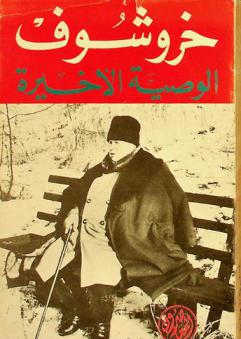
خروشوف : الوصية الأخيرة
يتناول هذا الكتاب مذكرات الزعيم السوفييتي (خروشوف) ويستعرض الكتاب في طياته المحتويات التالية : مدخل، مقدمة، تمهيد، القسم الأول : المواطنون والرفاق، ويشمل : 1-المارشال جوكوف والفريق المناوئ للحزب، 2-الأسطول : سقوط الأميرال كوزنتسوف، 3-قاذفات القنابل والصواريخ، 4-أرباب الفكر العلمي، 5-النخبة الخلاقة، 6-إسكان الشعب، 7-إطعام الشعب، 8-بولونيا : كسب حليفة، 9-أوروبا الشرقية : عقد حلف، 10-نقطة سوداء في الحلف، 11-الصين. القسم الثاني : السياسة الخارجية والرحلات... إلى آخر موضوعات الكتب.
Book
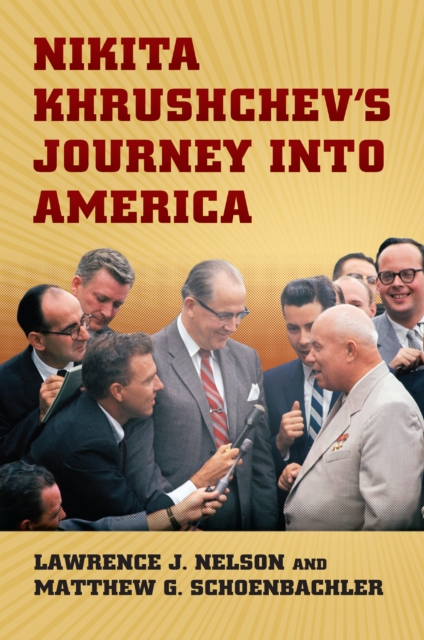
Nikita Khrushchev's Journey into America
When Nikita Khrushchev toured America in 1959-the first Russian
leader ever to set foot in the Western Hemisphere, let alone the
United States-the country was enjoying a period of unprecedented
prosperity, just as the Cold War and the possibility of
thermonuclear annihilation were causing widespread, bone-deep dread
throughout the land. This book for the first time fully explores
Khrushchev's journey as a reflection of a critical moment in US
life. Deeply researched and deftly written, Nikita Khrushchev's
Journey into America captures that moment in all its
complexity and implications, describing not only the Russian
leader's occasionally surreal itinerary (a tantrum at being denied
entry into Disneyland, for instance, or a near-riot upon wandering
into a grocery store in San Francisco) but also the tenor of the
crowds and the country along the way. Following Khrushchev from his
arrival in the nation's capital to the eerily silent greeting of
hundreds of thousands of spectators to his tickling of pigs,
kissing of babies, and glad-handing of union workers and farm
laborers in rural Iowa to his encounter with President Dwight
Eisenhower, Nelson and Schoenbachler's work offers glimpses of the
clash between a true believer in the Soviet system and the icons of
capitalism and visions of prosperity he repeatedly confronted on
his trip. At the same time the book shows us the American people of
the time coming to terms with who they were even as they confronted
the embodiment of everything they believed they weren't: atheistic,
socialist, and ideological. As the narrative unfolds, Khrushchev's
visit can be understood as easily the most democratic event of the
Cold War, one that laid bare the depth of ideological commitments
on both sides of the geopolitical divide as well as the key role of
religion in shaping Americans' reactions to the Soviet leader and
to the Cold War itself.
eBook


Khrushchev's Putsch
In a compact book built on quotes from primary sources, Schnehen shows that Khrushchev essentially pulled off a coup, eliminating Stalin and then Beria. This opened the future to a radical rejection of the policies that had enabled the Soviet Union to make the hair-raising jump into the modern industrialized world and pulled it through the devastating war. Khrushchev reversed major achievements and brought havoc to the Soviet economy and society.
eBook

Moscow 1956 : the silenced spring
Joseph Stalin had been dead for three years when his successor, Nikita Khrushchev, stunned a closed gathering of Communist officials with a litany of his predecessor's abuses. Meant to clear the way for reform from above, Khrushchev's 'Secret Speech' of February 25, 1956, shattered the myth of Stalin's infallibility. In a bid to rejuvenate the Party, Khrushchev had his report read out loud to members across the Soviet Union that spring. However, its message sparked popular demands for more information and greater freedom to debate. This work brings this first brief season of thaw into fresh focus. Drawing on newly declassified Russian archives, the author offers a month-by-month reconstruction of events as the official process of de-Stalinization unfolded and political and cultural experimentation flourished.-- Provided by publisher.
Book
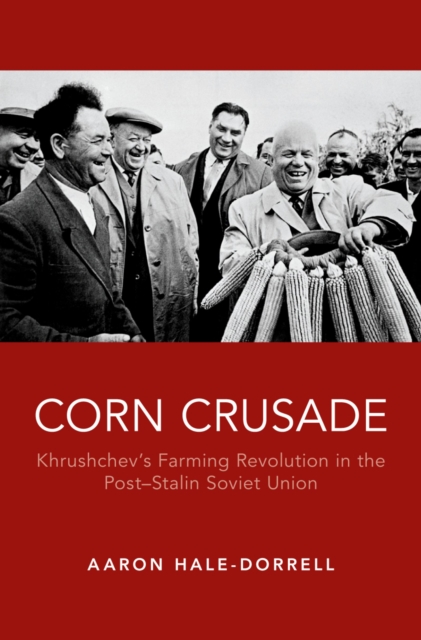
Corn Crusade
Almost everyone has long misinterpreted Nikita Khrushchev’s ten-year crusade to propagate the cultivation of corn, a crop important across the globe but previously rare across the vast, environmentally diverse Soviet Union. Launched in 1953, this campaign comprised a large part of the new leadership’s efforts to remedy agrarian crises inherited from Iosif Stalin. Khrushchev pressured collective and state farms to increase plantings of corn from an insignificant proportion of their crops to a peak of nearly 20 percent. Expected to feed livestock that were to yield meat and dairy products, corn promised to enrich citizens’ meager, monotonous diets and thereby make good on Khrushchev’s infamous pledges that the Soviet Union was soon to “catch up to and surpass America” in the Cold War “peaceful competition” between communism and capitalism. Echoing Khrushchev’s former comrades, who denounced corn as “harebrained scheming” when ousting him in 1964, scholars have ridiculed it as “an irrational obsession.” Newly available archival documents reveal a more complex and interesting story of how Khrushchev borrowed industrial-farming methods from the United States. Following experts’ advice, he believed that hybrid seeds, machines, agronomy, and other technologies constituting the global trends in farming technology promised even greater increases in productivity under conditions found in the Soviet Union. Yet Khrushchev’s programs achieved only partial success because they could not overcome the entrenched interests, bureaucratic inertia, and competing priorities that encouraged government officials, local authorities, and farmworkers to disregard methods required to grow even modest harvests, let alone the bumper crops that Khrushchev envisioned.
eBook

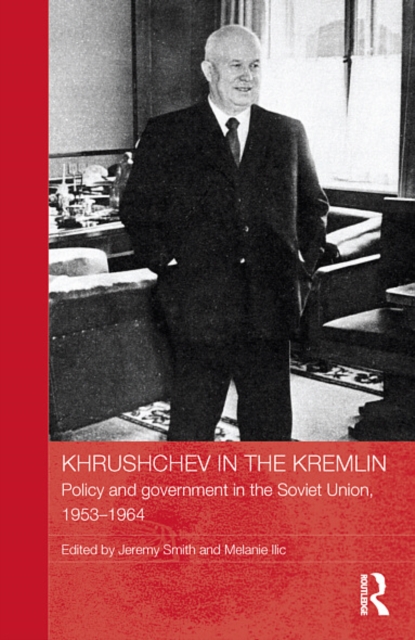
Khrushchev in the Kremlin : policy and government in the Soviet Union, 1953-1964
This book presents a new picture of the politics, economics and process of government in the Soviet Union under the leadership of Nikita Khrushchev. Based in large part on original research in recently declassified archive collections, the book examines the full complexity of government, including formal and informal political relationships; economic reforms and nationality relations in the national republics of the USSR; the treatment of political dissent; economic progress through technological innovation; relations with the Eastern bloc; corruption and deceit in the economy; and the reform of the railways and construction sectors. The book re-evaluates the Khrushchev era as one which represented a significant departure from the Stalin years, introducing a number of policy changes that only came to fruition later, whilst still suffering from many of the limitations imposed by the Stalinist system. Unlike many other studies which consider the subject from the perspective of the Cold War and superpower relations, this book provides an overview of the internal development of the Soviet Union in this period, locating it in the broader context of Soviet history. This is the companion volume to the Jeremy Smith and Melanie Ilic's previous edited collection, Soviet State and Society under Nikita Khrushchev (Routledge, 2009).
eBook

Back Channel : a novel
October 1962. In Cuba: Soviet ships off-load what intelligence reveals to be nuclear missiles. In Washington, President Kennedy and his advisers are in furious debate over how long they can wait to discover what the Soviets intend before dropping the first bomb. And, in Ithaca, New York, Margo Jensen-a nineteen-year-old Cornell sophomore-is swept up in a \"bizarre concatenation of circumstances\" that will make of her the \"back channel\" liaison between Soviet Premier Khrushchev and Kennedy. Events unfold too quickly for her even to ask \"why me?\" But the stunning answer is revealed bit by bit as she races from Ithaca to Bulgaria to Washington, D.C., drawn ever more deeply into the crossfire-figurative and literal-of infighting between governmental agencies, both American and Soviet; into the confidence and-unsettlingly-the affection of the president of the United States; into desperate negotiations to avoid nuclear war; and, finally, into the secrets of the extraordinary legacy-of honor and bravery-she inherited from the father she never knew.
Book

Protest, Reform and Repression in Khrushchev's Soviet Union
Protest, Reform and Repression in Khrushchev's Soviet Union explores the nature of political protest in the USSR during the decade following the death of Stalin. Using sources drawn from the archives of the Soviet Procurator's office, the Communist Party, the Komsomol and elsewhere, Hornsby examines the emergence of underground groups, mass riots and public attacks on authority as well as the ways in which the Soviet regime under Khrushchev viewed and responded to these challenges, including deeper KGB penetration of society and the use of labour camps and psychiatric repression. He sheds important new light on the progress and implications of de-Stalinization, the relationship between citizens and authority and the emergence of an increasingly materialistic social order inside the USSR. This is a fascinating study which significantly revises our understanding of the nature of Soviet power following the abandonment of mass terror.
eBook