
Catalogue Search | MBRL


Are you sure you want to remove the book from the shelf?

{{itemTitle}}
7
result(s) for
"Kievan Rus Relations Europe."
Sort by:

The Kingdom of Rus
As scholarship continues to expand the idea of medieval Europe beyond \"the West,\" the Rus' remain the final frontier relegated to the European periphery. Examining a wide range of medieval sources, and through an innovative analysis of medieval titles, The Kingdom of Rus' challenges the perception of Rus' as an eastern \"other\" - advancing the idea of the Rus' as a kingdom deeply integrated with medieval Europe.
eBook
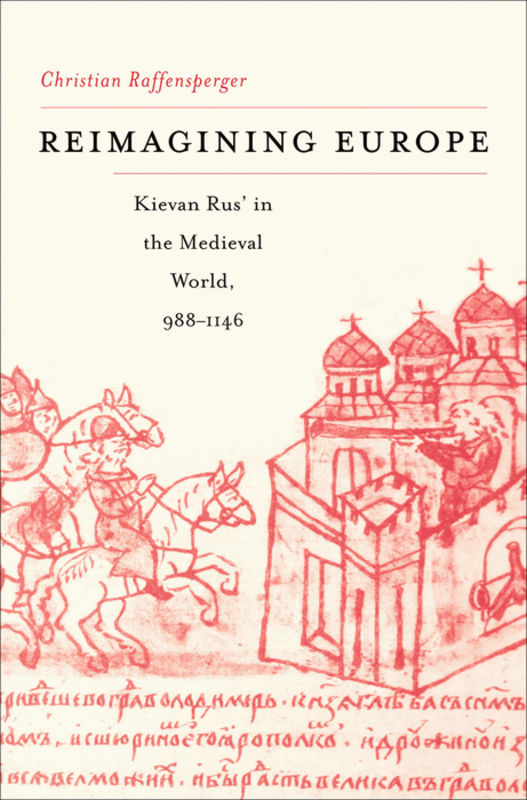
Reimagining Europe : Kievan Rus' in the Medieval world
An overriding assumption has directed scholarship in both European and Slavic history: that Kievan Rus' was part of a Byzantine commonwealth separate from Europe. Raffensperger refutes this, and offers a new frame for two hundred years of history, in which Rus' is understood as part of medieval Europe, and East is not so neatly divided from West.
eBook
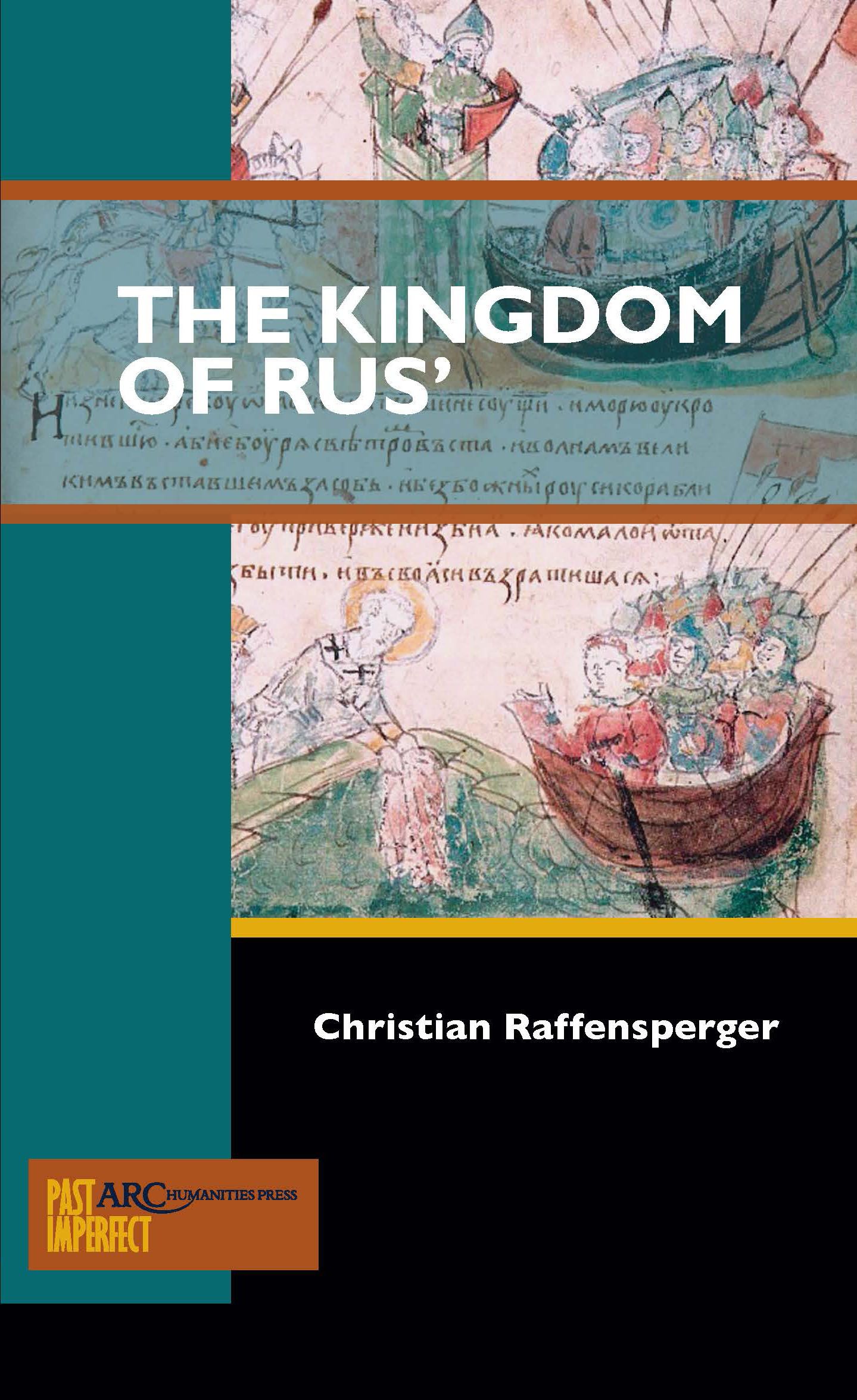
The Kingdom of Rus
As scholarship continues to expand the idea of medieval Europe beyond \"the West,\" the Rus' remain the final frontier relegated to the European periphery. The Kingdom of Rus' challenges the perception of Rus' as an eastern \"other\" – advancing the idea of the Rus' as a kingdom deeply integrated with medieval Europe, through an innovative analysis of medieval titles. Examining a wide range of medieval sources, this book exposes the common practice in scholarship of referring to Rusian rulers as princes as a relic of early modern attempts to diminish the Rus'. Not only was Rus' part and parcel of medieval Europe, but in the eleventh and twelfth centuries Rus' was the largest kingdom in Christendom.
As scholarship continues to expand the idea of medieval Europe beyond \"the West,\" the Rus' remain the final frontier relegated to the European periphery. The Kingdom of Rus' challenges the perception of Rus' as an eastern \"other\" – advancing the idea of the Rus' as a kingdom deeply integrated with medieval Europe, through an innovative analysis of medieval titles. Examining a wide range of medieval sources, this book exposes the common practice in scholarship of referring to Rusian rulers as princes as a relic of early modern attempts to diminish the Rus'. Not only was Rus' part and parcel of medieval Europe, but in the eleventh and twelfth centuries Rus' was the largest kingdom in Christendom.
eBook

Identity Formation and Diversity in the Early Medieval Baltic and Beyond
In Identity Formation and Diversity in the Early Medieval Baltic and Beyond, contacts between Early Medieval Baltic Finns, Sami, Scandinavians, Slavs and Balts are discussed and exemplified. Communication expressed through material culture is analysed in order to understand the culturally diverse regions in the Baltic and beyond.
eBook

Reimagining Kievan Rus' in Unimagined Europe
Russia's place in Europe is an old question, one that is answered differently depending on its eras of history, the generations of scholars who study this issue, and their backgrounds. How the Kievan Rus' period of Russian history may \"fit\" into medieval European history is perhaps not as well studied as are other epochs, although Soviet historiography is quite strong, as it nearly always attempted to situate Rus' into \"Feudal Europe.\" Marxist historians had no doubts that Kievan Rus' was European, as were West European medieval cartographers and geographers. Reasons for why, when, how, and where Russia came to be written out of medieval Europe, which has been generally understood as the Latin West, are still not clear. Recent scholarship has argued for the need to reevaluate the entire antiquated notion of \"medieval Europe\" being only the Latin West and include into it the \"Other Europe,\" or the Eastern-rite states that occupied the other half of the Continent. The new book by Christian Raffensperger attempts to find ways to situate Rus' into \"Europe\" through reimagining its place in it. However, because the author does not reimagine \"Europe,\" he squeezes Rus' into the Latin West, which compromises the former's uniqueness as it also writes the rest of the Eastern-rite European states out of medieval Europe.
Journal Article

Reimagining Europe
An overriding assumption has directed scholarship in both European and Slavic history: that Kievan Rus’ was part of a Byzantine commonwealth separate from Europe. Raffensperger refutes this, and offers a new frame for two hundred years of history, in which Rus’ is understood as part of medieval Europe, and East is not so neatly divided from West.
eBook