
Catalogue Search | MBRL


Are you sure you want to remove the book from the shelf?

{{itemTitle}}
16
result(s) for
"King, Martin Luther, Jr., 1929-1968 Political and social views."
Sort by:


Misremembering Dr. King
We all know the name. Martin Luther King Jr., the great American civil rights leader. But most people today know relatively little about King, the campaigner against militarism, materialism, and racism-what he called the \"giant triplets.\" Jennifer J. Yanco takes steps to redress this imbalance. \"My objective is to highlight the important aspects of Dr. King's work which have all but disappeared from popular memory, so that more of us can really 'see' King.\" After briefly telling the familiar story of King's civil rights campaigns and accomplishments, she considers the lesser-known concerns that are an essential part of his legacy. Yanco reminds us that King was a strong critic of militarism who argued that the United States should take the lead in promoting peaceful solutions rather than imposing its will through military might; that growing materialism and an ethos of greed was damaging the moral and spiritual health of the country; and that in a nation where racism continues unabated, white Americans need to educate themselves about racism and its history and take their part in the weighty task of dismantling it.
eBook


Ring out freedom! : the voice of Martin Luther King, Jr. and the making of the civil rights movement
Martin Luther King, Jr. was more than the civil rights movement's most visible figure, he was its voice. This book describes what went into the creation of that voice. It explores how King used words to define a movement. From a place situated between two cultures of American society, King shaped the language that gave the movement its identity and meaning. Fredrik Sunnemark shows how materialistic, idealistic, and religious ways of explaining the world coexisted in King's speeches and writings. He points out the roles of God, Jesus, the church, and the Beloved Community in King's rhetoric. Sunnemark examines King's use of allusions, his strategy of employing different meanings of key ideas to speak to different members of his audience, and the way he put into play international ideas and events to achieve certain rhetorical goals. The book concludes with an analysis of King's development after 1965, examining the roots, content, and consequences of his so-called radicalization.
eBook

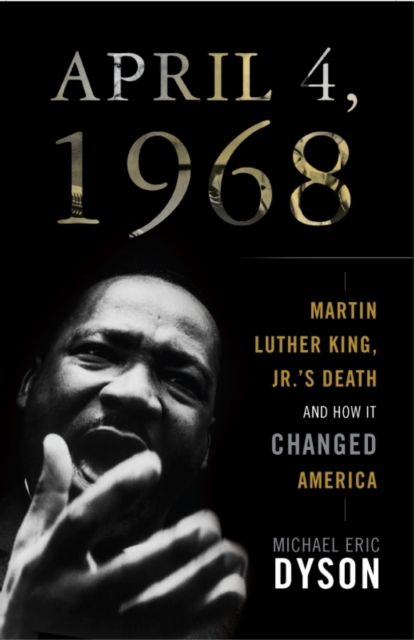
April 4, 1968 : Martin Luther King, Jr.'s death and how it changed America
On April 4, 1968, at 6:01 p.m., while he was standing on a balcony at a Memphis hotel, Martin Luther King Jr. was shot and fatally wounded. Only hours earlier King ended his final speech with the words, I may not get there with you, but I want you to know tonight, that we as a people will get to the Promised Land.\" Acclaimed public intellectual and best-selling author Michael Eric Dyson examines how King fought, and faced, his own death, and how America can draw on his legacy in the twenty-first century. April 4, 1968 celebrates the leadership of Dr. King, and challenges America to renew its commitment to his vision.
eBook

Confluence of thought : Mahatma Gandhi and Martin Luther King, Jr.
\"The literature on Gandhi and Martin Luther King is vast, and scholars often speak of the two leaders when discussing theories of non-violence. Yet, no attempt has yet been made to understand the way in which Gandhi and King's socio-political ideas converge in terms of their origins, development and application. In Confluence of Thought, Bidyut Chakrabarty argues that there is a confluence of thought between Gandhi and King's concerns for humanity and advocacy of non-violence, despite their different historical and socio-economic contexts. He says that these two figures are perhaps the best modern historical examples of individuals who combined religion with the political to produce a dynamic social ideology. Gandhi saw service to humanity as the path to 'self-actualization' and thus spiritually most fulfilling; similarly, King pursued religion-driven social action. Chakrabarty looks particularly at the way in which each deployed religious and political language to draw the widest possible membership to their social movements. While Chakrabarty points out that neither thinker was able to fulfill his chosen mission, both suffering death by assassination, he positions the two as the premier modern influences on theories of non-violence today\"-- Provided by publisher.
BOOK


Desert Rose
Desert Rose details Coretta Scott King's upbringing in a family of proud, land-owning African Americans with a profound devotion to the ideals of social equality and the values of education, as well as her later role as her husband's most trusted confidant and advisor. Coretta Scott King—noted author, human rights activist, and wife and partner of famed Civil Rights Movement leader Martin Luther King Jr.—grew up in the rural Alabama Black Belt with her older sister, Edythe Scott Bagley. Bagley chronicles the sisters’ early education together at the Crossroads School and later at the progressive Lincoln School in Marion. She describes Coretta’s burgeoning talent for singing and her devotion to musical studies, and the sisters’ experiences matriculating at Antioch College, an all-white college far from the rural South. Bagley provides vivid insights into Coretta’s early passion for racial and economic justice, which lead to her involvement in the Peace Movement and the National Association for the Advancement of Colored People. As Coretta’s older sister, Edythe shared in almost all of Coretta’s many trials and tribulations. Desert Rose charts Coretta’s hesitance about her romance with Martin Luther King and the prospect of having to sacrifice her dream of a career in music to become a minister’s wife. Ultimately, Coretta chose to utilize her artistic gifts and singing voice for the Movement through the development and performance of Freedom Concerts. This book also charts Coretta’s own commitment and dedication, in the years that followed King’s death, to the causes of international civil rights, the antiapartheid movement, and the establishment of the King Center in Atlanta and the national King Holiday. Coretta’s devotion to activism, motherhood, and the movement led by her husband, and her courageous assumption of the legacy left in the wake of King’s untimely assassination, are wonderfully detailed in this intimate biography.
eBook