
Catalogue Search | MBRL


Are you sure you want to remove the book from the shelf?

{{itemTitle}}
2,492
result(s) for
"King Arthur"
Sort by:

Zak's King Arthur adventure
\"Zak and his family are off for a vacation to the trailer park and Zak has brought his new metal detector. He hopes he can find some treasure. But when he unearths a broken sword, it leads to a much bigger adventure\"-- Provided by publisher.
BOOK

A Connecticut Yankee in King Arthur's court
A Connecticut Yankee is Mark Twain's most ambitious work, a tour de force with a science-fiction plot told in the racy slang of a Hartford workingman, sparkling with literary hijinks as well as social and political satire. Mark Twain characterized his novel as \"one vast sardonic laugh at the trivialities, the servilities of our poor human race.\" The Yankee, suddenly transported from his native nineteenth-century America to the sleepy sixth-century Britain of King Arthur and the Round Table, vows brashly to \"boss the whole country inside of three weeks.\" And so he does. Emerging as \"The Boss,\" he embarks on an ambitious plan to modernize Camelot—with unexpected results.
eBook


A Knight on the Mississippi: Teaching Twain Within Arthuriana
Twain's A Connecticut Yankee in King Arthur's Court is often taught in courses dedicated to the Arthurian tradition. How does Twain both reproduce and create anew the character of King Arthur? What about Hank's impressions of Arthur are unique to Twain's novel and what harks back to the medieval origins of this legendary character? This article explores both the character of Arthur and the novel's conclusion, in light of the larger field of Arthuriana.
Journal Article

The road to Camlann
The evil Mordred, plotting against his father King Arthur, implicates the Queen and Sir Lancelot in treachery and brings about the downfall of Camelot and the Round Table.
Book
Arthur in the Celtic Languages
A collection of essays providing a reliable, accessible and up-to-date introduction to Arthurian literature and popular traditions in the Celtic languages, from the early Middle Ages to the twentieth century. The figure of Arthur and the characters associated with him change as the stories are reworked for audiences in the different countries and at different periods.
eBook
Merlin and the dragons
When young Arthur is troubled by dreams, Merlin tells him a story about a fatherless boy who himself dreamed about dragons and the defeat of the evil king Vortigern.
BRAILLE
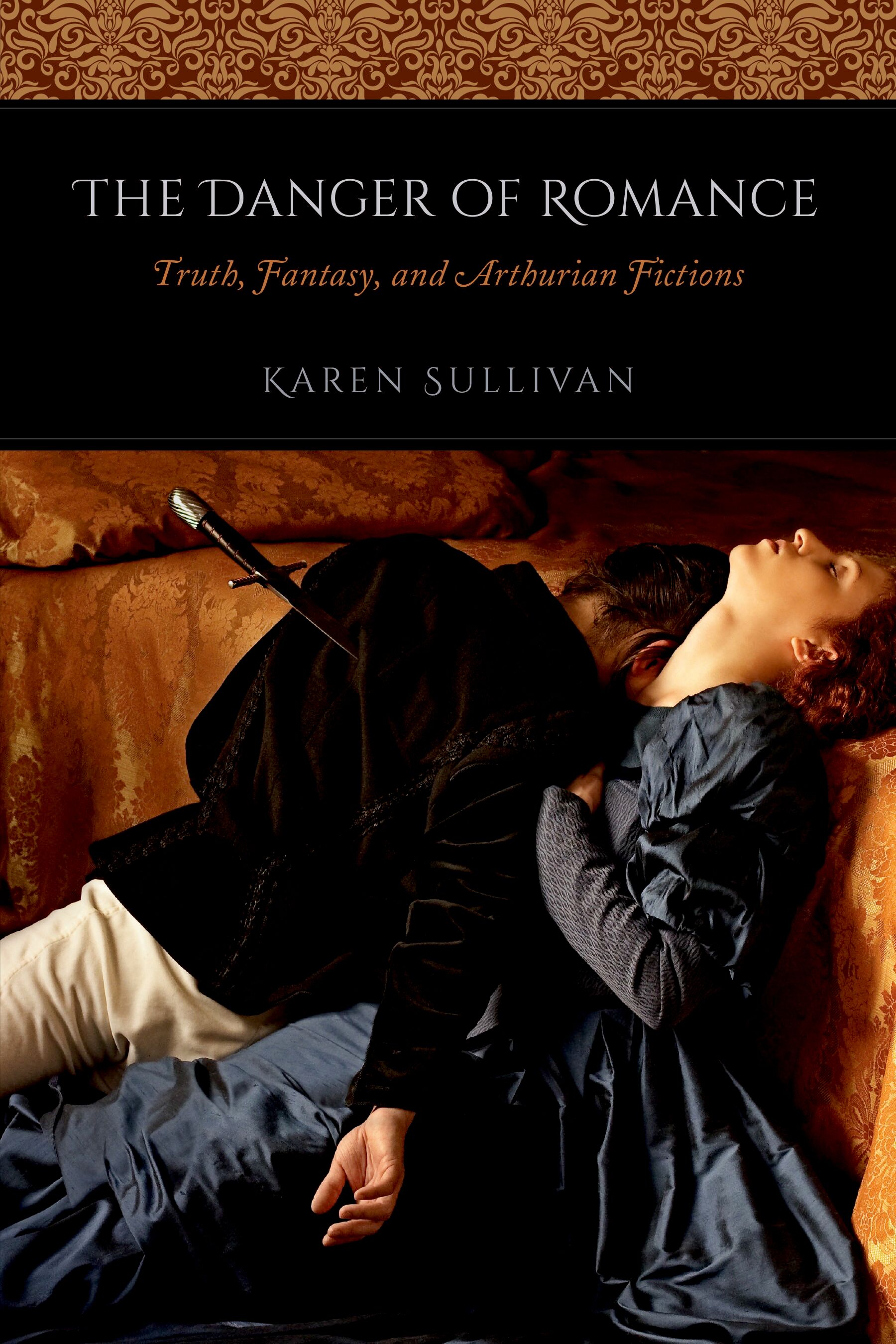
The danger of romance : truth, fantasy, and Arthurian fictions
The curious paradox of romance is that, throughout its history, this genre has been dismissed as trivial and unintellectual, yet people have never ceased to flock to it with enthusiasm and even fervor. In contemporary contexts, we devour popular romance and fantasy novels like The Lord of the Rings, Harry Potter, and Game of Thrones, reference them in conversations, and create online communities to expound, passionately and intelligently, upon their characters and worlds. But romance is \"unrealistic,\" critics say, doing readers a disservice by not accurately representing human experiences. It is considered by some to be a distraction from real literature, a distraction from real life, and little more.
Yet is it possible that romance is expressing a truth—and a truth unrecognized by realist genres? The Arthurian literature of the Middle Ages, Karen Sullivan argues, consistently ventriloquizes in its pages the criticisms that were being made of romance at the time, and implicitly defends itself against those criticisms. The Danger of Romance shows that the conviction that ordinary reality is the only reality is itself an assumption, and one that can blind those who hold it to the extraordinary phenomena that exist around them. It demonstrates that that which is rare, ephemeral, and inexplicable is no less real than that which is commonplace, long-lasting, and easily accounted for. If romance continues to appeal to audiences today, whether in its Arthurian prototype or in its more recent incarnations, it is because it confirms the perception—or even the hope—of a beauty and truth in the world that realist genres deny.
eBook


The Book of Kyng Arthur
Beginning with a consideration of Malory's ingenious chronology, this study shows that Malory achieved thematic and structural unity by selecting from the great mass of Arthurian legend three narrative strands -- the intrigues of Lancelot and Guinevere, the Grail quest, and the feud between the houses of Lot and Pellinore -- using these to illustrate a single theme -- the rise, flowering, and downfall of an ideal civilization. This selection and use of diverse materials, Charles Moorman asserts, indicates clearly that Malory set to work with a preconceived plan and that he did achieve his purpose, to write the \"haole book of Kyng Arthur.\"
eBook