
Catalogue Search | MBRL


Are you sure you want to remove the book from the shelf?

{{itemTitle}}
387
result(s) for
"Kings and rulers in literature"
Sort by:

Narratives of kingship in Eurasian empires, 1300-1800
\"In 'Narratives of Kingship in Eurasian Empires, 1300-1800' Richard van Leeuwen analyses representations and constructions of the idea of kingship in fictional texts of various genres, especially belonging to the intermediate layer between popular and official literature. The analysis shows how ideologies of power are embedded in the literary and cultural imagination of societies, their cultural values and conceptualizations of authority. By referring to examples from various empires (Chinese, Indian, Persian, Arabic, Turkish, European) the parallels between literary traditions are laid bare, revealing remarkable common concerns. The process of interaction and transmission are highlighted to illustrate how literature served as a repository for ideological and cultural values transforming power into authority in various imperial environments.\"--Cover page 4.
Book

The Cambridge Companion to Shakespeare's History Plays
Shakespeare's history plays have been performed more in recent years than ever before, in Britain, North America, and in Europe. This 2002 volume provides an accessible, wide-ranging and informed introduction to Shakespeare's history and Roman plays. It is attentive throughout to the plays as they have been performed over the centuries since they were written. The first part offers accounts of the genre of the history play, of Renaissance historiography, of pageants and masques, and of women's roles, as well as comparisons with history plays in Spain and the Netherlands. Chapters in the second part look at individual plays as well as other Shakespearean texts which are closely related to the histories. The Companion offers a full bibliography, genealogical tables, and a list of principal and recurrent characters. It is a comprehensive guide for students, researchers and theatre-goers alike.
eBook

Drawing mighty rulers
Step-by-step instructions for drawing several kinds of fantasy rulers including a fairy queen and an elf lord.
Book

Returning the King and the Women to the Beginning of the Song of Songs
The male lover portrayed in Song 1:2–4 was once ubiquitously considered to be a king. Recent interpreters, however, have understood the word “king” to be either a hypocorism (a nickname of affection) or an epithet for a “bridegroom.” Earlier interpretation also recognized a group of women in the opening scene, but this too is disappearing today. To address these exclusions, I present a close analysis of the grammar and offer an alternative perspective to what is identified as enallage (a substitution of one grammatical form for another) but which also inadvertently suppresses the women’s presence. Next, I investigate how the Song’s “king” became denuded of his royal meaning, including through a reliance on some dubious interpretations of Akkadian poetry. I also explore literary themes in the Hebrew Bible—women’s celebratory praise and a hitherto undiscovered case of subtle soundplay called “hidden paronomasia”—to show why the Song’s “king” should be understood as a royal personage. Finally, by comparing this scene in the Song to the Sumerian love poem Dumuzi-Inanna G, I show how the Song opens with a prominent ancient Near Eastern motif of love literature—the entrance or bringing of the royal consort into the palace, lauded by a group of rejoicing women.
Journal Article

Queen Red Riding Hood's guide to royalty
\"Queen Red Riding Hood from the Land of Stories gives advice and makes observations on how to rule\"-- Provided by publisher.
Book


King John
Includes Malone, Hazlitt, Dowden, Swinburne, Pater, Brandes, Chambers, Masefield and Frank Harris.
eBook

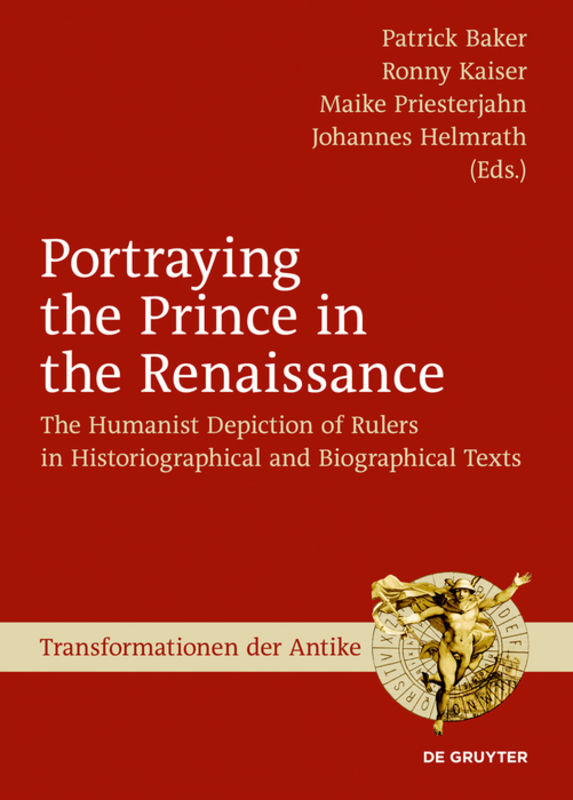
Portraying the prince in the Renaissance : the humanist depiction of rulers in historiographical and biographical texts
Although Antiquity itself has been intensively researched, together with its reception, to date this has largely happened in a compartmentalized fashion. This series presents for the first time an interdisciplinary contextualization of the productive acquisitions and transformations of the arts and sciences of Antiquity in the slow process of the European societies constructing a scientific system and their own cultural identity, a process which started in the Middle Ages and has continued up to the Modern Age. The series is a product of work in the Collaborative Research Centre \"Transformations of Antiquity\" and the \"August Boeckh Centre of Antiquity\" at the Humboldt University of Berlin. Their individual projects examine transformational processes on three levels in particular - the constitutive function of Antiquity in the formation of the European knowledge society, the role of Antiquity in the genesis of modern cultural identities and self-constructions, and the forms of reception in art, literature, translation and media. * new transdisciplinary series * the editors are prominent professors from different disciplines at the Humboldt University of Berlin * strengthens de Gruyter's profile in Classical Studies, Medieval Studies, Intellectual History _x000D_.
eBook