
Catalogue Search | MBRL


Are you sure you want to remove the book from the shelf?

{{itemTitle}}
1,748
result(s) for
"Kitchens Design and construction."
Sort by:

Kitchen and bath lighting
The industry standard illustrated guide from the National Kitchen and Bath Association Co-published by the National Kitchen and Bath Association (NKBA), Kitchen and Bath Lighting is the go-to resource for designing, planning, and installing light in residential kitchen and bath projects. Full color illustrations throughout the book make Kitchen and Bath Lighting a visually absorbing experience. This beautiful volume begins with the basics of light, color, and vision, progressing from there through every stage of the residential lighting design process. With special attention to sustainability and lighting for older eyes, this book contains the information you need to know about the latest trends impacting the lighting industry. Because the NKBA established the standard kitchen and bath guidelines for both new construction and remodels, Kitchen and Bath Lighting is aligned with the practices that are in high demand. This book is also an excellent choice for anyone hoping to obtain credentials as a Certified Kitchen Designer or Certified Bath Designer. -Comprehensive coverage of the kitchen and bath lighting process, from the fundamentals of color to design documentation to construction -Illustrated guidelines for using lighting tools like sources, luminaries, and controls in design development -Glossary and end-of-chapter exercises for quickly learning and referencing key terminology and lighting techniques -Companion website offering resources for instructors This new addition to the NKBA's Professional Resource Library is an essential reference for kitchen and bath designers, lighting designers, and interior designers, as well as contractors, retrofitters, specifiers, and anyone else involved in lighting kitchens and bathrooms. Kitchen and Bath Lighting will give you the visual understanding of lighting that can lead directly to client satisfaction.
eBook

Counter space : design and the modern kitchen
Discusses the history of the kitchen during the twentieth century, and describes how changes in technology, design, domestic life, space, organization, food, consumerism, politics, and gender role has affected its value in a home.
Book
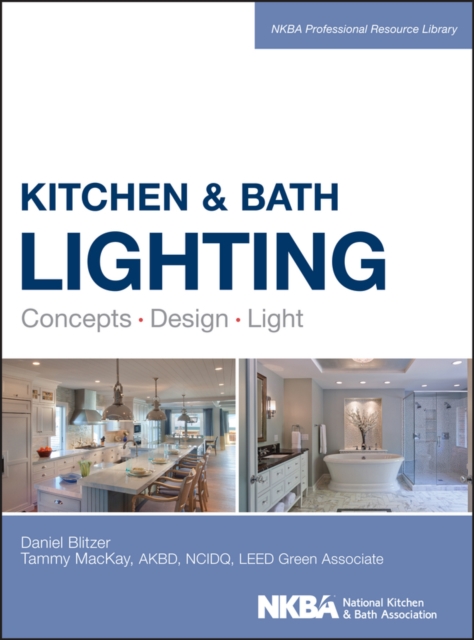
Kitchen & bath lighting
The industry standard illustrated guide from the National Kitchen and Bath Association Co-published by the National Kitchen and Bath Association (NKBA), Kitchen and Bath Lighting is the go-to resource for designing, planning, and installing light in residential kitchen and bath projects. Full color illustrations throughout the book make Kitchen and Bath Lighting a visually absorbing experience. This beautiful volume begins with the basics of light, color, and vision, progressing from there through every stage of the residential lighting design process. With special attention to sustainability and lighting for older eyes, this book contains the information you need to know about the latest trends impacting the lighting industry. Because the NKBA established the standard kitchen and bath guidelines for both new construction and remodels, Kitchen and Bath Lighting is aligned with the practices that are in high demand. This book is also an excellent choice for anyone hoping to obtain credentials as a Certified Kitchen Designer or Certified Bath Designer. Comprehensive coverage of the kitchen and bath lighting process, from the fundamentals of color to design documentation to construction Illustrated guidelines for using lighting tools like sources, luminaries, and controls in design development Glossary and end-of-chapter exercises for quickly learning and referencing key terminology and lighting techniques Companion website offering resources for instructors This new addition to the NKBA′s Professional Resource Library is an essential reference for kitchen and bath designers, lighting designers, and interior designers, as well as contractors, retrofitters, specifiers, and anyone else involved in lighting kitchens and bathrooms. Kitchen and Bath Lighting will give you the visual understanding of lighting that can lead directly to client satisfaction.
eBook
Architect's Pocket Book of Kitchen Design
As with the best-selling 'Architects Pocket Book' this title includes everyday information which the architect/designer normally has to find from a wide variety of sources and which is not always easily to hand.Focusing on kitchen design, this book is of use to the student as well as the experienced practitioner. It outlines all the information needed to design a workable kitchen, including ergonomics, services such as water and waste, appliances, and material choices for the floor, walls and ceiling. There is no similar compendium currently available.
eBook
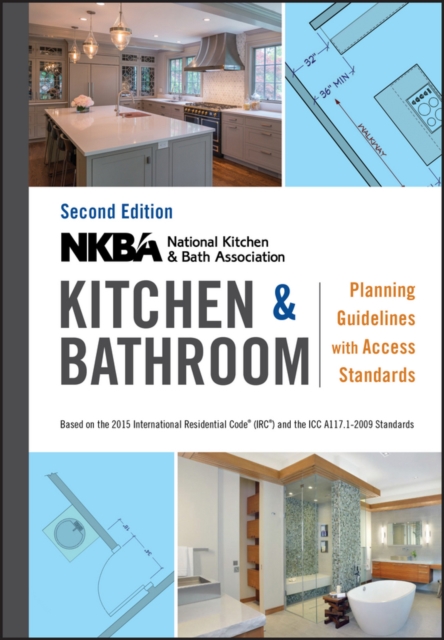
NKBA Kitchen and Bathroom Planning Guidelines with Access Standards
The essential kitchen and bath design reference, updated with the latest codes NKBA Kitchen & Bathroom Planning Guidelines with Access Standards is the industry standard reference, written by the National Kitchen and Bath Association and updated with the latest codes and standards. This new second edition features revised guidelines for cooking surface clearance, electrical receptacles, and ventilation for kitchens, as well as ceiling height, shower size, electrical receptacles, and ventilation for bathrooms. Revised to reflect the 2015 International Residential Code and the ICC A117.1-2009, all illustrations have been expertly redrawn using 2020 Design and Chief Architect Software to provide clearer visual reference for real-world application. With thirty-one kitchen guidelines and twenty-seven bathroom guidelines, this book provides full planning recommendations, code references, and access standards for today's kitchen and bath design professional. Kitchens and bathrooms are the two most functional rooms in the house, and also the most code-intensive. It is imperative that design professionals stay up to speed on the latest guidelines to ensure the safety and efficiency of their projects. * Get up to date on the latest kitchen and bath codes * Reference a new range of standards for clearance, ventilation, and more * Design for storage based on the results of university research * Examine illustrative and descriptive plans, sections, and perspective views The NKBA guidelines are based on a composite of historical review, current industry environment and practices, emerging trends, consumer lifestyles, research, and building codes. These factors combine to help kitchen and bath professionals create designs that are beautiful, functional, accessible, and safe. The NKBA Kitchen & Bathroom Planning Guidelines with Access Standards is the complete reference professionals turn to for the latest in kitchen and bath design.
eBook


Cooking Up a Circular Kitchen: A Longitudinal Study of Stakeholder Choices in the Development of a Circular Building Component
The built environment can be made more circular by gradually replacing building components with more circular components during construction, renovation, or maintenance. However, many different design options can be seen as circular. Although there is a growing number of studies about circular design options, research on what makes these options feasible or not feasible in practice is limited. This type of research requires intensive, long-term involvement with practitioners. Therefore, this article presents a longitudinal case study of an exemplary circular building component: the circular kitchen. The researchers actively engaged in a co-creation with industry partners to develop a circular kitchen design, supply chain model, and business model. All the choices made from initiative to market implementation were documented. Five lessons were drawn from an analysis of the stakeholder choices that can aid the future development of feasible circular building components: about ambition, aesthetics, design scale, participation, and focus.
Journal Article

Comparing Circular Kitchens: A Study of the Dutch Housing Sector
The built environment can become more sustainable by gradually replacing building components with circular ones. Kitchens are a logical component to be made circular, given their relatively short lifespan, product-based nature, and affordable prototypes. Since various designs for circular kitchens can be developed, understanding the feasibility of these designs is crucial for their successful implementation. This knowledge, however, remains limited. Therefore, this article aimed to determine which types of circular kitchens are feasible. Circular kitchens available or announced in the Dutch housing sector within the past five years were compared using an adapted version of the CBC generator, a comprehensive design framework for circular building components. The comparison included the Circular Kitchen (CIK), developed as part of an international research project. Data were sourced from manufacturers’ websites and online publications supplemented by interviews with two outliers to verify the results. The analysis encompassed seven circular kitchens, with two developed by established manufacturers and five by start-ups. The manufacturers mostly communicated about their kitchen’s physical design. The established manufacturers’ circular kitchens were found to be more similar to their non-circular kitchens, while start-ups applied more radical innovations. Furthermore, the kitchens that had a frame structure using technical materials or a panel-based structure using biological materials were more likely to be feasible. These findings can facilitate future circular kitchen development by improving these kitchens’ feasibility, thus aiding the transition to a more circular built environment. Furthermore, this research contributes scientifically by adapting a comprehensive design framework (the CBC generator) to compare circular designs.
Journal Article

Towards a circular built environment
PurposeThe transition to a circular economy in the built environment is key to achieving a resource-effective society. The built environment can be made more circular by applying circular building components. The purpose of this paper is to present a design tool that can support industry in developing circular building components.Design/methodology/approachThe tool was developed and tested in five steps. In Step 1, the authors analysed existing circular design frameworks to identify gaps and develop requirements for the design tool (Step 2). In Step 3, the authors derived circular design parameters and options from existing frameworks. In Step 4, the authors combined and specified these to develop the “circular building components generator” (CBC-generator). In Step 5, the CBC-generator was applied in the development of an exemplary component: the circular kitchen and tested in a student workshop.FindingsThe CBC-generator is a three-tiered design tool, consisting of a technical, industrial and business model generator. These generators are “parameter based”; they consist of a parameter-option matrix and design canvasses. Different variants for circular components can be synthesised by filling the canvasses through systematically “mixing and matching” design options.Research limitations/implicationsThe developed tool does not yet support establishing causal links between “parameter-options” and identification of the most circular design variant.Practical implicationsThe CBC-generator provides an important step to support the building industry in developing and implementing circular building components in the built environment.Originality/valueWhilst existing tools and frameworks are not comprehensive, nor specifically developed for designing circular building components, the CBC-generator successfully supports the integral design of circular building components. First, it provides all the design parameters which should be considered; second, it provides extensive design options per parameter; and third, it supports systematic synthesis of design options to a cohesive and comprehensive circular design.
Journal Article