
Catalogue Search | MBRL


Are you sure you want to remove the book from the shelf?

{{itemTitle}}
8
result(s) for
"Knights and knighthood France History To 1500."
Sort by:


Chivalry and the Ideals of Knighthood in France during the Hundred Years War
Craig Taylor's study examines the wide-ranging French debates on the martial ideals of chivalry and knighthood during the period of the Hundred Years War (1337–1453). Faced by stunning military disasters and the collapse of public order, writers and intellectuals carefully scrutinized the martial qualities expected of knights and soldiers. They questioned when knights and men-at-arms could legitimately resort to violence, the true nature of courage, the importance of mercy, and the role of books and scholarly learning in the very practical world of military men. Contributors to these discussions included some of the most famous French medieval writers, led by Jean Froissart, Geoffroi de Charny, Philippe de Mézières, Honorat Bovet, Christine de Pizan, Alain Chartier and Antoine de La Sale. This interdisciplinary study sets their discussions in context, challenging modern, romantic assumptions about chivalry and investigating the historical reality of debates about knighthood and warfare in late medieval France.
eBook

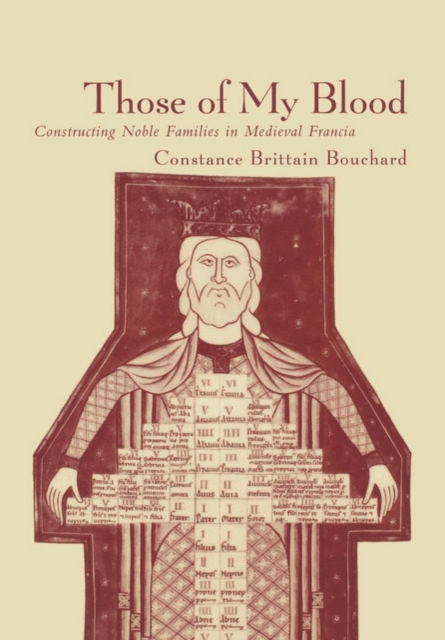
Those of My Blood
For those who ruled medieval society, the family was the crucial social unit, made up of those from whom property and authority were inherited and those to whom it passed. One's kin could be one's closest political and military allies or one's fiercest enemies. While the general term used to describe family members was consanguinei mei, those of my blood, not all of those relations-parents, siblings, children, distant cousins, maternal relatives, paternal ancestors, and so on-counted as true family in any given time, place, or circumstance. In the early and high Middle Ages, the family was a very different group than it is in modern society, and the ways in which medieval men and women conceptualized and structured the family unit changed markedly over time.
Focusing on the Frankish realm between the eighth and twelfth centuries, Constance Brittain Bouchard outlines the operative definitions of family in this period when there existed various and flexible ways by which individuals were or were not incorporated into the family group. Even in medieval patriarchal society, women of the aristocracy, who were considered outsiders by their husbands and their husbands' siblings and elders, were never completely marginalized and paradoxically represented the very essence of family to their male children.
Bouchard also engages in the ongoing scholarly debate about the nobility around the year 1000, arguing that there was no clear point of transition from amorphous family units to agnatically structured kindred. Instead, she points out that great noble families always privileged the male line of descent, even if most did not establish father-son inheritance until the eleventh or twelfth century. Those of My Blood clarifies the complex meanings of medieval family structure and family consciousness and shows the many ways in which negotiations of power within the noble family can help explain early medieval politics.
eBook
\Those of my blood\ : constructing noble families in medieval Francia
\"A wonderful introduction to those new to the subject as well as a welcome contribution to the debate on the nature of the medieval nobility.\"-Medieval Review
eBook

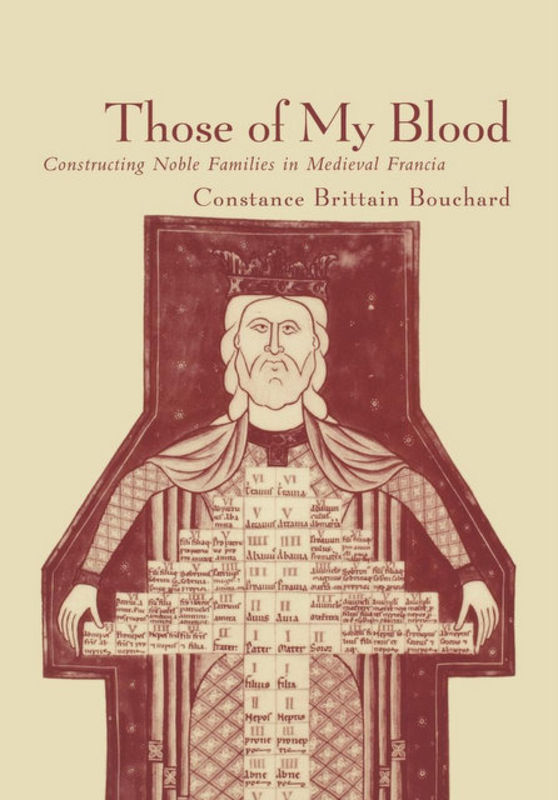
Those of My Blood
For those who ruled medieval society, the family was the crucial social unit, made up of those from whom property and authority were inherited and those to whom it passed. One's kin could be one's closest political and military allies or one's fiercest enemies. While the general term used to describe family members was consanguinei mei, \"those of my blood,\" not all of those relations-parents, siblings, children, distant cousins, maternal relatives, paternal ancestors, and so on-counted as true family in any given time, place, or circumstance. In the early and high Middle Ages, the \"family\" was a very different group than it is in modern society, and the ways in which medieval men and women conceptualized and structured the family unit changed markedly over time.Focusing on the Frankish realm between the eighth and twelfth centuries, Constance Brittain Bouchard outlines the operative definitions of \"family\" in this period when there existed various and flexible ways by which individuals were or were not incorporated into the family group. Even in medieval patriarchal society, women of the aristocracy, who were considered outsiders by their husbands and their husbands' siblings and elders, were never completely marginalized and paradoxically represented the very essence of \"family\" to their male children.Bouchard also engages in the ongoing scholarly debate about the nobility around the year 1000, arguing that there was no clear point of transition from amorphous family units to agnatically structured kindred. Instead, she points out that great noble families always privileged the male line of descent, even if most did not establish father-son inheritance until the eleventh or twelfth century.Those of My Bloodclarifies the complex meanings of medieval family structure and family consciousness and shows the many ways in which negotiations of power within the noble family can help explain early medieval politics.
eBook

Geoffroy of Villehardouin, Marshal of Champagne
Geoffroy of Villehardouin, Marshal of
Champagne by Theodore Evergates traces the
remarkable life of Geoffroy of Villehardouin (c. 1148-c. 1217) from
his earliest years in Champagne through his last years in Greece
after the crusade.
The fourth son of a knight, Geoffroy became marshal of
Champagne, principal negotiator in organizing the Fourth Crusade,
chief of staff of the expedition to and conquest of Constantinople,
garrison commander of Constantinople and, in his late fifties,
field commander defending the Latin settlement in the Byzantine
empire against invading Bulgarian armies and revolting Greek
cities. Known for his diplomatic skills and rectitude, he served as
the chief military advisor to Count Thibaut III of Champagne and
later to Emperor Henry of Constantinople.
Geoffroy is remarkable as well for dictating the earliest war
memoir in medieval Europe, which is also the earliest prose
narrative in Old French. Addressed to a home audience in Champagne,
he described what he did, what he saw, and what he heard during his
eight years on crusade and especially during the fraught period
after the conquest of Constantinople. His memoir, The Book of
the Conquest of Constantinople , furnishes a commander's
retrospective account of the main events and inner workings of the
crusade-the innumerable meetings and speeches, the conduct (not
always commendable) of the barons, and the persistent discontent
within the army-as well as a celebration of his own deeds as a
diplomat and a military commander.
eBook
