
Catalogue Search | MBRL


Are you sure you want to remove the book from the shelf?

{{itemTitle}}
111,497
result(s) for
"Knowledge and learning"
Sort by:

The cavernous mind of Thomas Jefferson, an American savant
While every biographer has something to say concerning Thomas Jefferson's cavernous mind - his varied interests and the depth of his understanding of them - there has never been, strange as it might seem, a non-anthology dedicated to fleshing out key features of his mind, exploring Jefferson's varied interests through his varied personae. This book does just that, studying Jefferson as lawyer, moralist, politician, scientist, epistolist, aesthetician, farmer, educationalist, and philologist.
BOOK

Shakespeare's Schoolroom
Shakespeare's Schoolroomplaces moments of considerable emotional power in Shakespeare's poetry-portraits of what his contemporaries called \"the passions\"-alongside the discursive and material practices of sixteenth-century English pedagogy. Humanist training in Latin grammar and rhetorical facility was designed to intervene in social reproduction, to sort out which differences between bodies (male and female) and groups (aristocrats, the middling sort, and those below) were necessary to producing proper English \"gentlemen.\" But the method adopted by Lynn Enterline in this book uncovers a rather different story from the one schoolmasters invented to promote the social efficacy of their pedagogical innovations. Beginning with the observation that Shakespeare frequently reengaged school techniques through the voices of those it excluded (particularly women), Enterline shows that when his portraits of \"love\" and \"woe\" betray their institutional origins, they reveal both the cost of a Latin education as well as the contradictory conditions of genteel masculinity in sixteenth-century Britain. In contrast to attempts to explain early modern emotion in relation to medical discourse, Enterline uncovers the crucial role that rhetoric and the texts of the classical past play in Shakespeare's passions. She relies throughout on the axiom that rhetoric has two branches that continuously interact: tropological (requiring formal literary analysis) and transactional (requiring social and historical analysis). Each chapter moves between grammar school archives and literary canon, using linguistic, rhetorical, and literary detail to illustrate the significant difference between what humanists claimed their methods would achieve and what the texts of at least one former schoolboy reveal about the institution's unintended literary and social consequences. When Shakespeare creates the convincing effects of character and emotion for which he is so often singled out as a precursor of \"modern\" subjectivity, he signals his debt to the Latin institution that granted him the cultural capital of an early modern gentleman precisely when undercutting the socially normative categories schoolmasters invoked as their educational goal.
eBook

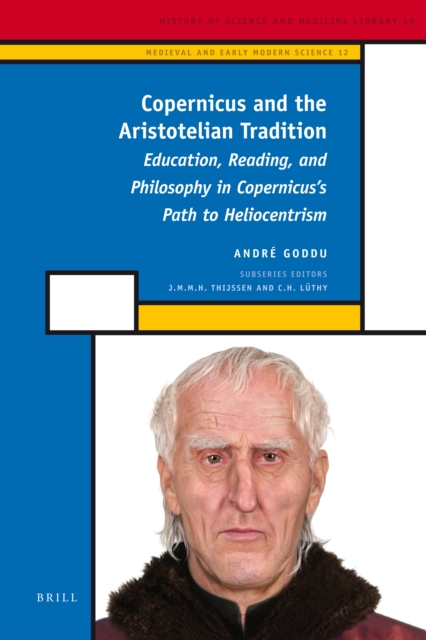
Copernicus and the Aristotelian Tradition
Drawing on a half century of scholarship, of Polish studies of Copernicus and Cracow University, and of Copernicus's sources, this book offers a comprehensive re-evaluation of Copernicus's achievement, and explains his commitment to the uniform, circular motions of celestial bodies, and his views about hypotheses.
eBook


Ain't I an Anthropologist
Iconic as a novelist and popular cultural figure, Zora Neale
Hurston remains underappreciated as an anthropologist. Is it
inevitable that Hurston's literary authority should eclipse her
anthropological authority? If not, what socio-cultural and
institutional values and processes shape the different ways we read
her work? Jennifer L. Freeman Marshall considers the polar
receptions to Hurston's two areas of achievement by examining the
critical response to her work across both fields. Drawing on a wide
range of readings, Freeman Marshall explores Hurston's popular
appeal as iconography, her elevation into the literary canon, her
concurrent marginalization in anthropology despite her significant
contributions, and her place within constructions of Black feminist
literary traditions.
Perceptive and original, Ain't I an Anthropologist is
an overdue reassessment of Zora Neale Hurston's place in American
cultural and intellectual life.
eBook

Finding a likeness : how I got somewhat better at art
\"Nicholson Baker's journey into the craft of painting before and through the COVID-19 pandemic, as he sets out to learn how to paint via books, workshops, and tutorials, alongside personal reflections on past artists he admires\"-- Provided by publisher.
Book

Hitler's Library
The first book to present the so-called Hitler Library. It sheds new light on the readings of Hitler and on his techniques how to read a book. Hitler presented himself as an ideal reader of Schopenhauer, nevertheless his remarks destroy that image, particularly if we see how he read Ernst Jünger, Richard Wagner, or Paul de Lagarde, and how he reread Mein Kampf.The book describes the gnostic character of the phenomenon as an explication of the success of nazism and that of the Hitler myth and challenges the static views of traditional historiography.
eBook

The World of Juba II and Kleopatra Selene
Raised and educated in Rome, Juba II (48 BC- AD 23) was sent to uphold Roman interests in northwest Africa as ruler of the cliet kingdom of Mauretania.Together with his wife K'eopatra Selene, daughter of Marcus Anthonius and Kleopatra VII, he established a rich, multicultural environment at their capital, renamed Caesarea, where Egyptian.
eBook