
Catalogue Search | MBRL


Are you sure you want to remove the book from the shelf?

{{itemTitle}}
15
result(s) for
"Korea (North) -- Politics and government -- 20th century"
Sort by:

Among Women across Worlds
In Among Women across Worlds, Suzy Kim explores the transnational connections between North Korean women and the global women's movement. Asian women, especially communists, are often depicted as victims of a patriarchal state. Kim challenges this view through extensive archival research, revealing that North Korean women asserted themselves from the late 1940s to 1975, before the Korean War began and up to the UN's International Women's Year. Kim centers on North Korea and the \"East\" to present a new genealogy of the global women's movement. Women of the Korean Democratic Women's Union (KDWU), part of the global left women's movement led by the Women's International Democratic Federation (WIDF), argued that family and domestic issues should be central to both national and international debates. They highlighted the connections between race, nationality, sex, and class in systems of exploitation. Their intersectional program proclaimed \"no peace without justice,\" \"the personal is the political,\" and \"women's rights are human rights,\" long before Western activists adopted these ideas. Among Women across Worlds uncovers movements and ideas foundational to today's era.
eBook


The State of the Japanese State
Gavan McCormack’s latest work argues that Abe Shinzo’s efforts to re-engineer the Japanese state may fail, but his radicalism continues to shake the country and have consequences not easy to predict. Its significance will be recognized by those researching contemporary world politics, international relations and the history of modern Japan.
eBook

East Asia Observed
This collection brings together themes in East Asian history, diplomacy, culture and politics written by J E Hoare since the early 1970s. His writings derive from his training as a historian, from his time as a Research Analyst in the British Foreign Office from 1969-2003, and from his experiences as a diplomat in the Republic of Korea (South Korea), the People’s Republic of China, and the Democratic People’s Republic of Korea (North Korea). The writings selected for this volume include academic papers, book reviews and some quasi-journalistic articles which reflect both historical research and analysis of current events and issues. The wide-ranging content speaks to the author’s specialist fields of interest including diplomacy, biography, extraterritoriality and architecture on which he has published extensively.
eBook

North Korean foreign policy
North Korean Foreign Policy: Security Dilemma and Succession, by Yongho Kim, starts from the point of view that North Korea's provocations have been motivated more by fear than by her in-born provocative nature. Kim argues that North Korea's provocative foreign policy reflects its threat perception stemming from various security dilemma, and a very real concern regarding another father-to-son succession. This volume views North Korea's external and domestic threats as causes and its provocative foreign policy as an effect of the causes. The security dilemma has impelled North Korea to generate and thus portray to the world provocative signals, and the ever-pressing issue of Kim Jong-il's succession has driven him to prioritize his own political survival over that of North Korea's state survival. Unless Kim Jong-il's political survival is guaranteed, North Korea will not be interested in full-scale introduction of capitalist way of economic reform and economic package promised by the United States and South Korea in return for the abandonment of their nuclear program. North Korean Foreign Policy suggests that an effective policy for countries relating to North Korea, whether dovish or hawkish, should deal directly with Kim Jong-il's political survival, and not with Pyongyang's failed economy.
eBook


Going Critical: The First North Korean Nuclear Crisis
A decade before being proclaimed part of the \"axis of evil,\" North Korea raised alarms in Washington, Seoul, and Tokyo as the pace of its clandestine nuclear weapons program mounted. When confronted by evidence of its deception in 1993, Pyongyang abruptly announced its intention to become the first nation ever to withdraw from the Nuclear Non-Proliferation Treaty, defying its earlier commitments to submit its nuclear activities to full international inspections. U.S. intelligence had revealed evidence of a robust plutonium production program. Unconstrained, North Korea's nuclear factory would soon be capable of building about thirty Nagasaki-sized nuclear weapons annually. The resulting arsenal would directly threaten the security of the United States and its allies, while tempting cash-starved North Korea to export its deadly wares to America's most bitter adversaries. In Going Critical,three former U.S. officials who played key roles in the nuclear crisis trace the intense efforts that led North Korea to freeze-and pledge ultimately to dismantle-its dangerous plutonium production program under international inspection, while the storm clouds of a second Korean War gathered. Drawing on international government documents, memoranda, cables, and notes, the authors chronicle the complex web of diplomacy--from Seoul, Tokyo, and Beijing to Geneva, Moscow, and Vienna and back again-that led to the negotiation of the 1994 Agreed Framework intended to resolve this nuclear standoff. They also explore the challenge of weaving together the military, economic, and diplomatic instruments employed to persuade North Korea to accept significant constraints on its nuclear activities, while deterring rather than provoking a violent North Korean response. Some ten years after these intense negotiations, the Agreed Framework lies abandoned. North Korea claims to possess some nuclear weapons, while threatening to produce even more. The story of the 1994 confrontatio
eBook
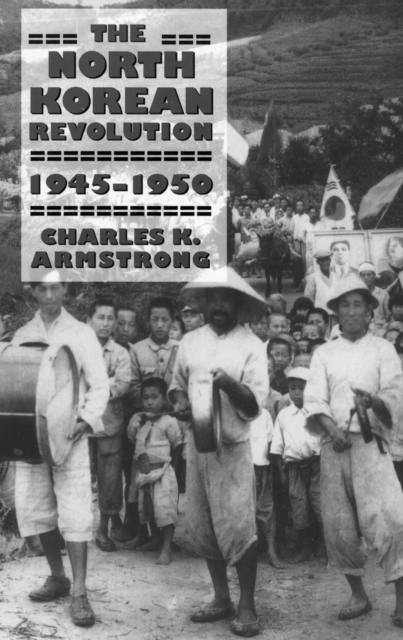
The North Korean revolution, 1945-1950
Armstorng examines the genesis of the Democratic People's Republic of Korea (DPRK) both as an important yet rarely studied example of a communist state and as part of modern Korean history.
eBook

Power Shift
The dynamics of international relations in Asia are undergoing broad and fundamental changes that are reverberating around the world. Primary among the catalysts of change in the region is the rise of China as the engine of regional economic growth, as a major military power, as a significant voice in regional diplomacy, and as a proactive power in multilateral institutions. With in-depth assessments by seventeen of the world’s leading experts on China’s foreign relations, this groundbreaking volume offers the most timely, up-to-date, and comprehensive analysis of China’s emerging influence on international relations in Asia. The contributors explore the various dimensions of China’s rise, its influence on the region, the consequences for the United States, and alternative models of the evolving Asian order. What emerges is a clear picture of China increasingly at the center of the regional web; while North Korean and Taiwan could erupt in conflict, the predominant trend in Asia is the creation of an extensive web of mutual interdependence among states and non-state actors. Providing the best overview we currently have of the changing political balance on the Asian continent, this accessible volume will be essential reading for anyone concerned with contemporary Asian affairs.
eBook