
Catalogue Search | MBRL


Are you sure you want to remove the book from the shelf?

{{itemTitle}}
607
result(s) for
"Korean fiction."
Sort by:


Reading colonial Korea through fiction
Reading Colonial Korea through Fiction is a compilation of thirteen original essays which was first serialized in a quarterly issued by the National Institute of Korean Language, Saekukŏsaenghwal (Living our National Language Anew) in a column entitled, “Our Fiction, Our Language” between 2004 to 2007. Although the original intent of the Institute was to elucidate on important features particular to “national fiction” and the superiority of “national language,” instead Kim Chul’s astute essays offers a completely different reading of how national literature and language was constructed. Through a series of culturally nuanced readings, Kim links the formation and origins of Korean language and fiction to modernity and traces its origins to the Japanese colonial period while demonstrating in a very lucid way how colonialism constitutes modernity and how all modernity is perforce colonial, given the imperial crucibles from which modernist claims emerged. For Kim, denying this reality can only lead to violent distortions as he eschews appeals to a preexisting framework, preferring instead to ground his theoretical insights in subtle, innovative readings of texts themselves.
eBook


Representations of Femininity in Contemporary South Korean Women's Literature
This book discusses perceptions of 'femininity' in contemporary South Korea and the extent to which fictional representations in South Korean women's fiction of the 1990s challenges the enduring association of the feminine with domesticity, docility and passivity.
eBook

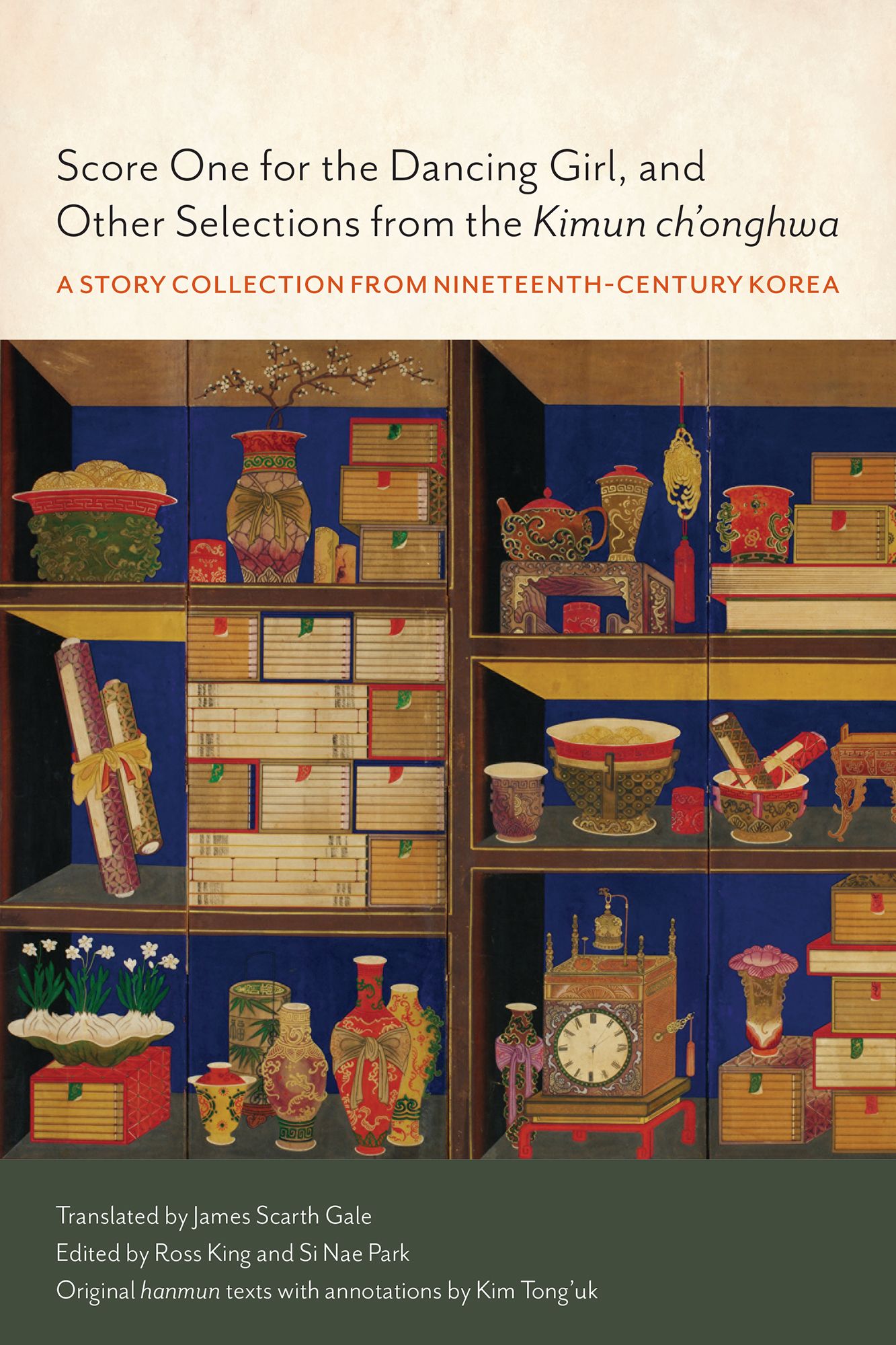
Score One for the Dancing Girl, and Other Selections from the Kimun ch'onghwa
Score One for the Dancing Girl presents more than a hundred stories from an early-nineteenth-century collection of yadam stories, the Kimun ch'onghwa (\"Compendium of Records of Hearsay\"). Prose tales that feature historical people and places but may also include fantastical elements, the yadam stories in this volume feature ghosts and magic, courtesans and sex, and court politics. They constitute both an entertaining literary collection and a rich treasure trove of information about life in seventeenth and eighteenth-century Korea.The first volume in an ongoing series of translations of classic Korean literature by the Canadian missionary James Scarth Gale (1863-1937), Score One for the Dancing Girl includes the original literary Sinitic (hanmun) text and Gale's English translation. Both the hanmun and English are extensively annotated. Introductory essays by Ross King and Si Nae Park discuss the yadam genre, Gale's life and career, and the ways in which his background as a Christian missionary affected the translations.
eBook

Song Lee in room 2B
Spring becomes a memorable time for Miss Mackle's second-grade classroom because of the antics of Horrible Harry and the special insights of shy Song Lee.
Book
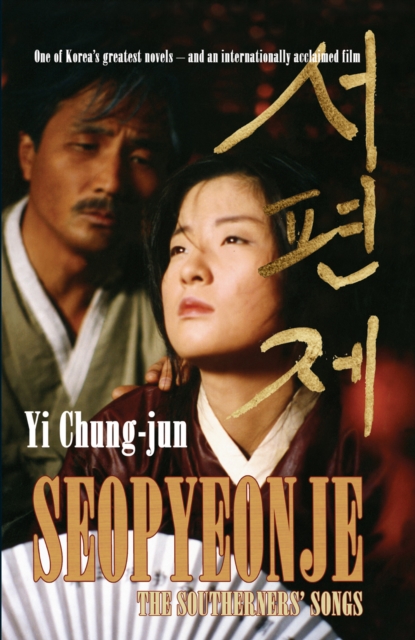
Seopyeonje: The Southerners' Songs
Yi Chung-jun's haunting and disturbing novel is set in the 1950s after the Korean War in the remote south of the country, home of the traditional art of pansori singing, a moving and plangently beautiful style of folk song performed by traveling musicians.
eBook

Keurium : a novel
\"Shay Stone lies in a hospital bed, catatonic -- dead to the world. Her family thinks it's a ploy for attention. Doctors believe it's the result of an undisclosed trauma. At the mercy of memories and visitations, Shay unearths secrets that may have led to her collapse. Will she remain paralyzed in denial? Or can she accept the unfathomable and break free? KEURIUM threads through one adopted Korean American's life of longing and letting go. On a quest for family, sanity, and survival, it challenges saviorism and forced gratitude. Woven through its heartbreaking fabric is a story of love and resilience. \"KEURIUM tells the harrowing journey of adopted Korean American Shay Stone's fight for her emotional well-being and ultimately, her life. Told in thoroughly satisfying chronological vignettes, this is a brave and necessary novel about hard truths, self-care, self-discovery, and one woman's hard-earned liberation.\"--Amazon.
Book

Representaciones del rol de la (no)maternidad en la literatura femenina coreana contemporánea: “la madre sin hijo”
En Corea, donde dar a luz a un hijo varón era, tradicionalmente, la principal obligación de la mujer, indagar en la imagen de la “madre sin hijo” permite exponer los prejuicios sobre los que se asienta la institución de la maternidad. El presente trabajo plantea el análisis de la representación de la (no)maternidad en la obra de dos escritoras coreanas del siglo XX, Lee Sun-hee y O Jeonghui, en cuyos textos aparecen madres que han perdido a su hijo y las repercusiones que ello conlleva en las vidas que se ven privadas del rol que la misma sociedad les impone.
Journal Article