
Catalogue Search | MBRL


Are you sure you want to remove the book from the shelf?

{{itemTitle}}
71
result(s) for
"Kremlin"
Sort by:

Screening Sanctity: Matilda, the Politics of Offense and Moral Values in Russia’s Public Religion
This paper examines “film as a medium of religious experience and moral imagination” in contemporary Russia through the legal–moral politics of “insulting religious feelings.” Using the controversy over Aleksei Uchitel’s Matilda (2017) as a case study, it analyzes how the portrayal of Nicholas II’s premarital romance was construed as sacrilegious and mobilized by the Russian Orthodox Church (ROC) and State actors to police the boundaries of the sacred and public morality. Read alongside the Pussy Riot (2012) and Tannhäuser (2015) scandals, the case illuminates how claims of offense structure ROC-Kremlin bargaining over “traditional values”, showing how these values are articulated through references to Romanov memory and the sacralized figure of Nicholas II. Drawing on ROC statements, appeals to historical memory, and State responses to protests, the article reassesses what the film, and its reception, reveal about Church-State equilibrium in post-Soviet Russia.
Journal Article
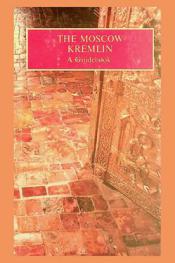
The Kremlin
\"Supplementing this ... narrative are some 120 illustrations--one half in full color. Manuscript illuminations, revered icons--both religious and historical--and numerous paintings, woodcuts, and modern photographs trace the evolution of the Kremlin through the more than eight centuries of its tumultuous history\"--Cover.
Book
International Relations by Proxy? The Kremlin and the Russian Orthodox Church
Russian officials and the Moscow Patriarchate have worked together in recent years to promote a socially conservative policy agenda, both domestically and beyond the Russian Federation’s borders. Examining official documents and the statements of key leaders, this article evaluates the development and nature of contemporary church–state relations as they pertain to international relations. The picture that emerges is one of pragmatic partnering, with the state increasingly inclining towards normative positions long espoused by the Church in an effort to shift its foreign policy in a direction that stresses civilizational differentiation and positions Russia as the protector of Christians and “traditional values” around the globe. Underlying this shift in orientation on the part of the Kremlin is a neorealist perspective (though one increasingly expressed through ideational rhetoric) that envisions Russia as not just having a privileged regional sphere of influence but becoming a major player in a polycentric world. As a means of legitimating these objectives, the Church has proven an ideal partner; however, it would be a mistake to simply regard the latter institution as an arm of the state, given that it has its own objectives and motivations relative to the wider world, and these at times conflict with those of the Kremlin.
Journal Article

Where is the Kremlin?
\"Get the inside story on the famous fortress in the heart of Moscow that has withstood fires, invaders, and revolutions for almost seven hundred years. Lined by nineteen beautiful towers, the high walls of the Kremlin enclose colorful domed cathedrals, treasure-filled museums, and the Russian capitol. But this Moscow fortress has had its share of dark days. Follow along with author Deborah Hopkinson as she recounts the tales of spying, murder, missing children, and lost treasure that are part of this landmark's long history.\"--Provided by publisher.
Book

Beau Monde on Empire’s Edge
In Beau Monde on Empire’s Edge , Mayhill C. Fowler tells the story of the rise and fall of a group of men who created culture both Soviet and Ukrainian. This collective biography showcases new aspects of the politics of cultural production in the Soviet Union by focusing on theater and on the multi-ethnic borderlands. Unlike their contemporaries in Moscow or Leningrad, these artists from the regions have been all but forgotten despite the quality of their art. Beau Monde restores the periphery to the center of Soviet culture. Sources in Russian, Ukrainian, Polish, and Yiddish highlight the important multi-ethnic context and the challenges inherent in constructing Ukrainian culture in a place of Ukrainians, Russians, Poles, and Jews. Beau Monde on Empire’s Edge traces the growing overlap between the arts and the state in the early Soviet years, and explains the intertwining of politics and culture in the region today.
eBook

Twenty letters to a friend : a memoir
\"In this riveting, New York Times-bestselling memoir--first published by Harper in 1967--Svetlana Alliluyeva, subject of Rosemary Sullivan's critically acclaimed biography, Stalin's Daughter, describes the surreal experience of growing up in the Kremlin in the shadow of her father, Joseph Stalin. Svetlana Iosifovna Alliluyeva, later known as Lana Peters, was the youngest child and only daughter of Joseph Stalin and Nadezhda Alliluyeva, his second wife. In 1967, she fled the Soviet Union for India, where she approached the U.S. Embassy for asylum. Once there, she showed her CIA handler something remarkable: A personal memoir about growing up inside the Kremlin that she'd written in 1963. The Indian Ambassador to the USSR, whom she'd befriended, had smuggled the manuscript out of the Soviet Union the previous year--and returned it to her as soon as she arrived in India. Structured as a series of letters to a 'friend'--Svetlana refused to identify him, but we now know it was her close friend, Fyodor Volkenstein--this astounding memoir exposes the dark human heart of the Kremlin. After opening with Stalin's death, Svetlana returns to her childhood. Each letter adds a new strand to her remarkable story; some are wistful--romanticized recollections of her early years and her family--while others are desperate exorcisms of the tragedies that plagued her, such as her mother's suicide and her father's increasing cruelty. It is also in some ways a love letter to Russia, with its ancient heritage and spectacularly varied geography. Candid, surprising, and utterly compelling, Twenty Letters to a Friend offers one of the most revealing portraits of life inside Stalin's inner circle, and of the notorious dictator himself\"-- Provided by publisher.
BOOK

The Kremlin’s Information Influence Campaigns in Estonia and Estonian Response in the Context of Russian-Western Relations
The Russian Federation has developed a large number of instruments to put pressure on the West using non-conventional means such as cyber attacks, economic tools and information warfare. Using modern IT technologies in its hybrid activities, Russia, much like China or other authoritarian powers, is trying to challenge the current world order. These instruments are particularly evident in the Baltic States. This article uses Estonia as a case study to inquire into the political goals and strategic conduct of Russia. Specifically, the focus is on the political context, instruments of information war, and available countermeasures. As argued in the current study, the shift from European to Eurasian power, Russia’s careful management and success in avoiding crossing the “red lines” of its adversaries, as well as in exploiting the socioeconomic weaknesses and openness of the West, all play a relevant role in understanding the political context. As for instruments, Russia has developed strategic narratives and conspiracy theories, plus several channels next to media channels, and policy tools such as Pax Russica and the compatriot policy. These are deployed in its neighborhood and aimed at unintegrated segments of the Russophone populations.
Journal Article

Is Russia Fascist?
In Is Russia Fascist?
, Marlene Laruelle argues that the charge of \"fascism\" has
become a strategic narrative of the current world order.
Vladimir Putin's regime has increasingly been accused of embracing
fascism, supposedly evidenced by Russia's annexation of Crimea, its
historical revisionism, attacks on liberal democratic values, and
its support for far-right movements in Europe. But at the same time
Russia has branded itself as the world's preeminent antifascist
power because of its sacrifices during the Second World War while
it has also emphasized how opponents to the Soviet Union in Central
and Eastern Europe collaborated with Nazi Germany.
Laruelle closely analyzes accusations of fascism toward Russia,
soberly assessing both their origins and their accuracy. By
labeling ideological opponents as fascist, regardless of their
actual values or actions, geopolitical rivals are able to frame
their own vision of the world and claim the moral high ground.
Through a detailed examination of the Russian domestic scene and
the Kremlin's foreign policy rationales, Laruelle disentangles the
foundation for, meaning, and validity of accusations of fascism in
and around Russia. Is Russia Fascist? shows that the
efforts to label opponents as fascist is ultimately an attempt to
determine the role of Russia in Europe's future.
eBook
Alexei Navalny, In His Own Words
The Economist interviewed Alexei Navalny, who has reportedly died in an Arctic penal colony, in the run-up to Russia’s 2018 presidential election. He discussed the breadth of his political support, his experiences in prison and offered some predictions for the future of Vladimir Putin’s Russia.
Streaming Video