
Catalogue Search | MBRL


Are you sure you want to remove the book from the shelf?

{{itemTitle}}
42
result(s) for
"Krieg Motiv"
Sort by:
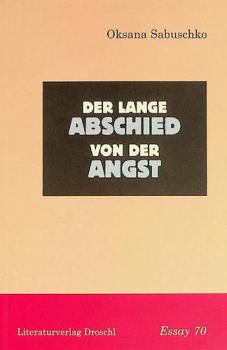
Der lange Abschied von der Angst
Etwas mehr als einen Monat nach dem Terroranschlag im Bataclan am 13.11.2015 ist Oksana Sabuschko zu Gast in Paris. Die Erfahrung in der paralysierten Metropole lässt die ukrainische Autorin über das Verarbeiten von Angst, hervorgerufen durch Krieg und Terror, reflektieren. Das historische und kulturelle Gedächtnis europäischer Staaten stehen zunächst im Fokus des Essays. Ausgehend von den Kollaborateuren mit dem Vichy-Regime und dem Versagen der Linksintellektuellen während des Zweiten Weltkriegs reist Sabuschko durch die französische Geistesgeschichte von Sartre über Derrida bis hin zu Houellebecq. Wo liegen die Parallelen zwischen dem Einmarsch der Nationalsozialisten in Frankreich und der russischen Besatzung der Krim seit 2014? Ist die Ukraine ein failed state? Welchen Einfluss haben Politik und Medien auf unser Alltagsleben? Bezugnehmend auf die Feldstudien geht sie in einem weiteren Schritt der Frage nach, inwieweit Sex eine Metapher für soziale und kulturelle Konstellationen darstellt. Dieser kluge und provokante Essay zeichnet einen langen Abschied von der Angst nach - lange mag der Weg sein, aber nicht hoffnungslos. Oksana Sabuschko wurde 1960 geboren und lebt in Kiew. Sie hat Philosophie studiert, an der Ukrainischen Akademie der Wissenschaften gearbeitet, war als Fulbright-Stipendiatin in Harvard sowie Pittsburgh und als writer-in-residence an der Penn State University. Sabuschko zählt zu den bedeutendsten Schriftstellerinnen der heutigen Ukraine. Ihr Werk wurde in zahlreiche Sprachen übersetzt und u.a. mit dem Global Commitment Foundation Poetry Prize (1997) sowie dem Angelus-Preis (2013) ausgezeichnet. Bei Droschl erschienen die beiden Romane \"Feldstudien über ukrainischen Sex\" (2006) und \"Museum der vergessenen Geheimnisse\" (2010) sowie die Essaysammlung \"Planet Wermut\" (2012).
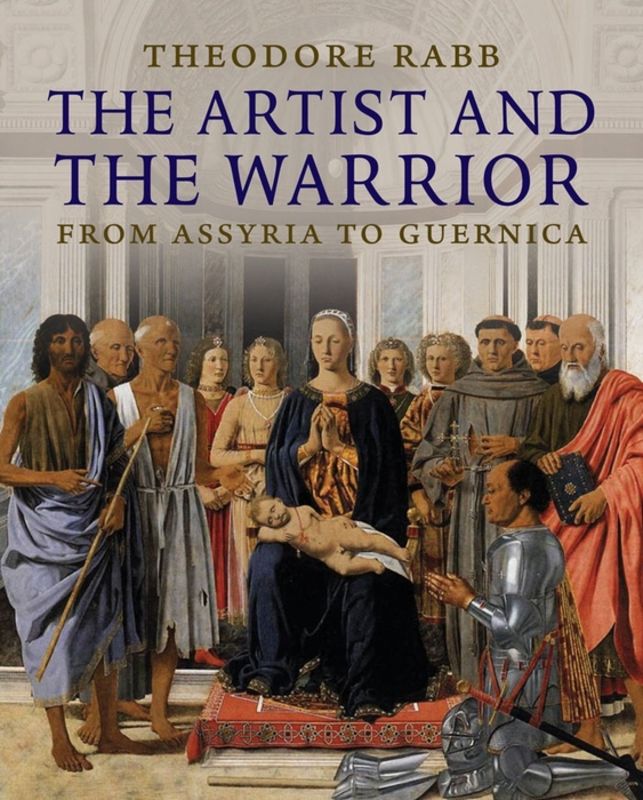
The Artist and the Warrior
How have artists across the millennia responded to warfare? In this uniquely wide-ranging book, Theodore Rabb blends military history and the history of art to search for the answers. He draws our attention to masterpieces from the ancient world to the twentieth century-paintings, sculpture, ceramics, textiles, engravings, architecture, and photographs-and documents the evolving nature of warfare as artists have perceived it.
The selected works represent landmarks in the history of art and are drawn mainly from the western tradition, though important examples from Japan, India, and the Middle East are also brought into the discussion. Together these works tell a story of long centuries during which warfare inspired admiration and celebration. Yet a shift toward criticism and condemnation emerged in the Renaissance, and by the end of the nineteenth century, glorification of the warrior by leading artists had ceased. Rabb traces this progression, from such works as the Column of Trajan and the Titian \"Battle of Lepanto\", whose makers celebrated glorious victories, to the antiwar depictions created by Brueghel, Goya, Picasso, and others. Richly illustrated and accessibly written, this book presents a study of unprecedented sweep and multidisciplinary interest.
eBook


Words for War
The armed conflict in the east of Ukraine brought about an emergence of a distinctive trend in contemporary Ukrainian poetry: the poetry of war. Directly and indirectly, the poems collected in this volume engage with the events and experiences of war, reflecting on the themes of alienation, loss, dislocation, and disability; as well as justice, heroism, courage, resilience, generosity, and forgiveness. In addressing these themes, the poems also raise questions about art, politics, citizenship, and moral responsibility. The anthology brings together some of the most compelling poetic voices from different regions of Ukraine. Young and old, female and male, somber and ironic, tragic and playful, filled with extraordinary terror and ordinary human delights, the voices recreate the human sounds of war in its tragic complexity.
eBook

Traumatic imprints : cinema, military psychiatry, and the aftermath of war
\"Forced to contend with unprecedented levels of psychological trauma during World War II, the United States military began sponsoring a series of nontheatrical films designed to educate and even rehabilitate soldiers and civilians alike. Traumatic Imprints examines wartime and postwar debates about, aspirations for, and uses of cinema as a vehicle for studying, publicizing, and even 'working through' war trauma\"--Provided by publisher.
Book

Male Armor
There is no shortage of iconic masculine imagery of the soldier in American film and literature-one only has to think of George C. Scott as Patton in front of a giant American flag, Sylvester Stallone as Rambo, or Burt Lancaster rolling around in the surf in From Here to Eternity. InMale Armor, Jon Robert Adams examines the ways in which novels, plays, and films about America's late-twentieth-century wars reflect altering perceptions of masculinity in the culture at large. He highlights the gap between the cultural conception of masculinity and the individual experience of it, and exposes the myth of war as an experience that verifies manhood.
Drawing on a wide range of work, from the war novels of Ernest Hemingway, Norman Mailer, James Jones, and Joseph Heller to David Rabe's playStreamersand Anthony Swofford'sJarhead,Adams examines the evolving image of the soldier from World War I to Operation Desert Storm. In discussing these changing perceptions of masculinity, he reveals how works about war in the late twentieth century attempt to eradicate inconsistencies among American civilian conceptions of war, the military's expectations of the soldier, and the soldier's experience of combat. Adams argues that these inconsistencies are largely responsible not only for continuing support of the war enterprise but also for the soldiers' difficulty in reintegration to civilian society upon their return. He intendsMale Armorto provide a corrective to the public's continued investment in the war enterprise as a guarantor both of masculinity and, by extension, of the nation.
eBook


Words for War
The poems collected in this volume engage with the events and experiences of war, reflecting on the themes of alienation, loss, dislocation, and disability; as well as justice, heroism, courage, resilience, generosity, and forgiveness. The anthology brings together some of the most compelling poetic voices from different regions of Ukraine.
eBook

The Cambridge Companion to War Writing
War writing is an ancient genre that continues to be of vital importance. Times of crisis push literature to its limits, requiring writers to exploit their expressive resources to the maximum in response to extreme events. This Companion focuses on British and American war writing, from Beowulf and Shakespeare to bloggers on the 'War on Terror'. Thirteen period-based chapters are complemented by five thematic chapters and two chapters charting influences. This uniquely wide range facilitates both local and comparative study. Each chapter is written by an expert in the field and includes suggestions for further reading. A chronology illustrates how key texts relate to major conflicts. The Companion also explores the latest theoretical thinking on war representation to give access to this developing area and to suggest new directions for research. In addition to students of literature, the volume will interest those working in war studies, history, and cultural studies.
eBook

Why We Fought
This book makes a powerful case that film can be as valuable a tool as primary documents for improving our understanding of the causes and consequences of war. Why We Fought: America's Wars in Film and History is a comprehensive look at war films, from depictions of the American Revolution to portrayals of September 11 and its aftermath. The volume contrasts recognized history and historical fiction with the versions appearing on the big screen. The text considers a selection of the pivotal war films of all time, including All Quiet on the Western Front (1930), Sands of Iwo Jima (1949), Apocalypse Now (1979), Platoon (1986), and Saving Private Ryan (1998). Why We Fought reveals how film depictions of the country's wars have shaped our values, politics, and culture, and it offers a unique understanding of American history.
eBook