
Catalogue Search | MBRL


Are you sure you want to remove the book from the shelf?

{{itemTitle}}
20
result(s) for
"Kriegsmarine"
Sort by:


Teddy Suhren, Ace of Aces
Reinhard 'Teddy' Suhren fired more successful torpedo shots than any other man during the Second World War and he was the first junior officer to be awarded the Knight's Cross for his achievements.However, this is not the reason Teddy remains legendary within the U-boat world.
eBook

Tirpitz and the Imperial German Navy
Grand Admiral Alfred von Tirpitz (1849-1930) was the principal force behind the rise of the German Imperial Navy prior to World War I, challenging Great Britain's command of the seas. As State Secretary of the Imperial Naval Office from 1897 to 1916, Tirpitz wielded great power and influence over the national agenda during that crucial period. By the time he had risen to high office, Tirpitz was well equipped to use his position as a platform from which to dominate German defense policy. Though he was cool to the potential of the U-boat, he enthusiastically supported a torpedo boat branch of the navy and began an ambitious building program for battleships and battle cruisers. Based on exhaustive archival research, including new material from family papers, Tirpitz and the Imperial German Navy is the first extended study in English of this germinal figure in the growth of the modern navy.
eBook

Battle of Dogger Bank
On January 24, 1915, a German naval force commanded by Admiral Franz von Hipper conducted a raid on British fishing fleets in the area of the Dogger Banks. The force was engaged by a British force, which had been alerted by a decoded radio intercept. The ensuing battle would prove to be the largest and longest surface engagement until the Battle of Jutland the following summer. While the Germans lost an armored cruiser with heavy loss of life and Hipper's flagship was almost sunk, confusion in executing orders allowed the Germans to escape. The British considered the battle a victory; but the Germans had learned important lessons and they would be better prepared for the next encounter with the British fleet at Jutand. Tobias Philbin's Battle of Dogger Bank provides a keen analytical description of the battle and its place in the naval history of World War I.
eBook

U-boat Commander Oskar Kusch: Anatomy of a Nazi-era Betrayal and Judicial Murder
To his enlisted men on U-154, Lieutenant Oskar Kusch was the ideal skipper-bright, experienced, successful, caring, tolerably eccentric-and a popular captain who always brought his boat home safely when so many others vanished without a trace. To most of his officers Kusch came across as someone very different-a Nazi-hating intellectual with an artistic bent given to lengthy criticisms of the regime, its leaders and its propaganda, a suspected coward and potential traitor unfit for command. Early in 1944, after his second patrol under Kusch, his executive officer, a reservist with a doctorate in law and member of the Nazi party, denounced him on charges of sedition and cowardice. A hastily arranged court-martial cleared Kusch of the cowardice accusation but sentenced him to death on purely ideological grounds for undermining the fighting spirit of his boat, even though the prosecutor had only recommended a ten-year jail sentence. Abandoned by all but his closest friends and relatives, coldly sacrificed by Grand Admiral Karl Dnitz, unwilling to plead for mercy, and to the end tormented by a naval legal bureaucracy acting in collusion with the brown regime, Oskar Kusch was executed in May 1944. This study, the first scholarly work on Kusch in English, traces his career and ordeal from his upbringing in Berlin to his tragic death and beyond, including the fifty-year struggle to rehabilitate his name and restore his honor in a postwar Germany long loath to confront the darker dimensions of its past. The passing of the wartime generation and the emergence of a new school of historians dedicated to critical research and inspired historiography have finally combined to rectify our picture of the Kriegsmarine and to appreciate the sacrifice of men like Oskar Kusch.
eBook

Admiral von Hipper
This work aims to constitute an objective analysis of a German World War I naval combat commander within his proper context, by closely defining both the military-technical and military-political milieux in which Franz Hipper operated. The description of Hipper's actions in the battles of Dogger Bank and Jutland and his handling of communications, airships, and the new technologies of war demonstrate the importance of the military environment. The volume also provides a glimpse into the decision-making process involved in the construction of German battle cruisers and the impact these decisions had in combat.
eBook

German Naval Strategy, 1856-1888
This book is a comparative study of the evolution of the German navy in the second half of the nineteenth century. It examines the development of strategy, especially commerce-raiding, in comparison to what other navies were doing in this era of rapid technological change. It is not an insular history, merely listing ship rosters or specific events; it is a history of the German navy in relation to its potential foes. It is also a look at a new military institution involved in an inter-service rivalry for funds, technology and manpower with the prestigious and well-established army.
David Olivier holds a Ph.D in History from the University of Saskatchewan, Canada.
Part 1: Change in a Changing World: Naval law and technology in the nineteenth century 1. The Roots of Plunder: Privateering and the laws of war at sea to 1865 2. Means and Method: Naval technology and theory in the mid-nineteenth century 2.1 Technology and Navies: New ships, new weapons Part 2: Early Days, Early Dreams: The navies of Prussia and the North German Confederation, 1856-1871 3. Precursor to Empire: The Prussian navy to 1864 4. The Wars of German Unification and Sea Power, 1864-1871 Part 3: The Army at the Helm: The navy in the Stosch and Caprivi eras, 1871-1888 5. Albrecht von Stosch and the Neglected Navy, 1871-1872 5.1 1871: The unhappy peace 6. Diverse Fortunes: The Navy Under Stosch, 1873-1883 7. Two Schools of Thought: The Jeune École and the cruiser admirals 8. Caprivi Off Course: Colonial sideshows, operations planning, construction policies and tactical development, 1884-1888
eBook
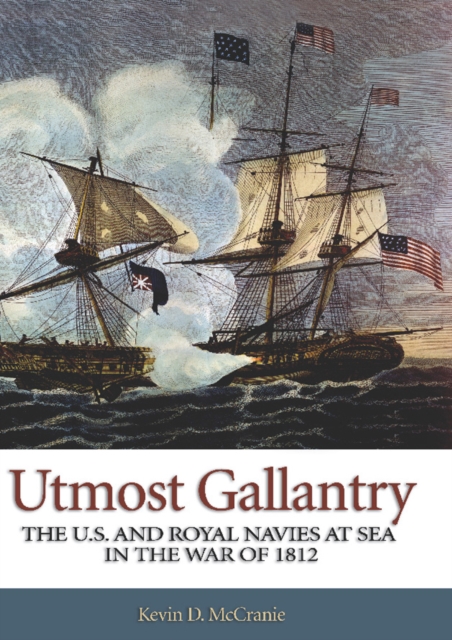
Utmost gallantry : the U.S. and Royal Navies at sea in the War of 1812
Focusing on the oceanic war rather than the war in the Great Lakes, this study charts the War of 1812 from the perspectives of the two opposing navies at seaone of the largest fleets in the world and a small, upstart navy just three decades old. While American naval leadership searched for a means of contesting Britains naval dominance, the English sought to destroy the U.S. Navy and protect its oceanic highways. Instead of describing battles between opposing warships, McCranie evaluates entire cruises by American and British men-of-war, noting both successes and failures and how they translated into broader strategies. In the process, his study becomes a history of how the two navies fought the oceanic war, linking high-level governmental decisions about strategy to the operational use of fleets in the Atlantic and Caribbean and from the South Pacific to the Indian Ocean.Unlike other books on the subject, this work offers a balanced appraisal of the oceanic war on the high seas, taking into account the strategic considerations of both combatants and how the leadership from each side assessed, planned, and implemented operational concepts. Drawing on a wealth of British and American archival sources, McCranie guides the reader through the strategic decision making processes on both sides of the Atlantic. He demonstrates vividly the impact of those decisions on the course of the war at sea, where the contest was close and deadly. Indeed, the authors action-packed accounts of battles hold special appeal.This study offers a more balanced appraisal of the war than most studies of the topic. Particularly important is the stress on understanding British strategic imperatives and the correlation between these imperatives and why Britain conducted the oceanic naval war in the manner it did. This study focuses on all cruises of American warships, not just those that terminated in battles so as to provide a more complete history of the naval war.
eBook

The Kriegsmarine and the Aircraft Carrier: The Design and Operational Purpose of the \Graf Zeppelin\, 1933–1940
While the Kriegsmarine's only aircraft carrier, the uncompleted Graf Zeppelin, has attracted considerable interest over the decades, this has been limited to technical histories of the vessel. This article explores the origins of the programme and what the German navy believed it needed such vessels for. It examines the design process and the proposed method of operational employment, and seeks to place them in an international context. To date, German efforts have been considered in isolation from the wider developments in aircraft carrier technology during the interwar period. When these are taken into account a more balanced view of the German enterprise emerges.
Journal Article
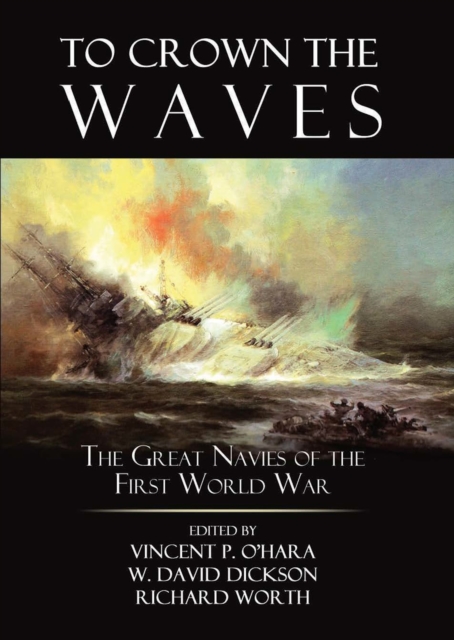
To Crown the Waves
The only comparative analysis available of the great navies of World War I, this work studies the Royal Navy of the United Kingdom, the German Kaiserliche Marine, the United States Navy, the French Marine Nationale, the Italian Regia Marina, the Austro-Hungarian Kaiserliche und K#65533;nigliche Kriegsmarine, and the Imperial Russian Navy to demonstrate why the war was won, not in the trenches, but upon the waves. It explains why these seven fleets fought the way they did and why the war at sea did not develop as the admiralties and politicians of 1914 expected. After discussing each navy's goals and circumstances and how their individual characteristics impacted the way they fought, the authors deliver a side-by-side analysis of the conflict's fleets, with each chapter covering a single navy. Parallel chapter structures assure consistent coverage of each fleet--history, training, organization, doctrine, materiel, and operations--and allow readers to easily compare information among the various navies. The book clearly demonstrates how the naval war was a collision of 19th century concepts with 20th century weapons that fostered unprecedented development within each navy and sparked the evolution of the submarine and aircraft carrier. The work is free from the national bias that infects so many other books on World War I navies. As they pioneer new ways of viewing the conflict, the authors provide insights and material that would otherwise require a massive library and mastery of multiple languages. Such a study has special relevance today as 20th-century navies struggle to adapt to 21st-century technologies.
eBook