
Catalogue Search | MBRL


Are you sure you want to remove the book from the shelf?

{{itemTitle}}
319
result(s) for
"Krige"
Sort by:

Estimating where and how animals travel: An optimal framework for path reconstruction from autocorrelated tracking data
An animal's trajectory is a fundamental object of interest in movement ecology, as it directly informs a range of topics from resource selection to energy expenditure and behavioral states. Optimally inferring the mostly unobserved movement path and its dynamics from a limited sample of telemetry observations is a key unsolved problem, however. The field of geostatistics has focused significant attention on a mathematically analogous problem that has a statistically optimal solution coined after its inventor, Krige. Kriging revolutionized geostatistics and is now the gold standard for interpolating between a limited number of autocorrelated spatial point observations. Here we translate Kriging for use with animal movement data. Our Kriging formalism encompasses previous methods to estimate animal's trajectories—the Brownian bridge and continuous‐time correlated random walk library—as special cases, informs users as to when these previous methods are appropriate, and provides a more general method when they are not. We demonstrate the capabilities of Kriging on a case study with Mongolian gazelles where, compared to the Brownian bridge, Kriging with a more optimal model was 10% more precise in interpolating locations and 500% more precise in estimating occurrence areas.
Journal Article

The End of the Roman Republic 146 to 44 BC
In 146 BC the armies of Rome destroyed Carthage and emerged as the decisive victors of the Third Punic War. The Carthaginian population was sold and its territory became the Roman province of Africa. In the same year and on the other side of the Mediterranean Roman troops sacked Corinth, the final blow in the defeat of the Achaean conspiracy: thereafter Greece was effectively administered by Rome. Rome was now supreme in Italy, the Balkans, Greece, Macedonia, Sicily, and North Africa, and its power and influence were advancing in all directions.
However, not all was well. The unchecked seizure of huge tracts of land in Italy and its farming by vast numbers of newly imported slaves allowed an elite of usually absentee landlords to amass enormous and conspicuous fortunes. Insecurity and resentment fed the gulf between rich and poor in Rome and erupted in a series of violent upheavals in the politics and institutions of the Republic. These were exacerbated by slave revolts and invasions from the east. The instigation of Rome's first professional army to resolve the crises soon made its generals - Sulla, then Pompey, then Caesar - all too powerful. Meanwhile Greek ideas and culture had invaded Rome, contributing to the subversion of the Roman ideal of the free citizen, farmer of his own land, duty-bound to fight in its defence.
Catherine Steel tells history of this crucial and turbulent century, focussing on the issues of freedom, honour, power, greed and ambition, and the cherished but abused institutions of the Republic which were central to events then and which have preoccupied historians ever since.
eBook

A companion to the punic wars (blackwell companions to the ancient world)
A Companion to the Punic Wars offers a comprehensive new survey of the three wars fought between Rome and Carthage between 264 and 146 BC.Offers a broad survey of the Punic Wars from a variety of perspectivesFeatures contributions from an outstanding cast of international scholars with unrivalled expertiseIncludes chapters on military and naval techniques, strategies, logistics, and Hannibal as a charismatic general and leaderGives balanced coverage of both Carthage and Rome.
eBook

Professor D.G. Krige (1919–2013)
Professor Daniel (Danie) Gerhardus Krige died recently. Krige is profiled.
Journal Article
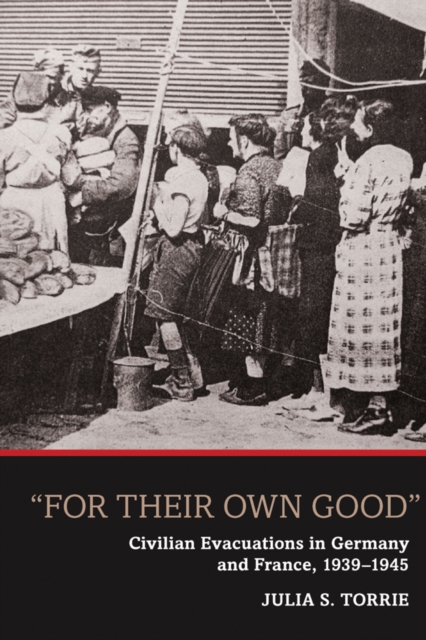
For Their Own Good
The early twentieth-century advent of aerial bombing made successful evacuations essential to any war effort, but ordinary people resented them deeply. Based on extensive archival research in Germany and France, this is the first broad, comparative study of civilian evacuations in Germany and France during World War II. The evidence uncovered exposes the complexities of an assumed monolithic and all-powerful Nazi state by showing that citizens' objections to evacuations, which were rooted in family concerns, forced changes in policy. Drawing attention to the interaction between the Germans and French throughout World War II, this book shows how policies in each country were shaped by events in the other. A truly cross-national comparison in a field dominated by accounts of one country or the other, this book provides a unique historical context for addressing current concerns about the impact of air raids and military occupations on civilians.
eBook

Media at war : the Iraq crisis
The Iraq war provoked widespread public debate, and media coverage of the events have also been the subject of scrutiny. Embedded reporters, 24-hour news and ′live on the spot′ reports have had a huge impact on the news we receive. The Media at War offers a critical overview of the war coverage, and provides a context for examining questions that emerged about the role of journalists: · What experience, training and protection do war reporters have? · What is the relationship between journalists and their sources? · Are embedded journalists able to deliver balanced news coverage? Howard Tumber and Jerry Palmer examine the pre-war phase, the military campaign and the post-war phase, as well as attitudes and interpretations of these events. Their comprehensive analysis includes both news page and comment page material.
eBook
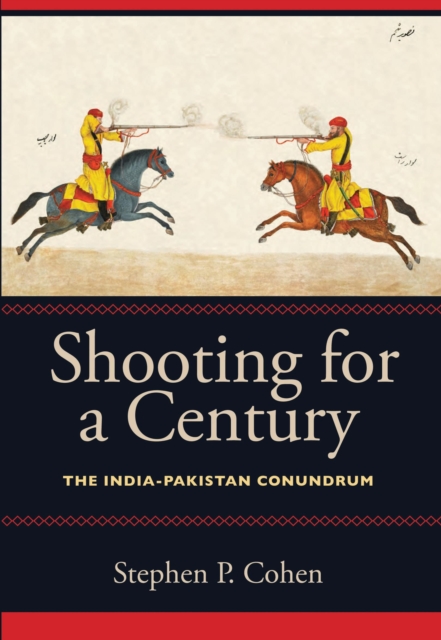
Shooting for a century
The rivalry between India and Pakistan has proven to be one of the world's most intractable international conflicts, ever since 1947 when the British botched their departure from the South Asian subcontinent. And the enmity is likely to continue for another thirty-five years, reaching the century mark. This has critical implications for both countries and the rest of the world. Renowned South Asia expert Stephen P. Cohen explains why he expects this rivalry to continue in this first comprehensive survey of the deep historical, cultural, and strategic differences that underpin the hostility.
In recent years the stakes have increased as India and Pakistan have each acquired a hundred or more nuclear weapons, blundered into several serious crises, and become victims of terrorism, some of it from across their borders. America is puzzled by the problem of dealing with a rising India and a struggling Pakistan, and Cohen offers a fresh approach for U.S. policy in dealing with these two powers.
Drawing on his rich experience in South Asia to explore the character, depth, and origin of Indian and Pakistani attitudes toward each other, Cohen develops a comprehensive theory of why the dispute between New Delhi and Islamabad is likely to persist. He also describes the terrible cost of this animosity for the citizens of India and Pakistan, including the region's high levels of violence and low level of economic integration. On a more hopeful note, however, he goes on to suggest developments that could ameliorate the tension, including a more active role for the UnitedStates in addressing a range of issues that divide the nations. Kashmir is one of these issues, but as much a consequence as a cause of the rivalry.
Can India and Pakistan resolve their many territorial and identity issues? Perhaps the best they can expect in the near term is a limited degree of normalization, including bottom-up ideas generated by the peace and business communities, as well as a realistic assessment by strategic elites of the two states' shared common interests.
\"Right now, full normalization seems unlikely,\" Cohen writes in the preface, \"so this book is suffused with conditional pessimism: normalization would be desirable, but there are worse futures than a projection of the present rivalry for another thirty years or more.\"
eBook

Globalized Fatherhood
Using an entirely new conceptual vocabulary through which to understand men's experiences and expectations at the dawn of the twenty-first century, this path-breaking volume focuses on fatherhood around the globe, including transformations in fathering, fatherhood, and family life. It includes new work by anthropologists, sociologists, and cultural geographers, working in settings from Peru to India to Vietnam. Each chapter suggests that men are responding to globalizationas fathersin creative and unprecedented ways, not only in the West, but also in numerous global locations.
eBook

Burning Country
In 2011, many Syrians took to the streets of Damascus to demand the overthrow of the government of Bashar al-Assad. Today, much of Syria has become a warzone where foreign journalists find it almost impossible to report on life in this devastated land. Burning Country explores the horrific and complicated reality of life in present-day Syria with unprecedented detail and sophistication, drawing on new first-hand testimonies from opposition fighters, exiles lost in an archipelago of refugee camps, and courageous human rights activists among many others. These stories are expertly interwoven with a trenchant analysis of the brutalisation of the conflict and the militarisation of the uprising, of the rise of the Islamists and sectarian warfare, and the role of governments in Syria and elsewhere in exacerbating those violent processes. With chapters focusing on ISIS and Islamism, regional geopolitics, the new grassroots revolutionary organisations, and the worst refugee crisis since World War Two, Burning Country is a vivid and groundbreaking look at a modern-day political and humanitarian nightmare.
eBook

Analysis of the vacuum infusion molding process
The vacuum infusion molding process is becoming increasingly popular for the production of large composite parts. A comprehensive model of the process has not been proposed yet, making its optimization difficult. The flexible nature of the vacuum bag coupled to the varying pressure inside the mold cavity results in a variation of the cavity thickness during the impregnation. A complete simulation model must incorporate this phenomenon. In this paper, a complete analysis of the vacuum infusion molding process is presented. The analysis is not restricted to the theoretical aspects but also reviews the effect of the main processing parameters. The parameters investigated in this paper are thought to be those of most interest for the process, i.e. the compaction of the reinforcement, the permeability, the infusion strategy and the presence of flow enhancement layers. Following the characterization experiments, a 1‐D model for the vacuum infusion molding process is presented. This model is derived assuming that an elastic equlibrium holds in the mold cavity during mold filling. Even though good agreement was found between simulation results and experiments, it is concluded that additional work is needed on the numerical model to integrate interesting findings from the experimental part.
Journal Article