
Catalogue Search | MBRL


Are you sure you want to remove the book from the shelf?

{{itemTitle}}
14,849
result(s) for
"Kubrick, Stanley."
Sort by:

The Bloomsbury companion to Stanley Kubrick
Stanley Kubrick is one of the most revered directors in cinema history. His 13 films, including classics such as Paths of Glory, 2001: A Space Odyssey, A Clockwork Orange, Barry Lyndon, and The Shining, attracted controversy, acclaim, a devoted cult following, and enormous critical interest. With this comprehensive guide to the key contexts - industrial and cultural, as well as aesthetic and critical - the themes of Kubrick's films sum up the current vibrant state of Kubrick studies. Bringing together an international team of leading scholars and emergent voices, this companion provides comprehensive coverage of Stanley Kubrick's contribution to cinema.
BOOK
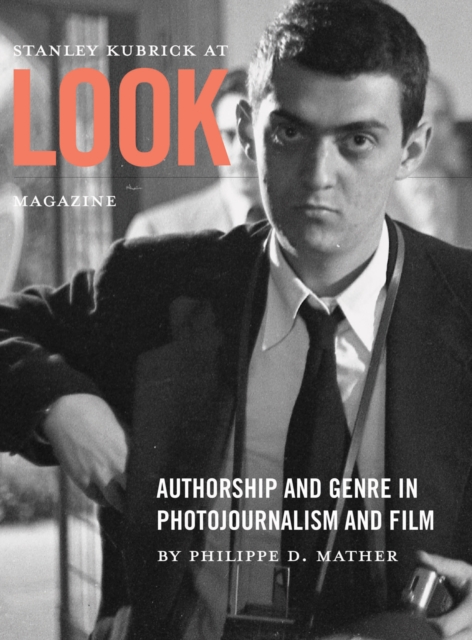
Stanley Kubrick at look magazine
From 1945 to 1950, during the formative years of his career, Stanley Kubrick worked as a photojournalist for Look magazine. Offering a comprehensive examination of the work he produced during this period – before going on to become one of America's most celebrated filmmakers – Stanley Kubrick at Look Magazine sheds new light on the aesthetic and ideological factors that shaped his artistic voice. Tracing the links between his photojournalism and films, Philippe Mather shows how working at Look fostered Kubrick's emerging genius for combining images and words to tell a story. Mather then demonstrates how exploring these links enhances our understanding of Kubrick's approach to narrative structure – as well as his distinctive combinations of such genres as fiction and documentary and fantasy and realism.
eBook


Kubrick’s Jewesses Onscreen and Offscreen
This article considers the Jewess in relation to the art of Stanley Kubrick. By utilizing the latest insights in the emerging field of Kubrick studies, namely the “new historical turn” that is based on exploiting material now deposited in his archive at the University of Arts, London, combined with the growing work on Kubrick’s Jewishness and on Kubrick and feminism, it argues for a reconsideration of Kubrick's working practices with regard to Jewish women, but also that the notion of the Jewess helps us to understand Kubrick’s work. In so doing, it expands our notion of the Jewess beyond explicit representation, thus widening the current boundaries within Jewish film studies. It will attempt to do so by combining a survey of those Jewish women with whom Kubrick worked before analyzing the Jewesses in his projects, in particular how his casting choices, among other factors, leave palimpsestic traces in his films, and hence permitting us the possibility of reading those Jewish actresses as Jewesses onscreen.
Journal Article
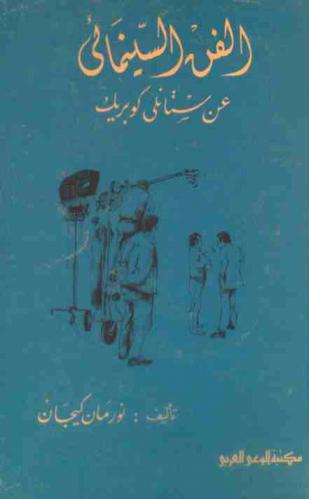
الفن السينمائي عن ستانلي كوبريك
يتناول كتاب (الفن السينمائي عن ستانلي كوبريك) والذي قام بتأليفه (نورمان كاجان) في حوالي (249) صفحة من القطع المتوسط موضوع (الفن السينمائي) مستعرضا المحتويات التالية : البداية، الرغبة والرهبة، قبلة القاتل، القتل، سبل المجد، سبارتاکوس، لوليتا، دكتور سترينجلف، 2001 أوديسا الفضاء، برتقالية آلة، مشاكل وتطلعات.
Book

A.I. Artificial Intelligence (2001) as the Spiritual Swan Song of Stanley Kubrick
This article proposes a reading of A.I. Artificial Intelligence (2001) as the spiritual swan song of Stanley Kubrick, even though it was completed posthumously by Steven Spielberg. Conceived and developed by Kubrick from the 1970s until the late 1990s, the film emerges as a profound meditation on life, death, and the persistence of memory—one that continues to resonate through another author’s hand. It stands as a singular case of authorial transmission, where Spielberg’s intervention operates less as completion than as curatorship: the act of listening to, translating, and preserving a vision projected beyond its creator’s lifetime. Beyond its production history, which includes Kubrick’s long collaboration with writer Ian Watson, the early story treatments, and Spielberg’s eventual reinterpretation of Kubrick’s design materials and narrative architecture, this essay advances a philosophical reflection on A.I. as a mediated testamentary work. Drawing on the thoughts of Paul Ricoeur, Jacques Derrida, and Maurice Blanchot, it examines how questions of authorship, memory, and narrative closure intersect with the film’s ontological and affective dimensions. Through these lenses, A.I. reveals itself as both an allegory of survival and a reflection on artistic legacy—suggesting that a swan song may endure beyond its maker, preserved through the curatorship and imagination of another.
Journal Article


Stanley Kubrick's Magic Mountain: Fiction as History in The Shining
Stanley Kubrick's film The Shining (1980) can be read as a central European imaginary retelling Thomas Mann's The Magic Mountain (1924). The film constructs a dark meditation on the human condition not only through its formal and thematic focus on Mann's novel but also through the lens of works by numerous other central European artists and scholars. Consequently, The Shining presents historical comprehension as the product not only of knowledge, but of experience, memory, and artistic representation/reception. Just as The Magic Mountain addressed itself to the crisis of European civilization that had culminated in the First World War, a deep-laid historical subtext in The Shining concerns the more desperate crisis facing the West in the wake of the Second World War. At its dark center, Kubrick's horror film reflects its creator's and its era's struggle with the reality and representation of the Holocaust.
Journal Article


Depth of Field
Director of some of the most controversial films of the twentieth century, Stanley Kubrick created a reputation as a Hollywood outsider as well as a cinematic genius. His diverse yet relatively small oeuvre—he directed only thirteen films during a career that spanned more than four decades—covers a broad range of the themes that shaped his century and continues to shape the twenty-first: war and crime, gender relations and class conflict, racism, and the fate of individual agency in a world of increasing social surveillance and control. In
Depth of Field , leading screenwriters and scholars analyze Kubrick's films from a variety of perspectives. They examine such groundbreaking classics as
Dr. Strangelove and
2001: A Space Odyssey and later films whose critical reputations are still in flux.
Depth of Field ends with three viewpoints on Kubrick's final film,
Eyes Wide Shut , placing it in the contexts of film history, the history and theory of psychoanalysis, and the sociology of sex and power. Probing Kubrick's whole body of work,
Depth of Field is the first truly multidisciplinary study of one of the most innovative and controversial filmmakers of the twentieth century.
eBook