
Catalogue Search | MBRL


Are you sure you want to remove the book from the shelf?

{{itemTitle}}
20
result(s) for
"Kung fu Fiction."
Sort by:

Kung fu panda
Po, an oversized panda with even bigger dreams, works in his father's noodle shop. But when a twist of fate sets him on course to become the mighty Dragon Warrior, Po isn't sure he can succeed--and neither is anyone else.
Book
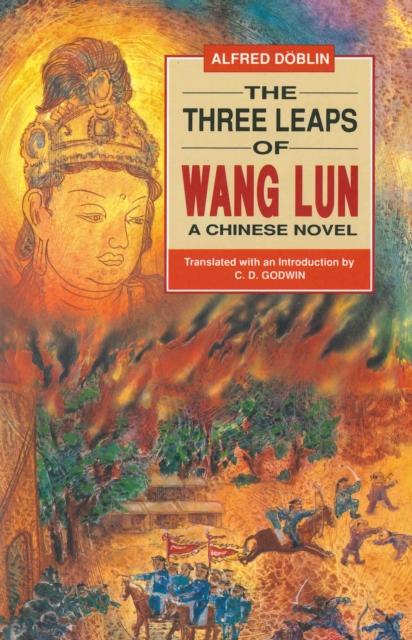
The Three Leaps of Wang Lun
In 1915, fourteen years before Berlin Alexanderplatz, Alfred Doblin published his first novel, an extensively researched Chinese historical extravaganza: The Three Leaps of Wang Lun. Even more remarkably, given its subject matter, the book was written in Expressionist style and is now considered the first modern German novel, as well as the first Western novel to depict a China untouched by the West. It is virtually unknown in English. Based on actual accounts of a doomed rebellion during the reign of Emperor Qianlong in the late 18th century, the novel tells the story of Wang Lun, a historical martial arts master and charismatic leader of the White Lotus sect, who leads a futile revolt of the “Truly Powerless.\" Densely packed cities and Tibetan wastes, political intrigue and religious yearning, imperial court life and the fate of wandering outcasts are depicted in a language of enormous vigor and matchless imagination, unfolding the theme of timidity against force, and a mystical sense of the world against the realities of power.
eBook

Candy in action
Eighteen-year-old Candy relies on her considerable Kung fu skills, quick wit, and good friends in a dangerous around-the-world adventure when a spurned suitor begins to stalk her every move.
Book
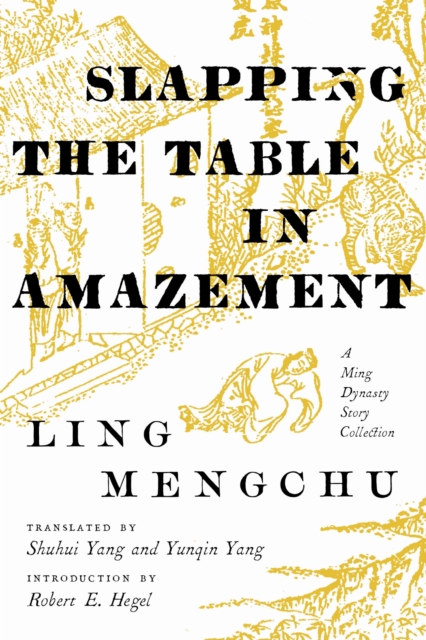
Slapping the Table in Amazement
Slapping the Table in Amazement is the unabridged English translation of the famous story collection Pai’an jingqi by Ling Mengchu (1580–1644), originally published in 1628. The forty lively stories gathered here present a broad picture of traditional Chinese society and include characters from all social levels. We learn of their joys and sorrows, their views about life and death, and their visions of the underworld and the supernatural.Ling was a connoisseur of popular literature and a seminal figure in the development of Chinese literature in the vernacular, which paved the way for the late-imperial Chinese novel. Slapping the Table in Amazement includes translations of verse and prologue stories as well as marginal and interlinear comments.
eBook


The plum in the golden vase or, Chin P’ing Mei, volume four
This is the fourth and penultimate volume in David Roy's celebrated translation of one of the most famous and important novels in Chinese literature.The Plum in the Golden Vaseor,Chin P'ing Meiis an anonymous sixteenth-century work that focuses on the domestic life of Hsi-men Ch'ing, a corrupt, upwardly mobile merchant in a provincial town, who maintains a harem of six wives and concubines. The novel, known primarily for its erotic realism, is also a landmark in the development of the narrative art form--not only from a specifically Chinese perspective but in a world-historical context.
Written during the second half of the sixteenth century and first published in 1618, ThePlum in the Golden Vaseis noted for its surprisingly modern technique. With the possible exception ofThe Tale of Genji(ca. 1010) andDon Quixote(1605, 1615), there is no earlier work of prose fiction of equal sophistication in world literature. Although its importance in the history of Chinese narrative has long been recognized, the technical virtuosity of the author, which is more reminiscent of the Dickens ofBleak House, the Joyce ofUlysses, or the Nabokov ofLolitathan anything in earlier Chinese fiction, has not yet received adequate recognition. This is partly because all of the existing European translations are either abridged or based on an inferior recension of the text. This complete and annotated translation aims to faithfully represent and elucidate all the rhetorical features of the original in its most authentic form and thereby enable the Western reader to appreciate this Chinese masterpiece at its true worth.
eBook
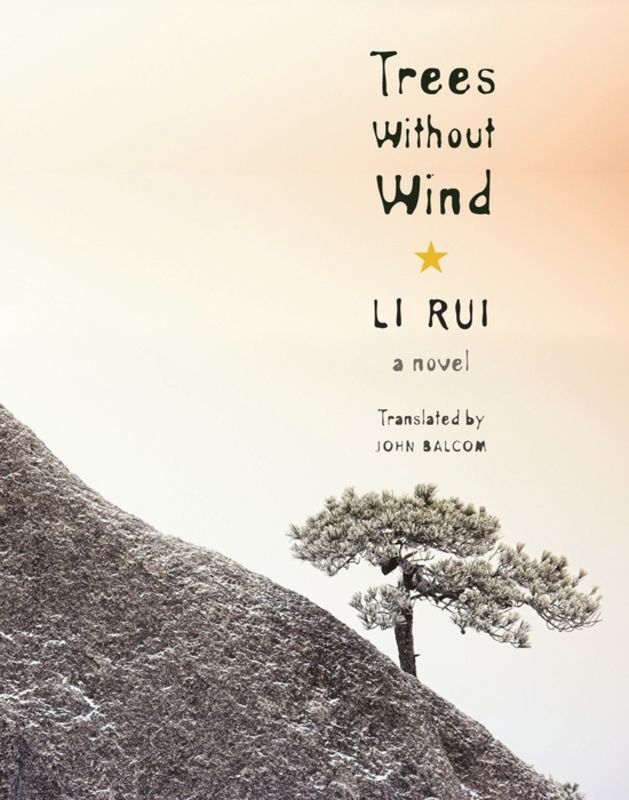
Trees without wind
Unfolding in the tense years of the Cultural Revolution (1966–1976), Trees Without Wind takes place in a remote Shanxi village in which a rare affliction has left the residents physically stunted. Director Liu, an older revolutionary and local commune head, becomes embroiled in a power struggle with Zhang Weiguo, a young ideologue who believes he is the model of a true revolutionary. Complicating matters is a woman named Nuanyu, who, like Zhang Weiguo and Director Liu, is an outsider untouched by the village's disease. \"Wedded\" to all of the male villagers, Nuanyu lives a polyandrous lifestyle based on necessity and at odds with the puritanical idealism of the Cultural Revolution. The deformed villagers, representing the manipulated masses of China, become pawns in the Party representatives' factional infighting. Director Liu and Zhang Weiguo's explosive tug-of-war is part of a larger battle among politics, self-interest, and passion gripping a world undone by ideological extremism. A collectively told narrative powered by distinctive subjectivities, Trees Without Wind is a milestone in the fictional treatment of a horrific event.
eBook

The Plum in the Golden Vase or, Chin P'ing Mei: Volume Five: The Dissolution
This is the fifth and final volume in David Roy's celebrated translation of one of the most famous and important novels in Chinese literature.The Plum in the Golden Vaseor,Chin P'ing Meiis an anonymous sixteenth-century work that focuses on the domestic life of Hsi-men Ch'ing, a corrupt, upwardly mobile merchant in a provincial town, who maintains a harem of six wives and concubines. The novel, known primarily for its erotic realism, is also a landmark in the development of the narrative art form-not only from a specifically Chinese perspective but in a world-historical context.
This complete and annotated translation aims to faithfully represent and elucidate all the rhetorical features of the original in its most authentic form and thereby enable the Western reader to appreciate this Chinese masterpiece at its true worth.
eBook
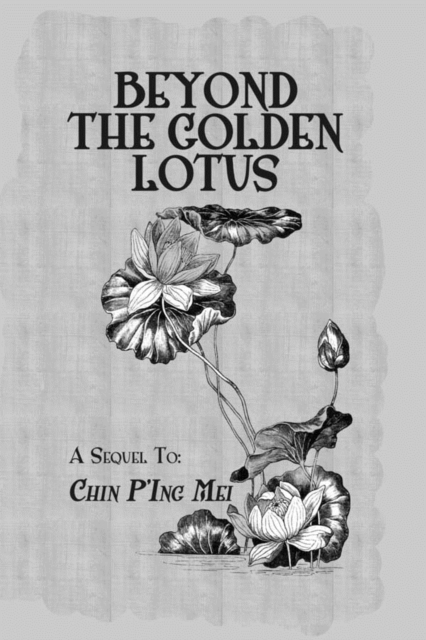
Beyond the golden lotus: Chin P'ing Mei
First published in 2005. Routledge is an imprint of Taylor Francis, an informa company.
eBook
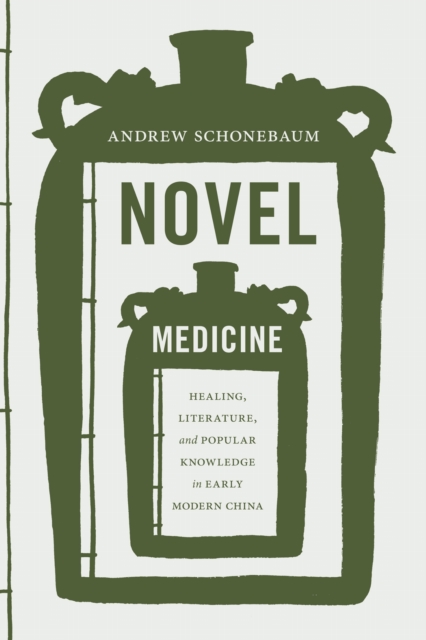
Novel Medicine
By examining the dynamic interplay between discourses of fiction and medicine,Novel Medicinedemonstrates how fiction incorporated, created, and disseminated medical knowledge in China, beginning in the sixteenth century. Critical readings of fictional and medical texts provide a counterpoint to prevailing narratives that focus only on the \"literati\" aspects of the novel, showing that these texts were not merely read, but were used by a wide variety of readers for a range of purposes. The intersection of knowledge-fictional and real, elite and vernacular-illuminates the history of reading and daily life and challenges us to rethink the nature of Chinese literature.
eBook