
Catalogue Search | MBRL


Are you sure you want to remove the book from the shelf?

{{itemTitle}}
14
result(s) for
"Kurds -- Turkey -- Politics and government -- 21st century"
Sort by:

Kurds of modern Turkey : migration, neoliberalism and exclusion in Turkish society
The role of the Kurds in Turkey has long been a controversial issue, although discussion has generally been focused around the political and cultural rights and activities of the Kurds. This book aims to bring a fresh approach to this contentious subject by shifting attention to the changing popular image of the Kurds in Turkish cities.
Book
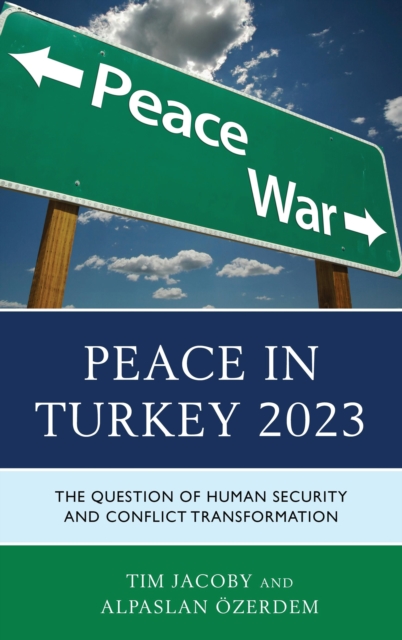
Peace in Turkey 2023
Peace in Turkey 2023: The Question of Human Security and Conflict Transformation, by Tim Jacoby and Alpaslan Özerdem, explores how the Kurdish conflict could possibly be transformed towards positive peace. By drawing on peace, conflict transformation and human security theories, Peace in Turkey 2023 seeks to redress a long-felt concern in Turkey: how to address the current challenge of establishing sustainable peace in the country. What will Turkey look like at its Republic’s centenary celebrations in 2023? Will it be able to resolve the Kurdish crisis through peaceful means and successfully transform the conflict towards positive peace? Will it be a country of peace, prosperity, rule of law, and democracy, or will the current violence intensify and continue to polarize society? To address these questions, Jacoby and Özerdem use scenario-writing derived from peace theory to highlight new ways to consider political violence and the future of Turkey, this study will appeal to both specialist and non-specialist students and teachers from a diverse range of disciplinary backgrounds.
eBook

Your freedom and mine : Abdullah èOcalan and the Kurdish question in Erdoوgan's Turkey
\"Your Freedom and Mine tells the story of the Imrali Delegations' attempts to meet with Abdullah èOcalan and provides context for an understanding of the conflict between Turkey and the Kurdish people. The book opens with a historical view of the Kurdish Question, leading up to the optimistic opening-and eventual bitter failure-of the peace process in Turkey. It includes official documents and reports from the Imrali Delegations in Istanbul and Diyarbakir/Amed, which involved in-depth interviews with Kurdish and Turkish politicians, media, and civil society regarding the degenerating political and human rights situation. The final section is a collection of testimonials from delegation participants. Your Freedom and Mine offers crucial insight into the dramatic history and current reality of the Kurdish struggle for recognition and peace in Turkey.\"-- Provided by publisher.
Book

Return to Point Zero
How did the Turkish-Kurdish Conflict arise? Why have Turks and
Kurds failed for so long to solve it? How can they solve it today?
How can social scientists better analyze this and other protracted
conflicts and propose better prescriptions for sustainable peace?
Return to Point Zero develops a novel framework for
analyzing the historical-structural and contemporary causes of
ethnic-national conflicts, highlighting an understudied dimension:
politics. Murat Somer argues that intramajority group politics
rather than majority-minority differences better explains
ethnic-national conflicts. Hence, the political-ideological
divisions among Turks are the key to understanding the
Turkish-Kurdish Conflict; though it was nationalism that produced
the Kurdish Question during late-Ottoman imperial
modernization, political elite decisions by the Turks created the
Kurdish Conflict during the postimperial nation-state
building. Today, ideational rigidities reinforce the conflict.
Analyzing this conflict from \"premodern\" times to today, Somer
emphasizes two distinct periods: the formative era of 1918-1926 and
the post-2011 reformative period. Somer argues that during the
formative era, political elites inadequately addressed three
fundamental dilemmas of security, identity, and cooperation and
includes a discussion of how the legacy of those political elite
decisions impacted and framed peace attempts that have failed in
the 1990s and 2010s. Return to Point Zero develops new
concepts to analyze conflicts and concrete conflict-resolution
proposals.
eBook

Kurds in Turkey : ethnographies of heterogeneous experiences
This ethnographic volume features fresh research by junior scholars of contemporary Kurdish studies. The contributions are assembled around four themes: women's participation, paramilitary, space, and infrapolitics of resistance.
Book
The Routledge Handbook of Turkish Politics
The Routledge Handbook of Turkish Politics pulls together contributions from many of the world's leading scholars on different aspects of Turkey.
Turkey today is going through possibly the most turbulent period in its history, with major consequences both nationally and internationally. The country looks dramatically different from the Republic founded by Atatürk in 1923. The pace of change has been rapid and fundamental, with core interlinked changes in ruling institutions, political culture, political economy, and society. Divided into six main parts, this Handbook provides a single-source overview of Turkish politics:
Part I: History and the Making of Contemporary Turkey
Part II: Politics and Institutions
Part III: The Economy, Environment and Development
Part IV: The Kurdish Insurgency and Security
Part V: State, Society and Rights
Part VI: External Relations
This comprehensive Handbook is an essential resource for students of Politics, International Relations, International/Security Studies with an interest in contemporary Turkey.
eBook

The Kurds in Erdogan's \new\ Turkey : domestic and international implications
\"This book focuses on the AKP government since 2002 during which time the state's approach to the Kurdish Question has undergone several changes. Examining what preceded and followed the failed putsch of 2016, it explains and critiques that situates the Kurdish Question in its broader context. It stands out with the main objective to avoid any 'policy-oriented bias' through an interdisciplinary and multi-thematic approach. The volume discusses the state and policies in the Kurdish region of Turkey, as well as counter-hegemonic discourses that seek to reform existing institutions. Some chapters focus on the domestic aspects and gender perspectives of the Kurdish Question in Turkey, which focus has been taken over by recent developments in Syria and the Middle East in general. Other chapters include a range of new aspects of Turkish society and politics, and the international aspects of Ankara's policies and its implications not only inside Turkey but also internationally. Taking both domestic and foreign policy aspects into account, the book offers a set of innovative explanations for the state of crisis in Turkey and a solid basis for thinking about the likely path forward. Scholars, researchers and post-graduates, interested in political theory, Kurdish and Middle East politics will find this book invaluable\"-- Provided by publisher.
Book
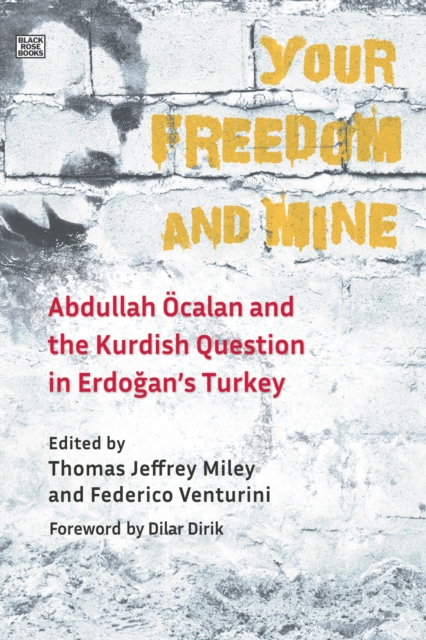
Your freedom and mine : Abdullah Öcalan and the Kurdish question in Erdoğan's Turkey
\"Only free men can negotiate. Prisoners cannot enter into contracts... I cannot and will not give any undertaking at a time when I and you, the people, are not free. Your freedom and mine cannot be separated.\"—From a letter by Nelson Mandela during his imprisonment, February 10, 1985 A revolutionary imprisoned on an island fortress may hold the key to peace in the Middle East. The leader of the outlawed Kurdistan Workers' Party (PKK), Abdullah Öcalan, is considered by many to be the \"Kurdish Mandela\", courageously issuing proposals for peace even from his prison cell. His ideas on democracy, women's liberation, and freedom have even inspired the remarkable Rojava Revolution in northern Syria. As Turkey descended into tyranny and Syria exploded in civil war, a peace delegation of European politicians, academics, and journalists, led by Nelson Mandela's lawyer and Supreme Court judge Essa Moosa, repeatedly attempted to go to meet with Öcalan at his prison on Imrali Island. Your Freedom and Mine tells the story of these momentous delegations. The book opens with an informative historical overview of the Kurdish Question, leading up until the optimistic opening—and eventual bitter failure—of the peace process in Turkey. It includes official documents and reports from the Imrali Delegations in Istanbul and Diyarbakir/Amed, which involved in-depth interviews with Kurdish and Turkish politicians, media, and civil society regarding the degenerating political and human rights situation. The final section is a collection of testimonials from delegation participants. Your Freedom and Mine offers crucial insight into the dramatic history and current reality of the Kurdish struggle for recognition and peace in Turkey.
eBook

The City Is Ours
The City is Ours accounts how
urban politics mediated the rise of Kurdish nationhood and
mobilization in Diyarbakır, Turkey. Muna Güvenç elucidates
how urban and architectural forms are not merely the backdrop of
the cityscape where political struggles unfold; they constitute the
very essence of these conflicts. Güvenç posits that urban spaces
offer \"wiggle room\", turning oppression into chances for dissent
and resilience and offering opportunities for vulnerable minority
groups to create sociopolitical blocs and mobilizations.
Güvenç takes readers from municipal halls to the streets and
illustrates how, in the early 2000s, pro-Kurdish parties harnessed
urban planning to resist coercion and foster Kurdish mobilization
in Turkey. Güvenç challenges readers to rethink urban
neoliberalism, new forms of nationalisms and mobilizations, and the
ways they shape cities and politics. The City is Ours is a
profound awakening, an invitation to all architects and urban
planners, urging them to rise above the confines of their
blueprints and embrace the vast tapestry of the politics of
space.
eBook

Secession and Conflict
The overthrow of Saddam Hussein in 2003 in Iraq opened the door
for Kurdish nationalists to move toward outright independence.
Despite the recent visibility of the Kurds in the international
media, little is known about their political aspirations as
citizens of an autonomous region. In Secession and
Conflict Zheger Hassan employs a comparative analysis to
explore why Iraqi Kurdistan, despite being better positioned
institutionally and economically than the similar cases of South
Sudan and Kosovo, has not declared independence. In rebuilding Iraq
and fighting against the Islamic State, the Kurds have cultivated
important political alliances with the US and Europe, which have
garnered them international economic, military, and political
support. Though now well-positioned to function as an independent
state, Iraqi Kurdistan has vacillated in seizing this golden
opportunity to declare independence. The apparent Kurdish
willingness to forgo independence runs counter to the prevailing
narratives about the Kurds in the Middle East. Hassan draws not
only on the history of the Kurds but also on first-hand interviews
with high-ranking officials, journalists, and nationalists to
provide a new window into the calculations of Kurdish leaders as
they navigate the complicated politics of Iraq. Secession and
Conflict offers a new model for understanding the Kurdish
question in Iraq.
eBook