
Catalogue Search | MBRL


Are you sure you want to remove the book from the shelf?

{{itemTitle}}
5,584
result(s) for
"Kushner, Tony"
Sort by:
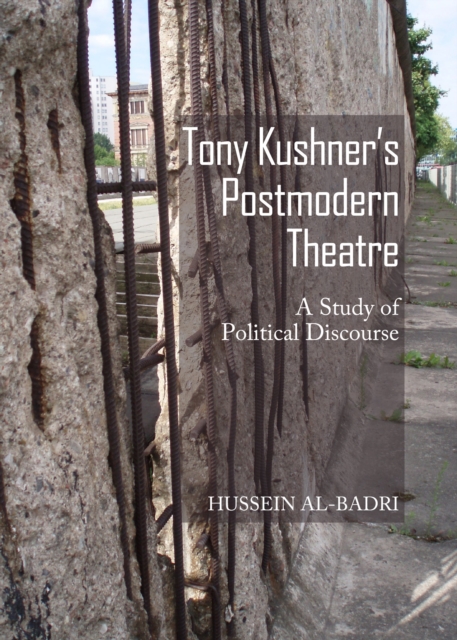
Tony Kushner's Postmodern Theatre
The book is an insightful and thorough examination of one of the most prominent political dramatists in the US today, Tony Kushner, and his theatricalization of politics. Moreover, it draws heavily on Kushners wide range of themes and techniques. As such, it will be beneficial for graduate students and scholars who are concerned with realm of contemporary American drama at the threshold of the twenty-first century. In addition, the book will appeal to anyone who wants a deeper understanding.
eBook
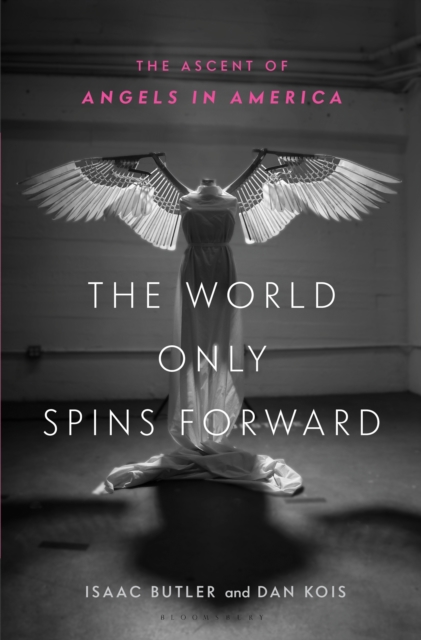
The World Only Spins Forward
\"Marvelous...A vital book about how to make political art that offers lasting solace in times of great trouble, and wisdom to audiences in the years that follow.\"-- Washington Post NAMED ONE OF THE BEST BOOKS OF THE YEAR BY NPR A STONEWALL BOOK AWARDS HONOR BOOK The oral history of Angels in America , as told by the artists who created it.
eBook

Kaddish and Other Millin Setimin: Esoteric Languages in Jewish–American Narratives
In this article, I analyze the use of Hebrew, Yiddish, and Aramaic texts—and the Kaddish in particular—as esoteric tongues in Jewish–American narratives, including poems, plays, television shows, and films. I suggest that by doing so, the creators of these works evoke the Lurianic notion of millin setimin or “secreted words”—utterances that transcend the communicative function of everyday speech and partake in some profound revelations. I hope to show that from Allen Ginsberg, through Tony Kushner, to the Coen Brothers and beyond, Jewish–American creators have been evoking Jewish tongues both as symbols of a lost past and as millin setimin that aspire to restore the connection to that past, within the Jewish–American community and beyond.
Journal Article
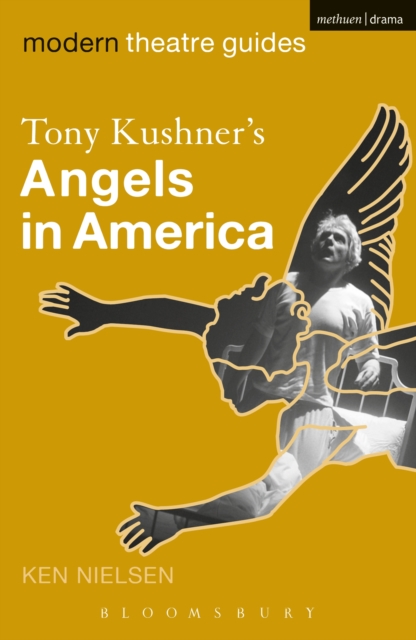
Tony Kushner’s Angels in America
Angels in America paved a new way for American theatre in its combination of heightened theatricality and politics. Tony Kushner has emerged as one of the American theatre's leading playwrights and productions worldwide have meant that the play has been recognized as the most important American play in decades. With the scope of the characters' sexual, class and religious affiliations in the play, Angels in America offers a unique possibility to discuss the construction of American identity in the late 1980s and 1990s. This guide provides a comprehensive critical introduction to the play, giving students an overview of the background and context; detailed analysis of the play including its structure, style and characters; analysis of key production issues and choices; an overview of the performance history from the first performances of Millennium Approaches and Perestroika to recent productions and the 2003 HBO adaptation; and an annotated guide to further reading highlighting key critical approaches.
eBook


The Jacob Cycle in Angels in America: Re-Performing Scripture Queerly
As theater is an art form that many times juxtaposes texts with the performing
body, one of its main contributions to Jewish culture could be in its “corporeal
reading” of Jewish textual heritage. Tony Kushner's celebrated play Angels
in America proposes such a reading of Jewish texts—mainly the biblical Jacob cycle
and the Jewish tradition regarding angels—as a queer re-performance that emphasizes bodily
aspects such as desire, sexuality, and disease. Analyzing the play alongside Jewish classical texts
from the midrashic and exegetic traditions, this paper suggests that the re-performance of Jewish
texts as queer repertoire in Angels in America raises questions about the politics
of the body in contemporary culture while at the same time opening up new horizons within textual
tradition itself, exploring new meanings within these texts—as well as the efficacy of their
performance.
Journal Article

Nostalgia for Afghanistan's History in Tony Kushner's Homebody/Kabul
The objective of this paper is to represent how the feelings of dissatisfaction with the present can lead the colonizer to recall the history of the colonized land. This is represented through the analysis of the American play Homebody/Kabul (2001) written by Tony Kushner (1950). The play depicts the suffering of the English protagonist, Homebody, from displacement within her homeland and family and her alienation from the present. Therefore, she decides to seek home and to recall history of Afghanistan, a country which is trapped between its glorious past and its traumatic present. Thus, nostalgia becomes a helpful mechanism for the colonizer to transcend those feelings of alienation and displacement. The analysis of this paper depends on the theories of Svetlana Boym through her book The Future of Nostalgia (2001,) and Dennis Walder throughout his Postcolonial Nostalgias: Writing, Representation, and Memory (2012), in order to examine how nostalgia for the lost time and the lost homeland may force the colonizer to recall the history and to seek home in the land of the colonized. Through a postcolonial lens, the analysis investigates Homebody's emotions of displacement from her home and her emotions of alienation from the present which forces her to search home in the land of the colonized, first mentally by recalling its history then by moving physically to Afghanistan.
Journal Article

Remembering Severo Sarduy
Despite struggling with his own HIV diagnosis and its physical and psychological tolls during the AIDS epidemic’s peak years, Severo Sarduy as a personality was such that suicide didn’t emerge as the inevitable, commonsensical choice. In his life and work, he demonstrates a way of going on without valorizing either the emotional highs or lows because emotions are simply a barometer of fatigue and temperament for him. The universality rather than the particularity of his condition—or its particularity that coaxed out a sense of the universal—provided an additional protective layer against depression. From the beginning of his career, Sarduy believed all bodies were doomed, not just diseased ones. His literature shifts how death is perceived by refocusing the lens through which all bodies, not just HIV-positive ones, are apprehended.
Journal Article
Updating a Classic: Progressive Hollywood’s Take on West Side Story
The paper addresses the paradoxes of Steven Spielberg’s and Tony Kushner’s West Side Story (2021), a film that reframes the story of the classic 1957 stage musical and, inevitably, its point of reference for the new film. After a brief discussion of the most problematic issues at the heart of the 1957 musical, the paper will analyse the 2021 West Side Story, challenging the rewriters’ claim that their intention was to provide the musical with a deeper significance and a more historically informed, ethnically sensitive, and progressive reimagining of the original.
Journal Article

Bless Me Anyway- A Solo Performance of My Own Design
The fight against HIV/AIDS is not over. Since the beginning of the epidemic over 39 million people have lost their lives due to HIV/AIDS related complications. And yet, HIV/AIDS continues to disproportionately affect marginalized populations. Stigma, fear and discrimination run high and force those affected into isolation. Access to medication is difficult and expensive. Under the current administration, Trump proposed diverting money away from HIV/AIDS research to fund detention centers for undocumented children. This crisis is not over. A personal, political, historical call to action, Bless Me Anyway, harkens back to the beginning of the ACT UP Movement: to Stand Up. Fight Back. Fight AIDS.
Dissertation