Catalogue Search | MBRL


Are you sure you want to remove the book from the shelf?

{{itemTitle}}
594
result(s) for
"Kuwait History"
Sort by:


Kuwait transformed : a history of oil and urban life
As the first Gulf city to experience oil urbanization, Kuwait City's transformation in the mid-twentieth century inaugurated a now-familiar regional narrative: a small traditional town of mudbrick courtyard houses and plentiful foot traffic transformed into a modern city with marble-fronted buildings, vast suburbs, and wide highways.
In Kuwait Transformed, Farah Al-Nakib connects the city's past and present, from its settlement in 1716 to the twenty-first century, through the bridge of oil discovery. She traces the relationships between the urban landscape, patterns and practices of everyday life, and social behaviors and relations in Kuwait. The history that emerges reveals how decades of urban planning, suburbanization, and privatization have eroded an open, tolerant society and given rise to the insularity, xenophobia, and divisiveness that characterize Kuwaiti social relations today. The book makes a call for a restoration of the city that modern planning eliminated. But this is not simply a case of nostalgia for a lost landscape, lifestyle, or community. It is a claim for a \"right to the city\"—the right of all inhabitants to shape and use the spaces of their city to meet their own needs and desires.
eBook


Islamic Extremism in Kuwait
This book is the first to provide a complete overview of Islamic extremism in Kuwait. It traces the development of Islamist fundamentalist groups in Kuwait, both Shiite and Sunni, from the beginning of the twentieth century. It outlines the nature and origins of the many different groups, considers their ideology and organization, shows how their activities are intertwined with the wider economy, society and politics to the extent that they are now a strong part of society, and discusses their armed activities, including terrorist activities. Although focusing on Kuwait, it includes overage of the activities of Islamist groups in other Gulf States. It also discusses the relation between Ruling Families with Islamist political groups, thereby demonstrating that the intertwining of Islamic ideology and armed activities with politics is not a new development in the region.
Falah Abdullah al-Mdaires is Professor in the Department of Political Science at Kuwait University.
1. The Roots of the Islamist political groups 2. Sunni Islamist political groups 3. Shi’ite Islamist political groups 4. The Relationships between the Kuwaiti Regime and the Islamist political groups 5. Spread of the Islamist political groups in the Social Body 6. Islamist political groups and Religious Violence, International Terrorism 7. The Armed Islamist Sunni Jihadist Groups 8. The Armed Islamist Shi’ite Jihadist Groups
eBook
Islamic extremism in Kuwait : from the Muslim Brotherhood to Al-Qaeda and other Islamist political groups
This book is the first to provide a complete overview of Islamic extremism in Kuwait. It traces the development of Islamist fundamentalist groups in Kuwait, both Shiite and Sunni, from the beginning of the twentieth century. It outlines the nature and origins of the many different groups, considers their ideology and organization, shows how their activities are intertwined with the wider economy, society and politics to the extent that they are now a strong part of society, and discusses their armed activities, including terrorist activities. Although focusing on Kuwait, it includes overage of the activities of Islamist groups in other Gulf States. It also discusses the relation between Ruling Families with Islamist political groups, thereby demonstrating that the intertwining of Islamic ideology and armed activities with politics is not a new development in the region. Summary reprinted by permission of Routledge
eBook
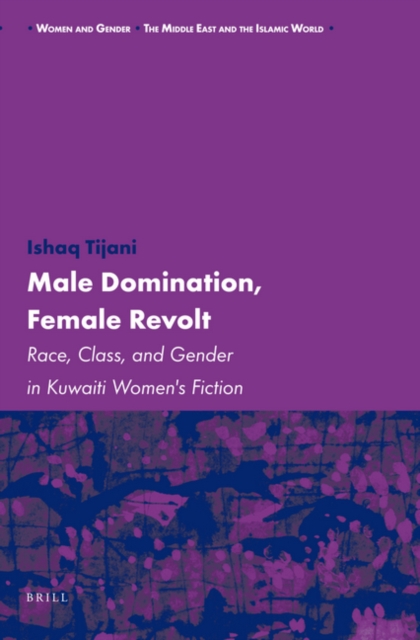
Male Domination, Female Revolt
Drawing on Marxist-feminist theory, this book examines women's resistance to, and subversion of, patriarchal authority, as respresented in Kuwaiti women's fiction. It demonstrates that Kuwaiti/Arabian Gulf women are not as submissive as commonly (mis)represented in academia and the media.
eBook