Search Results Heading

MBRLSearchResults

mbrl.module.common.modules.added.book.to.shelf
Title added to your shelf!
View what I already have on My Shelf.
Oops! Something went wrong.
While trying to add the title to your shelf something went wrong :( Kindly try again later!
Are you sure you want to remove the book from the shelf?

Oops! Something went wrong.
While trying to remove the title from your shelf something went wrong :( Kindly try again later!
    Done
    Filters
    Reset
  • Discipline
      Discipline
      Clear All
      Discipline
  • Is Peer Reviewed
      Is Peer Reviewed
      Clear All
      Is Peer Reviewed
  • Reading Level
      Reading Level
      Clear All
      Reading Level
  • Content Type
      Content Type
      Clear All
      Content Type
  • Year
      Year
      Clear All
      From:
      -
      To:
  • More Filters
      More Filters
      Clear All
      More Filters
      Item Type
    • Is Full-Text Available
    • Subject
    • Country Of Publication
    • Publisher
    • Source
    • Target Audience
    • Donor
    • Language
    • Place of Publication
    • Contributors
    • Location
8 result(s) for "Kuwait History Sources"
Sort by:
The Making of a Neo-colony? Anglo-Kuwaiti Relations in the Era of Decolonization
An analysis of Anglo-Kuwaiti relations in the era of decolonization does not support the theory of neo-colonialism. Far from dominating the economy in Kuwait, the UK occupied a position of declining importance as Kuwait progressed towards independence.
Fields on Iraq's borders require joint operations
A recent study advocates that the many fields that lie along Iraq's borders should be operated jointly with the adjacent country. The Centre for Global Energy Studies (CGES) conducted the study in reaction to February 2008 claims in the Iraqi press that neighboring countries were stealing Iraq's oil. The study suggested that an ideal approach is for two adjacent countries to undertake joint appraisal, planning, development, and production operations of fields on their common border, as well as for fields on either side of the border so that it can be verified that the fields are connected or are in separate reservoir systems. Straddling the Iran-Iraq border are Naft Shahr-Naft Khaneh fields, nearly depleted oil fields on production since the 1920s. Fields on the Kuwaiti side include: 1. Abdalli, 2. East Abdalli, 3. Ratga, 4. Raudhatian, 5. Sabriyah, 6. West Abdalli, 7. Jraishan, 8. Rachi, 9. South Rumaila, 10. Safwan, and 11. Umm Qasr.
Geosteering horizontal wells enhances production in Middle East field
Joint Operations, Saudi Arabian Texaco-Kuwait Oil Co., used geosteering to drill two wells in the South Umm Gudair (SUG) field for the first time in 2004. Geosteering and horizontal well technology have been effectively used elsewhere to produce hydrocarbons from thin reservoirs to enhance recovery and restrict waterconing problems. Recent advancements in well placement by geosteering allow successful targeting of low-permeability reservoirs with great precision, resulting in more drainage exposure and reducing the long, transient production periods in the target pay zones. In the SUG field, measurement while drilling (MWD), logging while drilling (LWD), and StrataSteer 3D services of Halliburton/Sperry-Sun were used. This article reviews the success of geosteering in two horizontal wells at the SUG field, targeting low permeability reservoirs, completed in July 2004.
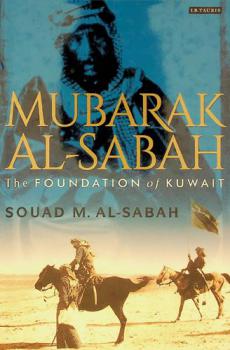
Mubarak Al-Sabah : the foundation of Kuwait
Exploration of the life, personality, and politics of the man who ruled Kuwait from 1896 to 1915, especially in areas of the construction of the state and its political boundaries and international relations.