
Catalogue Search | MBRL


Are you sure you want to remove the book from the shelf?

{{itemTitle}}
66
result(s) for
"Kuwait National Fund"
Sort by:

Investigating the causes of financial default among SMEs in Kuwait with evidence from the national fund for enterprise development
This research explores the causes behind increasing defaults among Small and Medium Enterprises (SMEs) in Kuwait by focusing on the impact of the crisis and the role of the Kuwait National Fund for SME Development. The central crisis examined in this study is the COVID-19 pandemic, which acted as a catalyst that intensified pre-existing financial and operational challenges within the SME sector. Other systemic vulnerabilities such as limited financial literacy, weak risk management, and policy gaps are also considered within this broader crisis context. By employing a mixed method approach, the study draws on 15 interviews with owners of defaulted SMEs and a questionnaire involving 64 defaulted SMEs. This dual method framework qualitative (thematic analysis) and quantitative (survey based statistics) provides both depth and generalizability in understanding default risks. Thematic analysis revealed that crises such as COVID-19 related operational delays, changes in customer behaviour, and increased financial obligations were the main contributing factors. The quantitative findings align with these themes, with 89% acknowledging that the pandemic affected their ability to repay loans. This research contributes to existing literature by empirically linking crisis induced pressures to SME loan defaults in a Gulf context, with Kuwait as the focus. Policy implications include strengthening the Kuwait National Fund’s role in flexible financial support, risk management programs, and enhancing SME access to alternative funding channels. The study proposes that the Kuwait National Fund for SME Development could implement sustainability policies and practices such as flexible financial support, capacity building, risk management, and facilitating connections with alternative funding sources to address these issues. These proposed strategies provide SMEs with more resources and skills to handle challenges, which may reduce default rates and contribute to a more resilient SME sector in Kuwait.
Journal Article
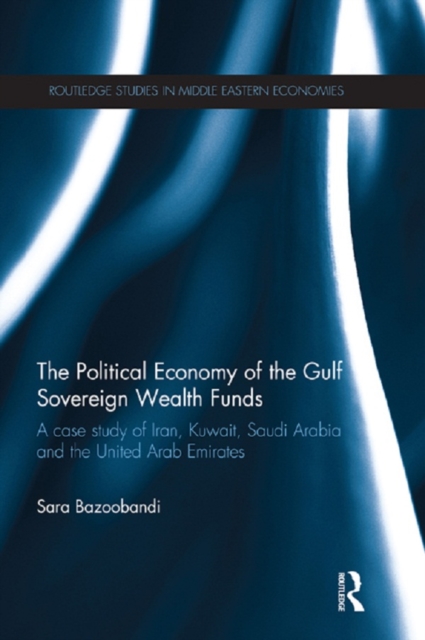
The Political Economy of the Gulf Sovereign Wealth Funds
Using four Gulf sovereign wealth funds as case studies - Iran, Kuwait, Saudi Arabia and the UAE - this book examines and analyses the history, governance and structure, and investment strategies of the above mentioned funds, in the context of on-going debates about their transparency.
The book discusses how most Gulf sovereign wealth funds were established under colonial rule, and have operated in the global financial system for many decades. With the increase of oil revenues, it goes on to look at how the funds have broadened their asset classes and their institutional development. Debate over the transparency of sovereign wealth funds has highlighted various global practices. Recently, organisational measures have been introduced for calculating possible risks from non-commercial investment incentives of funds, whose politically-driven investment strategies are viewed as potentially a major threat to the national security of their host countries.
Highlighting a number of incidents that triggered the transparency debate, the book scrutinises the reaction of some of the Gulf sovereign wealth funds to these recent regulatory codes and strategies. It is a useful contribution to Development, Political Economy and Middle East Studies.
eBook

Political Institutions under Dictatorship
Often dismissed as window dressing, nominally democratic institutions, such as legislatures and political parties, play an important role in non-democratic regimes. In a comprehensive cross-national study of all non-democratic states from 1946 to 2002 that examines the political uses of these institutions by dictators, Jennifer Gandhi finds that legislative and partisan institutions are an important component in the operation and survival of authoritarian regimes. She examines how and why these institutions are useful to dictatorships in maintaining power. In their efforts to neutralize threats to their power and to solicit cooperation from society, autocratic leaders use these institutions to organize concessions to potential opposition. The use of legislatures and parties to co-opt opposition results in significant institutional effects on policies and outcomes under dictatorship.
eBook

Risk Diversifications in Emerging Economies
This study shows how risk can be decreased by diversification in emerging economies. Results for diversification and correlation tests indicate that Arab Stock Markets are an ideal place for diversification for investors of developed countries. This paper evaluates stock prices as a leading indicator of economic activity. Time-series analysis and the notion of \"Granger causality\" are used in this project to estimate relationships between stock prices and the economy, and to see whether they are consistent with theory. We show that the higher the causality between stock market capital and gross domestic product (GDP) in any economy, the lower the risk. Results indicate evidence of causality between stock market capital and GDP in the seven countries.
Journal Article


NEWS IN BRIEF ECONOMY BUSINESS
Bahrain's economy is on target to meet expectations of four per cent year- on-year growth of gross domestic product (GDP), according to the kingdom's economic quarterly report. meanwhile, local economists and entrepreneurs have voiced overall optimism about the economic outlook for Kuwait in 2011, whilst urging that a number of issues be tackled to help strengthen the business environment. Other news is presented.
Journal Article